
| Index | Scranton | Pennsylvania | National |
| Cost of living | 90 | 97 | 100 |
| Groceries | 101 | 100 | 100 |
| Health care | 100 | 99 | 100 |
| Housing | 66 | 90 | 100 |
| Transportation | 97 | 101 | 100 |
| Utilities | 103 | 99 | 100 |
| Lifestyle & Entertainment | 102 | 100 | 100 |
| Household Items | 98 | 99 | 100 |
| Education & Childcare | 100 | 101 | 100 |

Getting a feel for the cost of living in Scranton is essential for anyone planning to relocate, as it empowers them to make informed financial decisions, secure a comfortable lifestyle and maintain financial stability in their new environment. The cost of living in Scranton is 90, which is 10% lower than the national average. Relocating individuals may need to adjust their savings and investment strategies based on the cost of living in the new location. It influences decisions about retirement planning, investments and financial goals.
Nobody knows their city better than the people who actually live there. So, we asked 14 local residents how they would rate the cost of living in Scranton and this is how they responded. 64% of people said that the cost of living was affordable, with prices decreasing, while 36% of people said that the cost of living was very expensive and prices continue to rise.
Wondering if Scranton is affordable? It's a question that often comes up when you're thinking about a new city since affordability can really shape your decisions. The cost of living index (covered earlier), housing expenses and income levels all play a part in the affordability equation. In Scranton, for example, the median home price is 41.1% lower than what folks pay nationally, and monthly rent is 17.8% lower than the usual rates. Plus, income levels matter too, with Scranton boasting a median household income of $61,065, which is 24.9% lower than the national average.
Groceries: Grocery costs have continued to increase significantly over the last 2-3 years. In some markets the cost of food has gone up by more than 20% in that period. While other markets have managed to see only a moderate uptick. These food costs can have a major impact on the cost of living in any area. In Scranton, the groceries index is 0.7% higher than the national average.
Transportation: In cities with limited or no public transportation, residents may find it necessary to own and maintain vehicles, thereby elevating the cost of living. Monthly expenditures include fuel, insurance, routine maintenance and potential lease or financing commitments. In Scranton, the transportation index stands at 2.8% lower than the national average.
Urbanization: Larger, urban areas boasting abundant amenities and robust employment prospects often exhibit a heightened cost of living, driven by the increased demand for services and residential relocation. Consequently, this leads to elevated home prices and higher rental rates. In contrast, sparsely populated rural locales or regions marked by diminished demand typically offer a more limited range of amenities and experience slower job market expansion. This translates into a more affordable cost of living.
The Scranton cost of living estimates above use a normalized U.S. average of 100 as the baseline for comparison. Housing values incorporate local home price and rental information from the U.S. Census, while all other estimates are AI-assisted and modeled using expected everyday expenses, local market trends, climate, and transportation-related cost pressures. The results are intended for practical city-to-city comparisons.

| Cost of living index | |
| Groceries index | |
| Health care index | |
| Housing index | |
| Transportation index | |
| Utilities index | |
| Lifestyle index | |
| Household index | |
| Educare index |
| Median Income | Per Year | Per Month | Max Budget (28% DTI) | Max Budget (36% DTI) |
| Owners | $91,072 | $7,589 | $2,125 | $2,732 |
| Renters | $43,113 | $3,593 | $1,006 | $1,294 |
| State | General Sales Tax | With Max Surtax |
| Pennsylvania | 6% | 8% |
| State | Income Tax (Low) | Income Tax (High) |
| Pennsylvania | 3.07% | 3.07% |
| City | Population | Cost of Living Index | National Avg. |
| Eagle Lake, PA | 0 | 100 | 0.0% |
| Plymouth, PA | 5,986 | 84 | 15.7% |
| Ashley, PA | 2,823 | 84 | 15.7% |
| Luzerne, PA | 2,912 | 86 | 13.9% |
| Wilkes-Barre, PA | 41,994 | 86 | 13.8% |
| Scranton, PA | 79,887 | 90 | 10.3% |
| City | Population | Cost of Living Index | National Avg. |
| Racine, WI | 79,849 | 90 | 9.7% |
| Saint-Jérôme, QC | 79,702 | n/a | |
| Kendall, FL | 79,660 | 131 | 30.7% |
| Jonesboro, AR | 79,653 | 92 | 7.8% |
| Waldorf, MD | 79,554 | 128 | 27.5% |
| Scranton, PA | 79,887 | 90 | 10.3% |

 Here are the best places to live in Pennsylvania
 Most Dangerous States In The US
 Safest Cities In The US
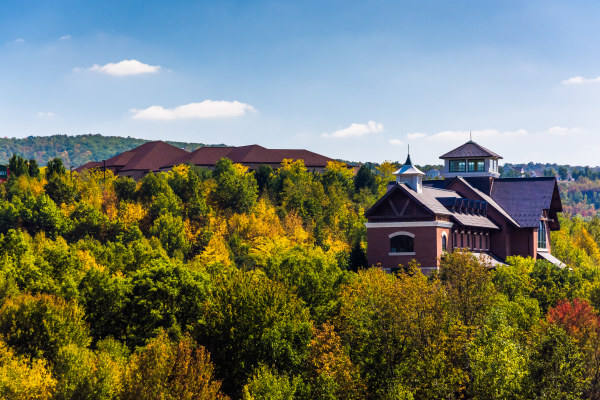 See the best places to live in Scranton