
| Index | Malden | Massachusetts | National |
| Cost of living | 148 | 131 | 100 |
| Groceries | 111 | 109 | 100 |
| Health care | 115 | 116 | 100 |
| Housing | 226 | 169 | 100 |
| Transportation | 114 | 115 | 100 |
| Utilities | 119 | 117 | 100 |
| Lifestyle & Entertainment | 112 | 115 | 100 |
| Household Items | 109 | 109 | 100 |
| Education & Childcare | 131 | 127 | 100 |

Knowing the cost of living in Malden allows individuals to create a realistic budget. This helps them understand how their income will cover expenses and whether they need to make financial adjustments. The cost of living in any region can fluctuate due to various factors. To assess the cost of living consistently across different areas, a national average of 100 serves as the basis for the cost of living index. The cost of living in Malden stands at 148, marking it 48% higher than the national average.
If you're in pursuit of an economical living environment, Malden may not fit the bill, as it ranks among the most expensive places to reside in the United States. Just a minority of regions exhibit a cost of living that is more than 20% higher than the national average, and, unfortunately, Malden falls within this bracket.
When it comes to the cost of living in Malden, housing costs are a real heavyweight, often hogging a significant chunk of your earnings. Sadly, in this area, housing expenses for both buying and renting were 125.7% more expensive compared to your average city. That means you'll be shelling out more for homes, rents, mortgage rates and insurance.
The substantial and relentless rise in grocery prices definitely warrants some attention. Over the past two years, grocery expenses have escalated by more than 10%. Having said that, the situation in Malden is even less favorable, with grocery prices here being 10.6% higher than the national average.
When it comes to knowing a city, its residents are the experts. We conducted a survey with 11 locals to understand their opinions on the cost of living in Malden. The results indicated that 9% found it reasonably priced with decreasing prices of goods and services, while 91% viewed it as quite expensive, with increasing prices.
Is Malden an affordable place to live? It's a good question and one that you might want to ask when considering any new city, as affordability can play a huge role in the decision making process. The cost of living index (which we covered above), as well as housing costs and income levels play a vital role in determining the affordability of an area. The median home price in Malden is 148.8% higher than the national average, while the average monthly rent prices are 72% higher than average. The affordability of any location can also be influenced by median income levels. Malden has a median household income of $107,304, which is 31.9% higher than the national average.
Subsidies: Certain cities or states may implement government subsidies or assistance programs with the goal of alleviating the cost of living pressures on their residents. These programs encompass a broad spectrum of support mechanisms, including Medicare, Medicaid, housing subsidies, low-income home energy assistance programs, school lunch programs, supplemental nutrition assistance programs, student loans, electric vehicle tax credits, affordable care act subsidies and farming subsidies. Areas offering fewer subsidies may experience a rise in their cost of living.
Taxes: Cities that impose higher taxes, including sales and income taxes, can contribute to an escalated cost of living. The added expense of taxes on everyday goods like clothing and food naturally results in higher overall costs. Similarly, a higher income tax rate can further elevate the cost of living. In Malden, the general sales tax rate starts at 6.25%, and income tax rates begin at 5%.
Utilities: As with the prices of anything else, utility costs can exhibit significant variations, contingent on factors like climate, energy source availability, geographic location and state regulations. The expenses associated with electricity, water, heating, and waste disposal can fluctuate, either upward or downward, depending on the particular city or state. In Malden, the utilities index registers 19.1% higher than the national average.
The cost of living data for Malden shown above is based on a U.S. average baseline score of 100, making it easier to compare how far your dollar may go from one city to another. Housing uses U.S. Census home price and rental data, while all remaining values are AI-assisted estimates informed by regional pricing, climate, transportation dynamics, and local economic factors. These scores are best used for directional comparisons between cities.

| Cost of living index | |
| Groceries index | |
| Health care index | |
| Housing index | |
| Transportation index | |
| Utilities index | |
| Lifestyle index | |
| Household index | |
| Educare index |
| Median Income | Per Year | Per Month | Max Budget (28% DTI) | Max Budget (36% DTI) |
| Owners | $160,805 | $13,400 | $3,752 | $4,825 |
| Renters | $81,355 | $6,780 | $1,898 | $2,441 |
| State | General Sales Tax | With Max Surtax |
| Massachusetts | 6.25% | 6.25% |
| State | Income Tax (Low) | Income Tax (High) |
| Massachusetts | 5% | 9% |
| City | Population | Cost of Living Index | National Avg. |
| Lowell, MA | 114,170 | 126 | 25.9% |
| Lynn, MA | 97,235 | 134 | 34.4% |
| Salem, MA | 44,881 | 135 | 35.3% |
| Chelsea, MA | 41,000 | 135 | 35.2% |
| Saugus, MA | 29,084 | 139 | 38.9% |
| Malden, MA | 62,735 | 148 | 48.4% |
| City | Population | Cost of Living Index | National Avg. |
| Terre Haute, IN | 62,758 | 85 | 15.4% |
| Monterey Park, CA | 62,573 | 169 | 69.0% |
| Leander, TX | 62,512 | 115 | 15.3% |
| Moore, OK | 62,967 | 94 | 6.2% |
| Petaluma, CA | 62,491 | 178 | 77.7% |
| Malden, MA | 62,735 | 148 | 48.4% |

 Here are the best places to live in Massachusetts
 Safest States In The US
 Most Dangerous Cities In The US
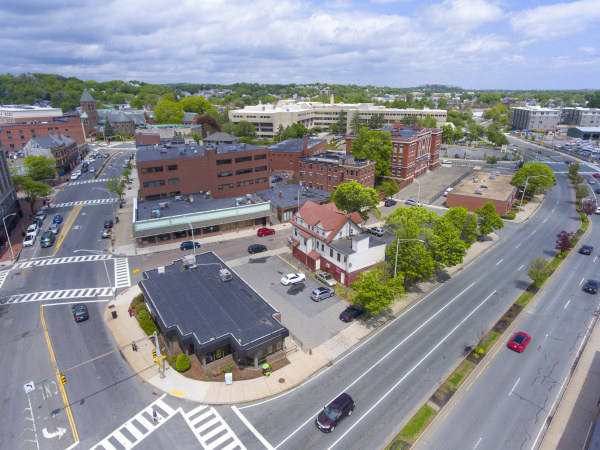 See the best places to live in Malden