
| Index | Grand Rapids | Michigan | National |
| Cost of living | 96 | 91 | 100 |
| Groceries | 99 | 98 | 100 |
| Health care | 99 | 97 | 100 |
| Housing | 90 | 76 | 100 |
| Transportation | 99 | 96 | 100 |
| Utilities | 101 | 100 | 100 |
| Lifestyle & Entertainment | 98 | 96 | 100 |
| Household Items | 98 | 98 | 100 |
| Education & Childcare | 93 | 95 | 100 |

Knowing the cost of living in Grand Rapids allows individuals to create a realistic budget. This helps them understand how their income will cover expenses and whether they need to make financial adjustments. The cost of living in any region can fluctuate due to various factors. To assess the cost of living consistently across different areas, a national average of 100 serves as the basis for the cost of living index. The cost of living in Grand Rapids stands at 96, marking it 4% lower than the national average.
The cost of living in Grand Rapids aligns closely with the national average when compared to other cities across the nation. Everyday essentials such as groceries, household expenses, health care and utility bills are priced at a level consistent with the average in similar urban areas. Grand Rapids residents can anticipate that their daily expenses won't be significantly higher than those in an average city, ensuring that the cost of living remains manageable.
The real experts on a city are its residents. That's why we reached out to 22 locals to get their views on the cost of living in Grand Rapids. We surveyed the residents and asked them if they felt like prices were affordable or out of reach. The results were as follows. 32% found it budget-friendly with decreasing prices, while 68% said it's simply not affordable as prices have continued to rise.
Wondering if Grand Rapids is affordable? It's a question that often comes up when you're thinking about a new city since affordability can really shape your decisions. The cost of living index (covered earlier), housing expenses and income levels all play a part in the affordability equation. In Grand Rapids, for example, the median home price is 12.6% lower than what folks pay nationally, and monthly rent is 2.4% lower than the usual rates. Plus, income levels matter too, with Grand Rapids boasting a median household income of $77,546, which is 4.7% lower than the national average.
Transportation: In areas where public transportation is scarce or unavailable, residents often find themselves compelled to own and upkeep vehicles, thereby increasing the overall cost of living. Monthly expenses encompass fuel, insurance, routine maintenance and potentially lease or financing payments. In Grand Rapids, the transportation index is 0.7% lower than the national average.
Groceries: Grocery expenditures have undergone notable escalation over the last 2-3 years. In some markets, the cost of food products has surged by more than 20%, while others have experienced only modest increments. These fluctuations in food costs can have a significant impact on the overall cost of living in any region. In Grand Rapids, the groceries index registers 1.4% lower than the national average.
Urbanization: Larger, urban areas boasting abundant amenities and robust employment prospects often exhibit a heightened cost of living, driven by the increased demand for services and residential relocation. Consequently, this leads to elevated home prices and higher rental rates. In contrast, sparsely populated rural locales or regions marked by diminished demand typically offer a more limited range of amenities and experience slower job market expansion. This translates into a more affordable cost of living.
The Grand Rapids cost of living data above is designed around a U.S. average baseline of 100, allowing for easy comparisons of relative living costs. Housing incorporates U.S. Census home price and rental data, while all other figures are AI-assisted estimates that account for regional price trends, climate, transportation dynamics, and common everyday expenses. These values are best used as directional city-to-city comparisons.

| Cost of living index | |
| Groceries index | |
| Health care index | |
| Housing index | |
| Transportation index | |
| Utilities index | |
| Lifestyle index | |
| Household index | |
| Educare index |
| Median Income | Per Year | Per Month | Max Budget (28% DTI) | Max Budget (36% DTI) |
| Owners | $99,856 | $8,321 | $2,330 | $2,996 |
| Renters | $52,516 | $4,376 | $1,225 | $1,576 |
| State | General Sales Tax | With Max Surtax |
| Michigan | 6% | 6% |
| State | Income Tax (Low) | Income Tax (High) |
| Michigan | 4.25% | 4.25% |
| City | Population | Cost of Living Index | National Avg. |
| Sparta, MI | 4,521 | 92 | 8.4% |
| Wyoming, MI | 78,208 | 92 | 7.7% |
| Coopersville, MI | 4,554 | 94 | 5.9% |
| Comstock Park, MI | 11,032 | 95 | 4.8% |
| Cutlerville, MI | 18,417 | 95 | 5.3% |
| Grand Rapids, MI | 204,117 | 96 | 4.0% |
| City | Population | Cost of Living Index | National Avg. |
| Augusta, GA | 204,183 | 92 | 8.1% |
| Glendale, CA | 204,037 | 193 | 93.1% |
| Montgomery, AL | 204,291 | 89 | 10.9% |
| Huntington Beach, CA | 204,313 | 195 | 95.1% |
| Yonkers, NY | 204,945 | 142 | 41.6% |
| Grand Rapids, MI | 204,117 | 96 | 4.0% |

 Here are the best places to live in Michigan
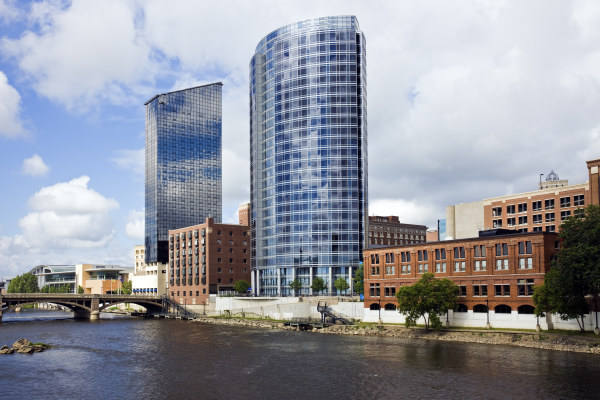 See the best places to live in Grand Rapids
 Safest States In The US
 Check out the 10 safest cities in Michigan