
| Statistic | Reportedincidents | /100k people | Vancouver/100k people | Washington/100k people | National/100k people |
| Total crime | 7,907 | n/a (estimate) | 3,990 | 2,793 | 2,119 |
| Murder | 11 | n/a | 5.6 | 3.8 | 5.0 |
| Rape | 122 | n/a | 61.6 | 37.8 | 37.5 |
| Robbery | 242 | n/a | 122.1 | 67.5 | 60.6 |
| Assault | 779 | n/a | 393.0 | 217.0 | 256.1 |
| Violent crime | 1,154 | n/a (estimate) | 582 | 326 | 359 |
| Burglary | 930 | n/a | 469.2 | 398.8 | 229.2 |
| Theft | 4,640 | n/a | 2,341.1 | 1,634.2 | 1,272.1 |
| Vehicle theft | 1,183 | n/a | 596.9 | 433.5 | 258.8 |
| Property crime | 6,753 | n/a (estimate) | 3,407 | 2,467 | 1,760 |

Crime is typically categorized into two main types: violent and property crimes. Violent crimes encompass offenses such as murder, rape, robbery, and assault, while property crimes include burglary, theft, and vehicle theft. Based on the most recent report, the Vancouver crime rate is higher than the national average by 88.3%. Specifically, there were 1154 violent crimes in Vancouver, equivalent to 582 per 100,000 individuals, higher than the national average by 62.1%. Furthermore, Vancouver recorded 6753 property crimes, amounting to 3407 per 100,000 residents, which was higher than the average by 93.6%.
Vehicle thefts across all of America are on the rise and Vancouver has one of the highest vehicle theft rates in the country. In the most recent crime report, Vancouver reported 1183 vehicle thefts, which equates to 597 stolen vehicles per 100,000 people. This falls in the bottom 10% of all cities, meaning that 90% of cities have better vehicle theft rates. The chance of having your vehicle stolen in Vancouver is 1 in 168.
What is the prevailing sentiment among Vancouver residents regarding the state of crime? A comprehensive survey conducted by AreaVibes, involving 170 respondents, sheds light on this matter. The results were as follows: 35% of Vancouver residents expressed a notable sense of security, asserting that crime was virtually non-existent in their community, and they felt at ease strolling the streets after dark. While, 65% of those surveyed held a contrasting viewpoint, perceiving a higher incidence of crime, leading them to feel apprehensive about walking alone at night.
To get a feel for the safety of living in Vancouver, it's essential to analyze both the overall crime rate and the daily incident count. Vancouver presents a total crime rate that is 88% higher than the national average per 100,000 residents. Consequently, Vancouver experiences an average of 21.66 daily crimes, comprising 3.16 violent incidents and 18.5 property-related offenses. This evaluation offers a comprehensive understanding of the safety landscape, aiding individuals in making informed decisions when considering relocation.
In the most recent crime report, year-over-year crime rates in Vancouver has decreased by 23.9%. Examining the change in crime rates from one year to the next provides valuable insights into the evolving safety landscape of Vancouver, aiding residents in assessing whether it is becoming a safer or more dangerous place to live. These crime rates are categorized into two primary groups: violent and property crimes. Year-over-year, violent crime has increased by 4.1%, while property crime has decreased by 27.2%. This comprehensive analysis offers potential residents essential information for making informed decisions about whether or not Vancouver is a safe place to live.
There are more than 60 different neighborhoods in the Vancouver area. Depending on their location and other socioeconomic factors, the rate of crime in each neighborhood is vastly different. Areas that are located near the center or downtown core, tend to be more densely populated and typically see higher crime rates. While neighborhoods in the outskirts of the city tend to be less densely populated and have lower unemployment and poverty rates. Some of the safer neighborhoods in Vancouver include Old Evergreen Highway, Cimarron and Riveridge. While Central Park, Arnada and North Garrison Heights have a reported crime rate that is higher than average. This reinforces the need to do a quality check on multiple neighborhoods as their crime rates can be quite different.
Vancouver has a population density of 4021.6 people per square mile, while with the national average is 90.6 people per square mile. Cities characterized by high population density are frequently larger urban centers offering diverse economic prospects. Within these areas, income inequality may be accentuated, resulting in the coexistence of poverty and affluence. Such economic disparities can contribute to elevated property crimes and on occasion, violent crimes. Conversely, areas with low population density generally record lower Vancouver crime rates.
In Vancouver, 85.6% of residents have graduated from high school, whereas the national average stands at 83%. The educational makeup of a community can exert a significant influence on crime rates. Typically, higher levels of educational attainment are associated with reduced crime rates, as they furnish individuals with improved employment prospects and viable alternatives to engaging in criminal activities. Conversely, communities characterized by lower educational achievement often grapple with higher crime rates, as limited opportunities may drive individuals towards criminal behavior.
In Vancouver, the cost of living is 25.06% higher than the national average. A high cost of living can induce economic stress for locals, especially those with limited financial resources. When people grapple with soaring housing expenses, utility bills, healthcare costs, and other essential necessities, they may be driven towards criminal activities, including theft or fraud, as a means of financial survival. Conversely, cities boasting a lower cost of living may mitigate economic pressures and potentially result in reduced crime rates.
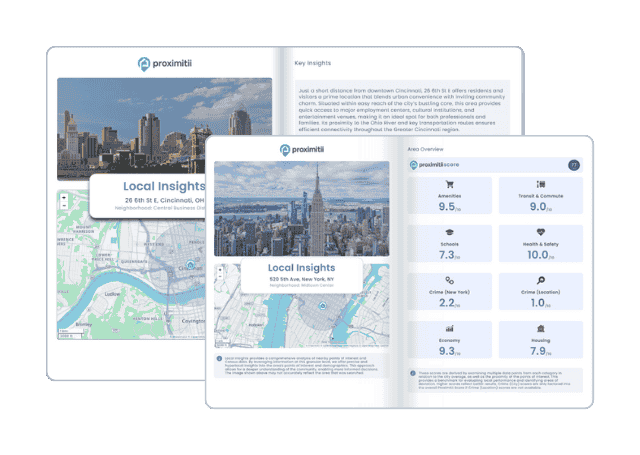
Why stop at city-to-city? With Local Insights, you can compare neighborhoods, zip codes, or even exact addresses. Access 300+ hyperlocal data points—from schools and crime to housing and amenities—to see which area is the better fit.

| Item | Vancouver | Washington | National |
| Law enforcement employees (officers & civilians) | 200 | 8,169 | 558,732 |
| Police officers & civilians /1000 residents | 1.2 | 2.2 | 3.3 |
| State | Total offenders | Washington /100K | National /100K |
| Washington | 6,688 | 107 | 266 |
| City | Population | Violent crime/100k people | Property crime/100k people | Total crime/100k people |
| Maywood Park, OR | 1,256 | 46 | 335 | 382 |
| Warren, OR | 1,923 | 46 | 335 | 382 |
| Duluth, WA | 1,276 | 46 | 346 | 392 |
| Lewisville, WA | 2,223 | 51 | 387 | 438 |
| Meadow Glade, WA | 2,850 | 54 | 406 | 460 |
| Venersborg, WA | 4,092 | 68 | 517 | 586 |
| Fern Prairie, WA | 2,040 | 82 | 622 | 704 |
| Vancouver, WA | 188,837 | 582 | 3,407 | 3,990 |
| City | Population | Violent crime/100k people | Property crime/100k people | Total crime/100k people |
| Worcester, MA | 189,035 | 16 | 0 | 16 |
| Brownsville, TX | 189,413 | 456 | 1,942 | 2,398 |
| Fort Lauderdale, FL | 187,807 | 144 | 767 | 911 |
| Chattanooga, TN | 187,734 | 824 | 3,942 | 4,766 |
| Sioux Falls, SD | 185,812 | 527 | 2,915 | 3,442 |
| Vancouver, WA | 188,837 | 582 | 3,407 | 3,990 |

 Here are the best places to live in Washington
 Safest Cities In The US
 These are the largest cities in Washington
 These are the 10 cheapest cities in Washington