
| Index | Franklin | Tennessee | National |
| Cost of living | 132 | 92 | 100 |
| Groceries | 96 | 98 | 100 |
| Health care | 97 | 97 | 100 |
| Housing | 216 | 80 | 100 |
| Transportation | 101 | 97 | 100 |
| Utilities | 97 | 98 | 100 |
| Lifestyle & Entertainment | 92 | 97 | 100 |
| Household Items | 97 | 98 | 100 |
| Education & Childcare | 93 | 97 | 100 |

Understanding the cost of living in Franklin can help future residents assess whether their current financial situation aligns with the expenses they will encounter. It enables them to plan for potential changes in their budget and lifestyle. The Franklin cost of living index is 132, which is 32% higher than the national average. The cost of living index is calculated by taking into account multiple categories, which encompass both the cost of everyday expenditures and larger expenses as well.
If you prioritize affordability when seeking a new place to live, Franklin may not be your ideal choice, as it ranks among the most expensive locations in the entire United States. A very small amount of areas exhibit a cost of living at least 20% higher than the national average, and unfortunately, Franklin falls into this category, which may not align with your preferences for a budget-friendly living environment.
Housing costs are a very significant part of the Franklin cost of living index and generally encompass a large percentage of take-home income. Unfortunately, in this area, the housing costs for both homes and rentals were 116.4% more than the average city. This includes things like home and rent prices, mortgage rates and insurance.
The most insightful perspective on a city comes from its residents. We recently surveyed 15 locals to gauge their perception of the cost of living in Franklin. The feedback revealed that 47% of respondents found the cost of living to be reasonable, with prices on the decline, while 53% regarded it as notably expensive with prices that continue to rise.
Is Franklin an affordable place to live? It's a good question and one that you might want to ask when considering any new city, as affordability can play a huge role in the decision making process. The cost of living index (which we covered above), as well as housing costs and income levels play a vital role in determining the affordability of an area. The median home price in Franklin is 140.8% higher than the national average, while the average monthly rent prices are 59.3% higher than average. The affordability of any location can also be influenced by median income levels. Franklin has a median household income of $147,192, which is 81% higher than the national average.
Groceries: The costs associated with groceries have witnessed substantial increases over the past 2-3 years. In select markets, food prices have escalated by more than 20% during this timeframe, whereas others have seen more restrained upticks. The variances in food expenses can exert a considerable influence on the overall cost of living in a given locale. In Franklin, the groceries index is 3.8% lower than the national average.
Urbanization: Urban areas with extensive amenities and job opportunities tend to have a higher cost of living due to increased demand for services and relocation, resulting in higher home prices and higher rents. Less densely populated rural areas, or areas with less demand tend to have fewer amenities and slower job growth, which results in a lower cost of living.
Taxes: Cities that enforce higher taxes, covering both sales taxes and income taxes, can be a factor contributing to a higher cost of living. Paying more in taxes for everyday essentials like clothing and food inevitably leads to higher expenses. A higher income tax rate can further contribute to an overall elevated cost of living. In Franklin, the baseline sales tax rate begins at 7%, and income tax rates start at 0%.
The Franklin cost of living data displayed above uses a U.S. average baseline of 100 to provide a practical way to compare living expenses across cities. Housing estimates incorporate U.S. Census home price and rental data, while all other values are generated using AI-assisted models based on everyday expense expectations, regional pricing trends, climate, transportation patterns, and local economic conditions. These values are designed for directional city-to-city comparisons.

| Cost of living index | |
| Groceries index | |
| Health care index | |
| Housing index | |
| Transportation index | |
| Utilities index | |
| Lifestyle index | |
| Household index | |
| Educare index |
| Median Income | Per Year | Per Month | Max Budget (28% DTI) | Max Budget (36% DTI) |
| Owners | $178,484 | $14,874 | $4,164 | $5,355 |
| Renters | $105,399 | $8,783 | $2,459 | $3,162 |
| State | General Sales Tax | With Max Surtax |
| Tennessee | 7% | 9.75% |
| State | Income Tax (Low) | Income Tax (High) |
| Tennessee | 0% | 0% |
| City | Population | Cost of Living Index | National Avg. |
| Eagleville, TN | 979 | 105 | 4.8% |
| Kingston Springs, TN | 2,809 | 108 | 7.7% |
| Pegram, TN | 2,570 | 111 | 10.6% |
| Berry Hill, TN | 1,260 | 116 | 16.5% |
| Spring Hill, TN | 42,910 | 116 | 15.6% |
| Franklin, TN | 83,480 | 132 | 32.3% |
| City | Population | Cost of Living Index | National Avg. |
| San Ramon, CA | 83,423 | 220 | 120.1% |
| Auburn, WA | 83,617 | 131 | 31.2% |
| Brooklyn Park, MN | 83,324 | 107 | 7.3% |
| Silver Spring, MD | 83,266 | 154 | 53.9% |
| Lynchburg, VA | 83,703 | 100 | 0.2% |
| Franklin, TN | 83,480 | 132 | 32.3% |

 Here are the best places to live in Tennessee
 Check out the 10 safest cities in Tennessee
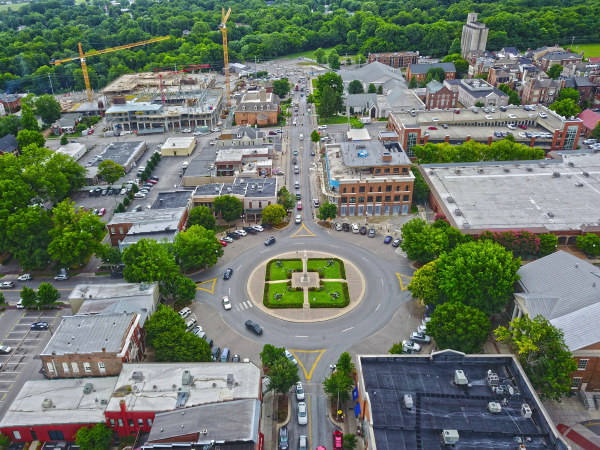 See the best places to live in Franklin
 Check out the 10 most dangerous cities in Tennessee