
| Statistic | Reportedincidents | /100k people | Abington/100k people | Massachusetts/100k people | National/100k people |
| Total crime | 275 | n/a (estimate) | 1,593 | 1,427 | 2,119 |
| Murder | 1 | n/a | 5.8 | 1.8 | 5.0 |
| Rape | 6 | n/a | 34.8 | 27.6 | 37.5 |
| Robbery | 4 | n/a | 23.2 | 36.0 | 60.6 |
| Assault | 29 | n/a | 168.0 | 249.3 | 256.1 |
| Violent crime | 40 | n/a (estimate) | 232 | 315 | 359 |
| Burglary | 14 | n/a | 81.1 | 130.3 | 229.2 |
| Theft | 200 | n/a | 1,158.7 | 876.3 | 1,272.1 |
| Vehicle theft | 21 | n/a | 121.7 | 105.5 | 258.8 |
| Property crime | 235 | n/a (estimate) | 1,361 | 1,112 | 1,760 |
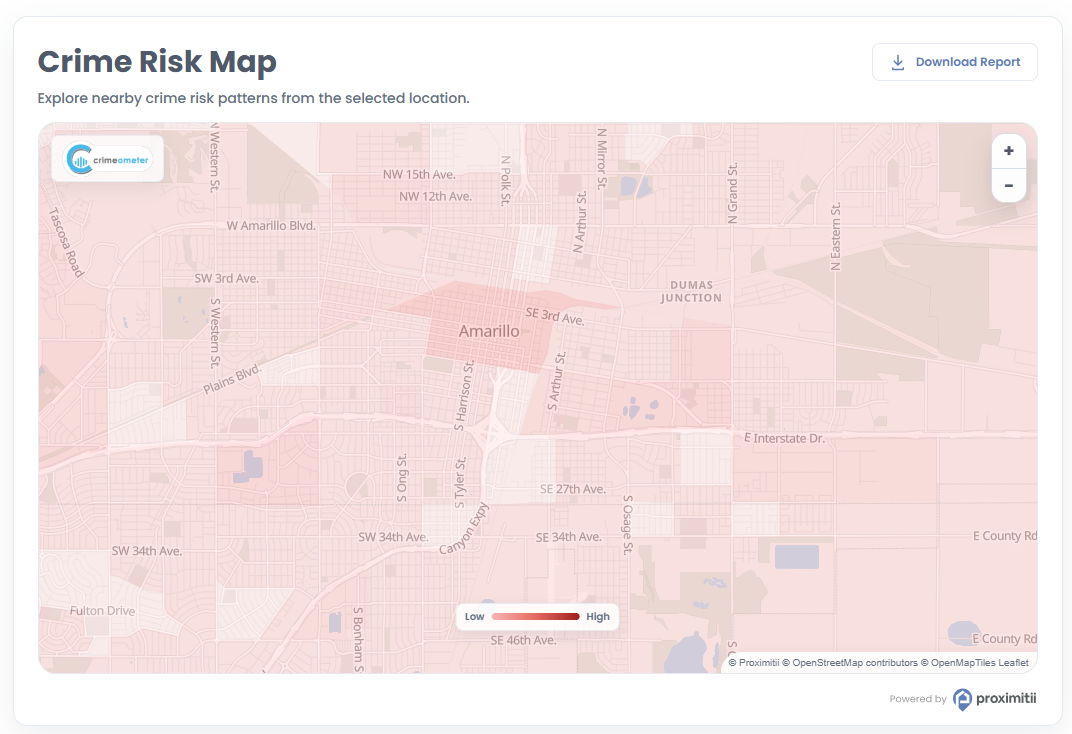
The Abington crime rates are 24.8% lower than the national average. There are two main categories of crime - violent crime and property crime. Violent crime consists of murder, rape, robbery and assault, while property crimes include burglary, theft and vehicle theft. There were a total of 40 violent crimes in Abington (232 per 100,000 people), which is 35.5% lower than the national average and there were a total of 235 property crimes (1361 per 100,000 residents) which is 22.7% lower than average.
What do the local residents think about crime in Abington? Well, based on a recent survey of 7 people (conducted by AreaVibes), 71% of Abington residents said that there was virtually no crime and that they felt safe walking at night. Another 29% of respondents said that there was too much crime in the area and they did not feel safe walking alone at night.
To get a feel for the safety of living in Abington, it's essential to analyze both the overall crime rate and the daily incident count. Abington presents a total crime rate that is 25% lower than the national average per 100,000 residents. Consequently, Abington experiences an average of 0.75 daily crimes, comprising 0.11 violent incidents and 0.64 property-related offenses. This evaluation offers a comprehensive understanding of the safety landscape, aiding individuals in making informed decisions when considering relocation.
Year-over-year crime data allows residents and potential residents to assess the crime in Abington. A decrease in crime rates may indicate improving safety, while an increase could raise concerns. The year-over-year crime rate in Abington has increased by 63.7%. Violent crimes have increased by 37.9%, while property crimes have increased by 69.1%. By comparing crime rates from one year to the next, authorities and communities can identify trends and patterns in criminal activity. This helps in understanding whether crime is increasing, decreasing, or remaining stable over time.
Limited employment opportunities or a prevalence of low-wage jobs can result in higher rates of unemployment and underemployment. Regions where individuals grapple with joblessness or meager wages may exhibit greater vulnerability to an uptick in crime due to financial instability. While areas that have strong employment rates, often will see a reduction in overall crime. Abington, for instance, reports an unemployment rate of 4.8%, which differs from the national average of 4.9%.
The level of education within a community can impact crime rates. Higher educational attainment often correlates with lower crime rates, as it provides individuals with better job opportunities and alternatives to criminal behavior. While lower educational achievement rates tend to lead to higher crime rates. In Abington, 93.4% of people have completed high school, while 83% of people have completed high school nationally.
The impact of law enforcement and community policing efforts plays a crucial role in shaping crime rates in any city. A robust and cooperative bond between law enforcement and the community can serve as a deterrent to criminal activities, enhancing overall safety. In Abington, the ratio of police officers and civilians per 1,000 residents stands at 1.6, differing from the national average of 3.25. Effective law enforcement hinges not solely on officer numbers but also on the manner in which they interact and collaborate with the community. Building trust and cooperation are central tenets of community policing, amplifying its influence on crime prevention.

| Item | Abington | Massachusetts | National |
| Law enforcement employees (officers & civilians) | 26 | 11,659 | 558,732 |
| Police officers & civilians /1000 residents | 1.6 | 2.2 | 3.3 |
| State | Total offenders | Massachusetts /100K | National /100K |
| Massachusetts | 4,551 | 72 | 266 |
| City | Population | Violent crime/100k people | Property crime/100k people | Total crime/100k people |
| Scituate, MA | 6,062 | 41 | 117 | 157 |
| Marshfield Hills, MA | 2,484 | 49 | 174 | 224 |
| South Duxbury, MA | 3,467 | 60 | 212 | 272 |
| Bridgewater, MA | 8,837 | 75 | 200 | 275 |
| Sharon, MA | 6,394 | 37 | 240 | 277 |
| Marshfield, MA | 5,296 | 145 | 168 | 313 |
| Hanson, MA | 1,932 | 121 | 204 | 325 |
| Abington, MA | 17,033 | 232 | 1,361 | 1,593 |
| City | Population | Violent crime/100k people | Property crime/100k people | Total crime/100k people |
| North Myrtle Beach, SC | 17,032 | 361 | 3,223 | 3,583 |
| Opelousas, LA | 17,032 | 1,369 | 5,019 | 6,388 |
| Pendleton, OR | 17,038 | 409 | 2,681 | 3,090 |
| Truckee, CA | 17,023 | 374 | 648 | 1,021 |
| Ham Lake, MN | 17,046 | 116 | 724 | 840 |
| Abington, MA | 17,033 | 232 | 1,361 | 1,593 |

 Here are the best places to live in Massachusetts
 Safest Cities In The US
 Safest States In The US
 Most Dangerous Cities In The US