
| Statistic | Reportedincidents | /100k people | Taylor/100k people | Michigan/100k people | National/100k people |
| Total crime | 1,730 | n/a (estimate) | 2,855 | 1,813 | 2,119 |
| Murder | 3 | n/a | 5.0 | 5.2 | 5.0 |
| Rape | 30 | n/a | 49.5 | 56.5 | 37.5 |
| Robbery | 46 | n/a | 75.9 | 31.3 | 60.6 |
| Assault | 429 | n/a | 707.9 | 341.3 | 256.1 |
| Violent crime | 508 | n/a (estimate) | 838 | 434 | 359 |
| Burglary | 180 | n/a | 297.0 | 184.2 | 229.2 |
| Theft | 831 | n/a | 1,371.2 | 963.6 | 1,272.1 |
| Vehicle theft | 211 | n/a | 348.2 | 231.0 | 258.8 |
| Property crime | 1,222 | n/a (estimate) | 2,016 | 1,379 | 1,760 |

Crime can be categorized into two primary types: violent and property crimes. Violent crimes encompass offenses such as murder, rape, robbery, and assault, whereas property crimes involve acts like burglary, theft, and vehicle theft. The overall crime rate in Taylor is 34.7% higher than the national average. Specifically, there were 508 violent crimes reported in Taylor, equivalent to 838 per 100,000 residents, which is higher than the national average by 133.4%. Additionally, Taylor recorded 1222 property crimes, amounting to 2016 per 100,000 people, higher than the national average by 14.6%.
Taylor ranks among the most perilous cities in the United States, bearing a violent crime rate of 838 per 100,000 people, positioning it within the lowest 10% of all U.S. cities reporting crime statistics. The odds of falling victim to violent crime in Taylor stand at 1 in every 120 residents, emphasizing the pressing need for enhanced safety measures and community engagement to address this significant concern.
Taylor exhibits a property crime rate closely aligned with the national average. There were 2016 reported property crimes, which closely matches the national average of 1760 per 100,000 people. Consequently, the area's safety profile mirrors that of an average city, neither notably safer nor more dangerous than the norm. This balance suggests that Taylor maintains a consistent approach to property crime prevention in line with the broader national landscape.
AreaVibes surveyed 20 local residents in Taylor to gauge the safety of the area. Based on the results, 40% of people answered that there was very little crime in Taylor and that they felt very comfortable walking alone at night. Another 60% of people responded that there was far too much crime and they would be hesitant to walk the streets alone at night. Keep in mind that the opinions of residents may vary depending on which area they live in.
Is Taylor a safe place to live? While the answer may not be straightforward due to variations in safety levels across the city, gaining an understanding of the overall crime rate can prove to be advantageous. In general, Taylor has a crime rate that is higher than the national average by 35%. Breaking this down on a daily basis, it translates to 4.74 daily incidents, encompassing 1.39 violent crimes and 3.35 property crimes. Evaluating these statistics can aid in forming a more informed perspective on the safety of Taylor as a potential place to call home.
Year-over-year crime rates in Taylor has increased by 12.6% in the last reported crime report. Comparing crime rates from one year to another offers some insight into whether or not Taylor is becoming a safer or more dangerous place to live. Crime rates are categorized by violent and property crime. Year-over-year violent crime has increased by 56.8%, while property crime has increased by 0.8%. This analysis equips individuals with crucial information for making informed decisions about living in Taylor.
In areas where employment options are limited or where a significant proportion of jobs offer meager wages, the likelihood of heightened unemployment and homelessness increases. Regions facing challenges related to unemployment or inadequate income may become more vulnerable to a surge in crime stemming from economic instability. While low unemployment rates tend to lead to reduced crime in most areas. Taylor currently has an unemployment rate of 4%, contrasting with the national average of 4.9%. This could be one of many factors that could contribute to a higher or lower crime rate.
High population density areas are often large urban centers with diverse economic opportunities. These areas can exacerbate income inequality, with pockets of poverty existing alongside affluence. Areas with economic disparities may experience higher property crimes and, in some cases, violent crimes. On the other hand, areas with low population density tend to see lower Taylor crime rates. The population density in Taylor is 2691.1 people per square mile, while the national average is 90.6 people per square mile.
Escalating cost of living expenses, encompassing exorbitant housing costs, grocery and healthcare expenditures, can induce financial strain on individuals and families, particularly those with limited financial resources. Such economic stress may propel individuals towards criminal activities, including theft or burglary, as a means of addressing their financial hardships. Conversely, cities characterized by a lower cost of living may alleviate economic pressures, potentially resulting in a reduced crime rate. In Taylor, the cost of living is 8.53% lower than the national average, reflecting a more affordable economic environment that could contribute to a decrease in crime levels.
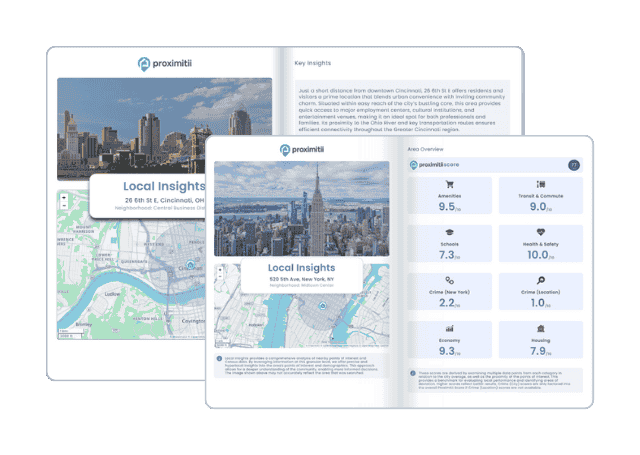
Why stop at city-to-city? With Local Insights, you can compare neighborhoods, zip codes, or even exact addresses. Access 300+ hyperlocal data points—from schools and crime to housing and amenities—to see which area is the better fit.

| Item | Taylor | Michigan | National |
| Law enforcement employees (officers & civilians) | 88 | 10,515 | 558,732 |
| Police officers & civilians /1000 residents | 1.4 | 2.1 | 3.3 |
| State | Total offenders | Michigan /100K | National /100K |
| Michigan | 40,460 | 414 | 266 |
| City | Population | Violent crime/100k people | Property crime/100k people | Total crime/100k people |
| South Rockwood, MI | 1,977 | 116 | 370 | 486 |
| Rockwood, MI | 3,275 | 129 | 419 | 548 |
| Trenton, MI | 18,684 | 34 | 542 | 576 |
| Northville, MI | 6,168 | 17 | 607 | 624 |
| Carleton, MI | 2,527 | 179 | 570 | 749 |
| Gibraltar, MI | 4,653 | 103 | 662 | 765 |
| Plymouth, MI | 9,363 | 55 | 968 | 1,023 |
| Taylor, MI | 63,527 | 838 | 2,016 | 2,855 |
| City | Population | Violent crime/100k people | Property crime/100k people | Total crime/100k people |
| Burnsville, MN | 63,628 | 210 | 1,889 | 2,098 |
| National City, CA | 63,422 | 696 | 1,939 | 2,635 |
| Spring, TX | 63,363 | 406 | 2,129 | 2,535 |
| Council Bluffs, IA | 63,786 | 421 | 2,452 | 2,873 |
| Palm Harbor, FL | 63,813 | 178 | 948 | 1,126 |
| Taylor, MI | 63,527 | 838 | 2,016 | 2,855 |

 Here are the best places to live in Michigan
 Safest Cities In The US
 Safest States In The US
 Most Dangerous States In The US