
| Statistic | Reportedincidents | /100k people | Salt Lake City/100k people | Utah/100k people | National/100k people |
| Total crime | 12,897 | n/a (estimate) | 6,064 | 1,639 | 2,119 |
| Murder | 11 | n/a | 5.2 | 2.6 | 5.0 |
| Rape | 337 | n/a | 158.5 | 58.0 | 37.5 |
| Robbery | 390 | n/a | 183.4 | 27.3 | 60.6 |
| Assault | 1,100 | n/a | 517.2 | 141.7 | 256.1 |
| Violent crime | 1,838 | n/a (estimate) | 864 | 230 | 359 |
| Burglary | 1,172 | n/a | 551.1 | 146.6 | 229.2 |
| Theft | 8,900 | n/a | 4,184.8 | 1,145.8 | 1,272.1 |
| Vehicle theft | 987 | n/a | 464.1 | 116.5 | 258.8 |
| Property crime | 11,059 | n/a (estimate) | 5,200 | 1,409 | 1,760 |
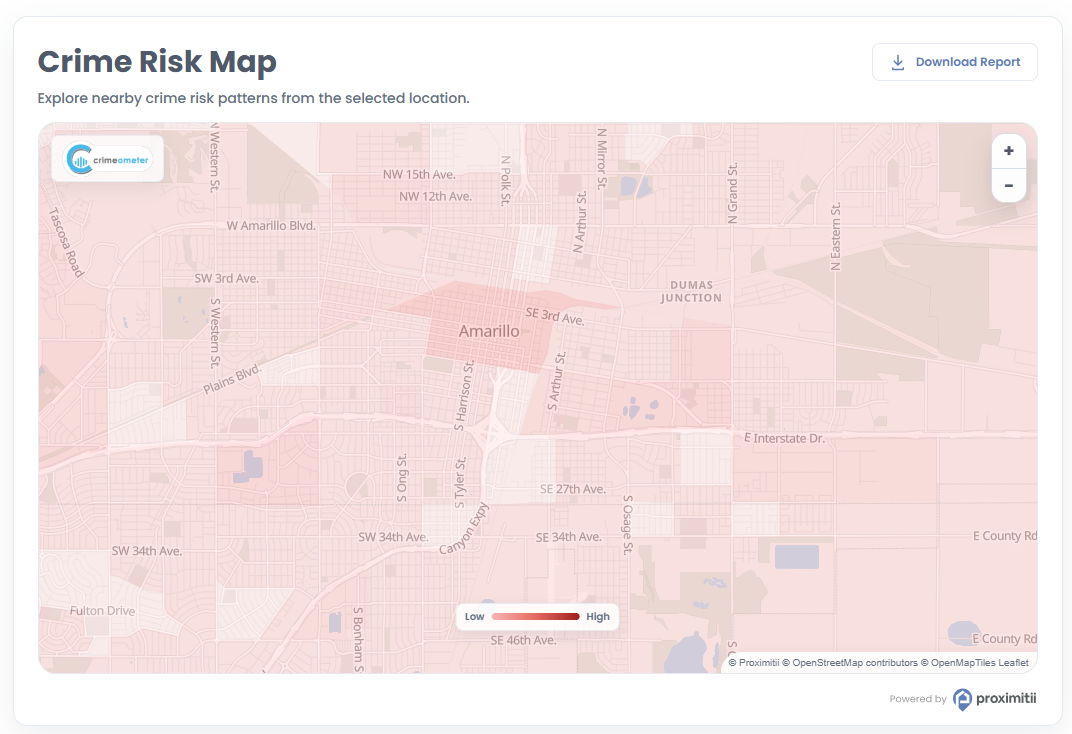
When we analyze the latest crime report, the Salt Lake City crime rate is 186.2% higher than the national average. These incidents are classified into two primary categories: violent and property crimes. Violent crimes include assault, robbery, rape and murder. Whereas property crimes encompass theft, vehicle theft and burglary. In the case of Salt Lake City, there were 1838 reported violent crimes, equivalent to 864 per 100,000 individuals, 140.7% higher than the national average. Additionally, Salt Lake City recorded 11059 property crimes, amounting to 5200 per 100,000 residents, 195.4% higher than the U.S. average.
With a crime rate of 6064 per 100,000 residents, Salt Lake City has a crime rate that is 186.15% higher than the national average. This results in one of the highest total crime rates in the entire country. This does not necessarily mean that the entire city is unsafe. As with any area, there are some pockets in Salt Lake City that are much safer than others. A little research will go a long way in determining which areas could potentially offer a safer living environment.
With a violent crime rate of 864 crimes per 100,000 residents, Salt Lake City is known as one of the most dangerous cities in the United States. In fact, Salt Lake City ranks in the bottom 10% of all cities that reported violent crime last year. This translates into a 1 in 116 chance of becoming a victim of a violent crime. Keep in mind that some areas will be safer than others and this doesn't necessarily mean that the entire city suffers from a high violent crime rate.
Salt Lake City reports one of the nation's highest property crime rates, with 5200 incidents per 100,000 people, positioning it among the worst 10% of American cities reporting crime. This unfortunate statistic translates to a 1 in 20 chance of falling victim to property crime in Salt Lake City, significantly surpassing the national average. These figures underscore the city's challenges in combating property-related offenses, necessitating a concerted effort to enhance security and community safety.
Recently, vehicle thefts have seen an upward trend across the United States, and Salt Lake City ranks among the cities with the highest vehicle theft rates in the country. Last year, there were 987 vehicle thefts, amounting to 464 stolen vehicles per 100,000 residents. This places Salt Lake City within the worst 10% of all cities, indicating that 90% of cities fare better in terms of vehicle theft rates. The likelihood of your vehicle being stolen stands at 1 in 216.
AreaVibes surveyed 169 local residents in Salt Lake City to gauge the safety of the area. Based on the results, 43% of people answered that there was very little crime in Salt Lake City and that they felt very comfortable walking alone at night. Another 57% of people responded that there was far too much crime and they would be hesitant to walk the streets alone at night. Keep in mind that the opinions of residents may vary depending on which area they live in.
Before you decide to relocate, it’s always good to ask yourself “Is Salt Lake City a safe place to live?” Although the answer might not be that simple, as some areas are safer than others, getting a good feel for the overall rate of crime can definitely be helpful. Overall, the Salt Lake City crime rate is 186% higher than the national average. If we break that down daily, that translates into 35.33 crimes per day - 5.04 violent crimes and 30.3 property crimes.
Year-over-year crime rates in Salt Lake City has decreased by 19.8% in the last reported crime report. Comparing crime rates from one year to another offers some insight into whether or not Salt Lake City is becoming a safer or more dangerous place to live. Crime rates are categorized by violent and property crime. Year-over-year violent crime has decreased by 7.9%, while property crime has decreased by 21.5%. This analysis equips individuals with crucial information for making informed decisions about living in Salt Lake City.
The Salt Lake City region comprises an array of over 19 distinct neighborhoods, each characterized by its unique crime rate influenced by factors including location and socioeconomic conditions. Typically, neighborhoods situated near the city center or downtown core exhibit higher crime rates owing to their higher population density. Conversely, neighborhoods on the city's outskirts tend to boast lower population density, along with reduced unemployment and poverty rates, contributing to a safer environment. Among the secure neighborhoods in Salt Lake City are exemplars such as Greater Avenues, Wasatch Hollow and Yalecrest, whereas Downtown, Poplar Grove and Glendale grapple with an above-average reported crime rate. This underscores the necessity for thorough evaluation across multiple neighborhoods, given their notable variations in crime rates.
In Salt Lake City, the current unemployment rate stands at 2.9%, diverging from the national average of 4.9%. The availability of job opportunities is a pivotal factor influencing unemployment and underemployment rates. Communities where individuals contend with limited employment prospects or a preponderance of low-wage positions may witness elevated rates of joblessness and income inadequacy, which can contribute to heightened crime levels driven by financial insecurity. Conversely, areas characterized by robust employment rates often experience a reduction in overall Salt Lake City crime rates.
In Salt Lake City, the ratio of police officers and civilians stands at 3.03 per 1,000 residents, contrasting with the national average of 3.25. This discrepancy highlights the potential impact of law enforcement and community policing on crime rates. The strength of their collaboration can serve as a deterrent to criminal behavior, fostering a safer environment. Effective law enforcement leans heavily on community policing strategies that prioritize the cultivation of trust and cooperation between police and residents. It's essential to recognize that the effectiveness of these efforts isn't solely tied to the quantity of officers but also hinges on the quality of their engagement with the community.
Elevated rental costs can generate economic strain for both individuals and families, particularly those with restricted financial means. When a substantial proportion of one's income is allocated to housing costs, it often leaves limited resources for fulfilling other crucial necessities such as groceries, healthcare and education. This financial pressure can fuel desperation, potentially prompting individuals to resort to criminal actions, including theft or fraud, as a means of coping with their financial hardships. In Salt Lake City, the average monthly rent stands at $1,593, while the national average is $1,444 per month.

| Item | Salt Lake City | Utah | National |
| Law enforcement employees (officers & civilians) | 583 | 3,469 | 558,732 |
| Police officers & civilians /1000 residents | 3.0 | 2.4 | 3.3 |
| State | Total offenders | Utah /100K | National /100K |
| Utah | 8,736 | 362 | 266 |
| City | Population | Violent crime/100k people | Property crime/100k people | Total crime/100k people |
| Emigration Canyon, UT | 1,640 | 32 | 198 | 230 |
| Granite, UT | 816 | 93 | 569 | 662 |
| Alta, UT | 409 | 93 | 569 | 662 |
| Holladay, UT | 31,564 | 99 | 609 | 708 |
| Millcreek, UT | 62,982 | 106 | 648 | 754 |
| Sandy, UT | 98,208 | 106 | 648 | 754 |
| Bountiful, UT | 45,323 | 133 | 813 | 946 |
| Salt Lake City, UT | 207,784 | 864 | 5,200 | 6,064 |
| City | Population | Violent crime/100k people | Property crime/100k people | Total crime/100k people |
| Huntsville, AL | 207,126 | 483 | 2,388 | 2,871 |
| Aurora, IL | 206,020 | 266 | 1,252 | 1,518 |
| Sunrise Manor, NV | 205,701 | 618 | 3,380 | 3,998 |
| Amarillo, TX | 205,514 | 691 | 2,656 | 3,346 |
| Yonkers, NY | 204,945 | 312 | 1,015 | 1,327 |
| Salt Lake City, UT | 207,784 | 864 | 5,200 | 6,064 |

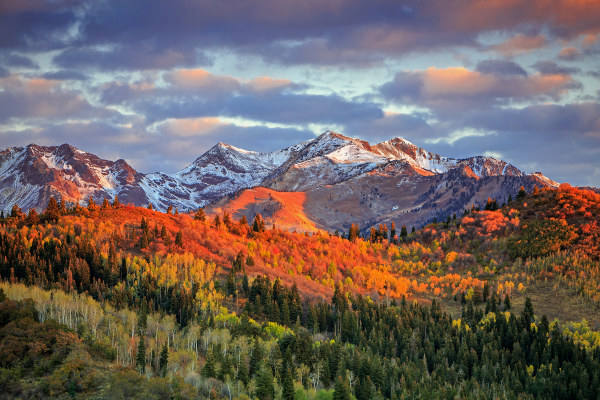 Here are the best places to live in Utah
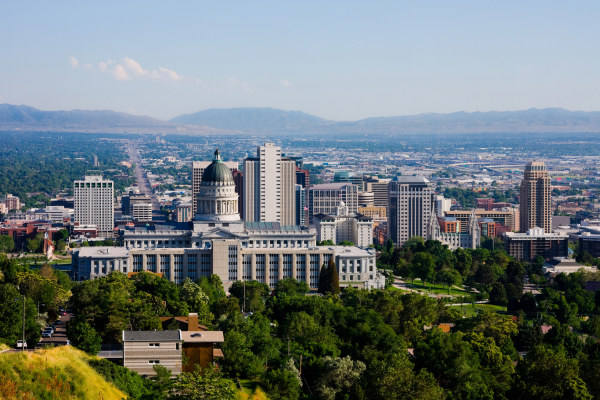 See the best places to live in Salt Lake City
 Check out the 10 safest cities in Utah
 Check out the 10 most dangerous cities in Utah