
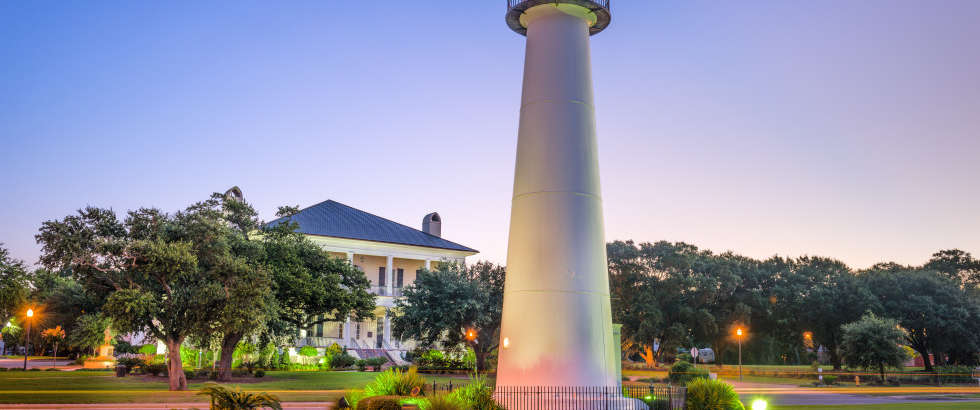
Mississippi, known for its rich musical heritage and southern hospitality, is a state with a strong sense of community and history. With a population of approximately 3 million, it ranks as the 34th most populated state in the U.S. Mississippi has experienced moderate population growth, reflecting its appealing living conditions and economic opportunities. Bordered by Tennessee to the north, Alabama to the east, the Gulf of Mexico to the south, and Louisiana and Arkansas to the west, Mississippi offers a variety of living environments across its roughly 300 cities and towns.
Living in Mississippi provides residents with numerous advantages, including a low cost of living, a mild climate, and a strong sense of community. The state's low population density allows for spacious living and a slower pace of life, with ample opportunities for outdoor activities and community engagement. Mississippi's economy is diverse, with strengths in agriculture, manufacturing, and tourism. The state's steady population growth supports sustainable development and economic stability. The AreaVibes list of the largest cities in Mississippi, based on data from the United States Census Bureau's American Community Survey, offers a comprehensive overview of Mississippi cities by population, highlighting the state's most significant urban centers.
| Rank | Location | Population | Area KM2 | Median Income | Livability Score |
| 1 | Jackson | 168,127 | 288 | $59,653 | 68 |
| 2 | Gulfport | 73,689 | 144 | $61,023 | 73 |
| 3 | Southaven | 57,133 | 107 | $94,921 | 65 |
| 4 | Hattiesburg | 47,823 | 138 | $53,085 | 79 |
| 5 | Biloxi | 47,008 | 111 | $72,674 | 79 |
| 6 | Olive Branch | 39,759 | 95 | $116,511 | 72 |
| 7 | Tupelo | 39,384 | 167 | $83,001 | 72 |
| 8 | Meridian | 38,491 | 139 | $45,599 | 64 |
| 9 | Greenville | 30,605 | 70 | $43,995 | 57 |
| 10 | Oxford | 28,503 | 43 | $73,497 | 87 |
| 11 | Horn Lake | 28,196 | 42 | $78,534 | 61 |
| 12 | Pearl | 27,352 | 66 | $73,932 | 73 |
| 13 | Madison | 26,675 | 65 | $179,747 | 81 |
| 14 | Starkville | 26,447 | 66 | $52,743 | 69 |
| 15 | Clinton | 25,729 | 108 | $95,605 | 69 |
| 16 | Ridgeland | 25,070 | 55 | $90,367 | 68 |
| 17 | Brandon | 25,016 | 66 | $119,059 | 81 |
| 18 | Columbus | 24,360 | 65 | $51,645 | 60 |
| 19 | Vicksburg | 22,799 | 85 | $51,798 | 63 |
| 20 | Pascagoula | 22,492 | 40 | $61,207 | 70 |
| 21 | Gautier | 19,005 | 78 | $77,471 | 66 |
| 22 | Laurel | 18,971 | 42 | $51,203 | 66 |
| 23 | Ocean Springs | 18,287 | 30 | $90,950 | 86 |
| 24 | Hernando | 16,752 | 67 | $100,121 | 70 |
| 25 | Long Beach | 16,179 | 27 | $91,440 | 69 |
| 26 | Clarksdale | 15,683 | 36 | $46,054 | 61 |
| 27 | Natchez | 15,207 | 41 | $40,424 | 63 |
| 28 | Corinth | 14,869 | 78 | $50,687 | 61 |
| 29 | Greenwood | 14,347 | 32 | $47,723 | 71 |
| 30 | D'Iberville | 14,203 | 18 | $70,934 | 68 |
| 31 | Bay St. Louis | 13,930 | 38 | $66,090 | 71 |
| 32 | Moss Point | 13,734 | 62 | $66,925 | 67 |
| 33 | McComb | 13,253 | 30 | $45,328 | 69 |
| 34 | Grenada | 12,751 | 78 | $46,933 | 67 |
| 35 | Brookhaven | 12,524 | 56 | $46,261 | 66 |
| 36 | Canton | 12,207 | 55 | $47,460 | 60 |
| 37 | Byram | 11,831 | 48 | $99,777 | 69 |
| 38 | Cleveland | 11,812 | 20 | $52,597 | 72 |
| 39 | Picayune | 11,292 | 34 | $46,946 | 76 |
| 40 | Yazoo City | 11,022 | 25 | $37,436 | 53 |
| 41 | West Point | 10,912 | 54 | $44,713 | 56 |
| 42 | Petal | 10,849 | 43 | $86,860 | 73 |
| 43 | Indianola | 9,550 | 22 | $46,742 | 71 |
| 44 | Flowood | 9,500 | 74 | $106,238 | 77 |
| 45 | Gulf Hills | 9,087 | 20 | $80,620 | 71 |
| 46 | New Albany | 9,039 | 47 | $63,348 | 74 |
| 47 | Booneville | 8,772 | 67 | $62,760 | 65 |
| 48 | St. Martin | 8,380 | 11 | $78,118 | 67 |
| 49 | Diamondhead | 8,346 | 26 | $95,138 | 68 |
| 50 | Senatobia | 7,927 | 40 | $84,073 | 64 |
To compile the list of the largest cities in Mississippi, AreaVibes used census data from the United States Census Bureau's American Community Survey (ACS). The American Community Survey releases updated estimates annually, offering a valuable resource for understanding the evolving dynamics within communities. These estimates are crucial for officials, community leaders, businesses, and local residents as they provide insights into demographic, economic, and social changes. By analyzing ACS data, stakeholders can make informed decisions, plan for future developments, and address the needs of their communities effectively. The detailed population information from the ACS helps track trends, allocate resources, and implement policies that enhance the quality of life for all residents.
The map above serves as an excellent tool for discovering the most and least densely populated states across the United States. By highlighting both the states with the highest and lowest population density, it offers a comprehensive view of the nation's demographic landscape. This visual representation allows users to easily compare different regions, making it a valuable resource for anyone considering relocation or investment opportunities. Living in high density states could give you access to the following benefits: additional economic opportunities, enhanced amenities, improved health care, better infrastructure and technological advancement. Less densely poupulated states on the other hand, often have a lower cost of living, reduced traffic, closer-knit communities, abundant natural spaces and lower crime rates.