
| Index | Ellicott City | Maryland | National |
| Cost of living | 155 | 121 | 100 |
| Groceries | 107 | 105 | 100 |
| Health care | 110 | 109 | 100 |
| Housing | 263 | 151 | 100 |
| Transportation | 108 | 109 | 100 |
| Utilities | 111 | 108 | 100 |
| Lifestyle & Entertainment | 112 | 109 | 100 |
| Household Items | 104 | 105 | 100 |
| Education & Childcare | 115 | 112 | 100 |

Knowing the cost of living in Ellicott City allows individuals to create a realistic budget. This helps them understand how their income will cover expenses and whether they need to make financial adjustments. The cost of living in any region can fluctuate due to various factors. To assess the cost of living consistently across different areas, a national average of 100 serves as the basis for the cost of living index. The cost of living in Ellicott City stands at 155, marking it 55% higher than the national average.
If you value affordability in your search for a new place to live, Ellicott City may not be the most suitable option, as it stands out as one of the priciest areas in the entire United States. Only a small fraction of regions have a cost of living that is more than 20% higher than the national average, and regrettably, Ellicott City falls into this category, which may not align with your desire for an affordable place to call home.
Housing costs make up a big chunk of the cost of living in Ellicott City, and they usually eat into a large part of your take-home pay. Unfortunately, in this area, both buying a home and renting one costs 163.4% more than the average city. This includes stuff like home prices, rent, mortgage rates, and insurance.
Is Ellicott City affordable? It's a key consideration when pondering a move, as affordability often shapes your choices. The cost of living index (we discussed it earlier), coupled with housing costs and income levels, serves as the cornerstone for determining a location's affordability. Take Ellicott City, for instance, where the median home price falls 201.5% higher than the national average, and monthly rent rates are 74.4% higher than usual. Additionally, median income levels contribute to the equation, with Ellicott City flaunting a median household income of $197,015, 142.2% higher than the national norm.
Healthcare: Healthcare costs and insurance premiums can fluctuate greatly based on the city or state. Access to healthcare facilities, out-of-pocket expenses for doctor\’s visits, dentist costs, medication costs and specialized care costs can all impact the cost of living. In Ellicott City, the healthcare costs are 9.8% higher than the national average.
Utilities: As with the prices of anything else, utility costs can exhibit significant variations, contingent on factors like climate, energy source availability, geographic location and state regulations. The expenses associated with electricity, water, heating, and waste disposal can fluctuate, either upward or downward, depending on the particular city or state. In Ellicott City, the utilities index registers 11.3% higher than the national average.
Subsidies: Some areas might offer government subsidies or assistance programs that help lower cost of living for residents. These programs can include anything from Medicare, Medicaid, housing subsidies, low-income home energy assistance programs, school lunch programs, supplemental nutrition assistance programs, student loans, electric vehicle tax credits, affordable care act subsidies and crop subsidies. Areas that offer less subsidies, could see an increase in their cost of living.
The Ellicott City cost of living data displayed above uses a U.S. average baseline of 100 to provide a practical way to compare living expenses across cities. Housing estimates incorporate U.S. Census home price and rental data, while all other values are generated using AI-assisted models based on everyday expense expectations, regional pricing trends, climate, transportation patterns, and local economic conditions. These values are designed for directional city-to-city comparisons.

| Cost of living index | |
| Groceries index | |
| Health care index | |
| Housing index | |
| Transportation index | |
| Utilities index | |
| Lifestyle index | |
| Household index | |
| Educare index |
| Median Income | Per Year | Per Month | Max Budget (28% DTI) | Max Budget (36% DTI) |
| Owners | $252,099 | $21,008 | $5,882 | $7,564 |
| Renters | $107,398 | $8,950 | $2,506 | $3,222 |
| State | General Sales Tax | With Max Surtax |
| Maryland | 6% | 6% |
| State | Income Tax (Low) | Income Tax (High) |
| Maryland | 2% | 5.75% |
| City | Population | Cost of Living Index | National Avg. |
| Lansdowne, MD | 8,964 | 104 | 4.0% |
| Baltimore, MD | 621,744 | 108 | 7.9% |
| Woodlawn CDP (Prince George's County), MD | 8,071 | 110 | 9.6% |
| Parkville, MD | 31,074 | 110 | 10.1% |
| Baltimore Highlands, MD | 8,178 | 113 | 13.5% |
| Ellicott City, MD | 75,837 | 155 | 55.4% |
| City | Population | Cost of Living Index | National Avg. |
| Bolingbrook, IL | 76,035 | 110 | 9.6% |
| Bismarck, ND | 75,566 | 106 | 5.6% |
| Schaumburg, IL | 76,160 | 114 | 14.5% |
| Evanston, IL | 75,477 | 131 | 31.4% |
| Appleton, WI | 76,203 | 94 | 5.7% |
| Ellicott City, MD | 75,837 | 155 | 55.4% |

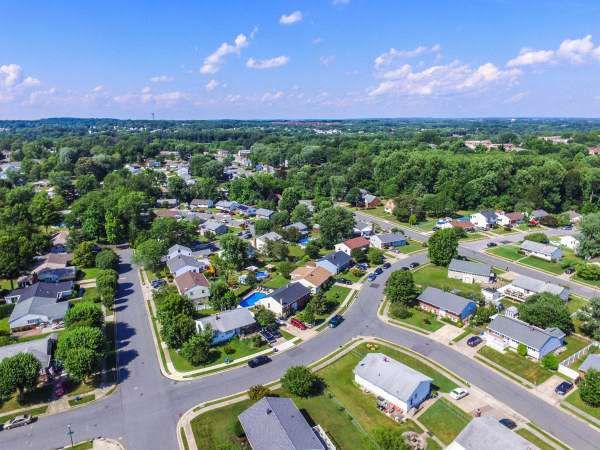 Here are the best places to live in Maryland
 See the best places to live in Ellicott City
 Safest Cities In The US
 Check out the 10 safest cities in Maryland