

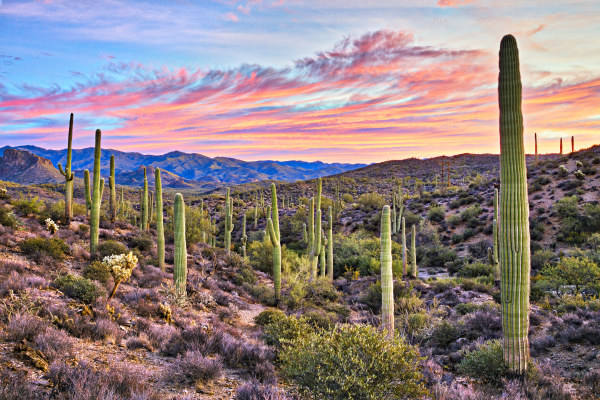
Tucson, AZ, known as 'The Old Pueblo,' offers a unique blend of Southwestern charm and urban amenities. Located in southern Arizona, Tucson is a large city that serves as a major cultural and economic hub. Major nearby cities like Phoenix and Nogales enhance its status as a central point in the region. Tucson's blend of scenic landscapes, cultural festivals, and urban amenities creates a distinctive living experience.
Tucson is home to several iconic landmarks, including the Saguaro National Park, the Arizona-Sonora Desert Museum, and the historic Mission San Xavier del Bac. The city offers a variety of attractions, from the beautiful Sabino Canyon to the bustling Fourth Avenue district, known for its local shops and restaurants. Tucson's dining scene is diverse, offering everything from traditional Mexican cuisine to contemporary fusion dishes.
Annual events such as the Tucson Gem and Mineral Show and the Tucson Festival of Books highlight the city's vibrant cultural scene and provide unique entertainment opportunities for residents and visitors. These events celebrate Tucson's rich cultural heritage and community spirit. Prestigious institutions like the University of Arizona contribute to the city's academic and cultural vibrancy, fostering a thriving intellectual community.
The arts and culture scene in Tucson is dynamic and diverse, with numerous theaters, music venues, and art galleries. The Tucson Symphony Orchestra and the Tucson Museum of Art are just a few of the cultural landmarks that showcase the city's commitment to the arts. Living in Tucson provides ample opportunities to engage with art, music, and history, making it an exciting place to call home.
Tucson’s community is welcoming and diverse, creating a friendly environment for newcomers. The city is home to professional sports teams like FC Tucson (USL) and the Tucson Roadrunners (AHL), providing plenty of excitement for sports fans. Major industries in Tucson include aerospace, defense, and healthcare, with significant employers such as Raytheon and Banner Health driving economic growth. The city has extensive public transit options, including buses and a developing streetcar system, making it easy to navigate the city.
 Commute
The high commute score in this area could imply easy access to public transportation, as well as shorter-than-average commute times to your workplace.
 Cost Of Living
Everyday cost of living expenses like goods and services, housing, groceries, transportation, health care and utilities are far below the national average.
 Housing
Impressive scores in the housing category characterize this area, potentially attributed to the availability of affordable housing, strong appreciation rates and high home values.
 Crime
Crime
Reporting high crime rates per 100,000 people, this area may be perceived as an unsafe place to reside. These statistics encompass both violent and property crime rates.
 Employment
This area earns a low score in the employment category due to low household income levels and high unemployment rates, which may pose challenges in seeking job opportunities.
Tucson is a large city located in the state of Arizona. The city has a population of 564,632 people. The majority of Tucson residents report their race to be White; this is followed by Black and Asian. Additionally, more than a quarter of the population of Tucson are of Hispanic or Latino origin, and 27% of the population also speak Spanish. In Tucson, only 42% of people over the age of fifteen are married. This city could be a good option for singles ready to mingle.
Living in Tucson can be a great experience for anyone relocating to the city. Having said that, in the state of Arizona, there are many incredible places to live, so choose wisely! When searching for a new neighborhood, several factors play a vital role in determining its suitability. Safety should be a top priority, ensuring a secure environment with low crime rates. Proximity to your workplace or school helps minimize commuting time and allows for a better work-life balance. Availability of essential amenities such as parks, coffee shops, restaurants, grocery stores, and healthcare facilities contributes to convenience and well-being. Access to reliable public transportation options facilitates easy commuting and connectivity. Additionally, considering the sense of community and the overall atmosphere that resonates with your lifestyle and preferences fosters a harmonious living experience. Finding the best places to live in Tucson and nearby areas is a much easier task when you can rely on information and data from the livability score, which includes cost of living, health & safety, education, employment, housing and other important metrics.
Tucson, AZ receives 73/100 for its livability score; this results in a ranking of #22 in Arizona and #4,543 in the USA. Based on the scores for each individual category, Tucson has received high marks for amenities (B), cost of living (A) and housing (A+). There are some categories that Tucson ranks poorly for, including: crime (F) and employment (D-). It might be worth taking a closer look to determine why.
Tucson has many conveniently situated amenities and captivating attractions that adds to the continuous enjoyment of your everyday life. Having the assurance of abundant conveniences and a wide array of activities ensures your easy access to nearby grocery stores, restaurants, bars, fitness facilities, coffee shops and exciting entertainment options. This not only simplifies daily routines but also fosters a vibrant and dynamic lifestyle within the community. With a wealth of resources at your fingertips, you can savor the convenience and variety that Tucson has to offer, making it a desirable destination for those seeking both accessibility and enjoyment in their daily lives. Some of the interesting things to do and attractions include: Pima Air & Space Museum, Reid Park Zoo, and Tucson Botanical Gardens.
A healthy real estate market serves as a key economic indicator. It could signify overall local economic strength, stability and reflects consumer confidence in the area. Based on multiple factors including: median home and rental prices, appreciation rates and home affordability, Tucson has received high marks in the housing category. Based on these calculations, the apartment rental and real estate market appears to be very healthy.
Certain items on your wish list like shopping, restaurants, nightlife, parks and proximity to public transportation are all important things to look for. Having said that, perhaps the most important metric to consider when contemplating a move to Tucson is real estate affordability. The median home price for Tucson homes is $292,061, which is 6.2% lower than the Arizona average. If we take a closer look at the affordability of homes in Tucson, we’ll see that the home price to income ratio is 4.3, which is 4.9% higher than the Arizona average.

| Statistic | Tucson | Arizona | National |
| Average one way commute | 22min | 25min | 26min |
| Workers who drive to work | 73.1% | 76.7% | 76.4% |
| Workers who carpool | 10.5% | 10.9% | 9.3% |
| Workers who take public transit | 2.9% | 2.0% | 5.1% |
| Workers who bicycle | 2.2% | 1.0% | 0.6% |
| Workers who walk | 3.0% | 2.0% | 2.8% |
| Working from home | 6.7% | 5.7% | 4.6% |

 Here are the best places to live in Arizona
 Check out the 10 most dangerous cities in Arizona
 Most Dangerous Cities In The US
 Check out the 10 safest cities in Arizona