
| Statistic | Reportedincidents | /100k people | Port Angeles/100k people | Washington/100k people | National/100k people |
| Total crime | 614 | n/a (estimate) | 3,050 | 2,793 | 2,119 |
| Murder | 2 | n/a | 9.9 | 3.8 | 5.0 |
| Rape | 23 | n/a | 114.2 | 37.8 | 37.5 |
| Robbery | 10 | n/a | 49.7 | 67.5 | 60.6 |
| Assault | 79 | n/a | 392.4 | 217.0 | 256.1 |
| Violent crime | 114 | n/a (estimate) | 566 | 326 | 359 |
| Burglary | 103 | n/a | 511.6 | 398.8 | 229.2 |
| Theft | 350 | n/a | 1,738.4 | 1,634.2 | 1,272.1 |
| Vehicle theft | 47 | n/a | 233.4 | 433.5 | 258.8 |
| Property crime | 500 | n/a (estimate) | 2,483 | 2,467 | 1,760 |

Crime can be categorized into two primary types: violent and property crimes. Violent crimes encompass offenses such as murder, rape, robbery, and assault, whereas property crimes involve acts like burglary, theft, and vehicle theft. The overall crime rate in Port Angeles is 43.9% higher than the national average. Specifically, there were 114 violent crimes reported in Port Angeles, equivalent to 566 per 100,000 residents, which is higher than the national average by 57.7%. Additionally, Port Angeles recorded 500 property crimes, amounting to 2483 per 100,000 people, higher than the national average by 41.1%.
AreaVibes has conducted polls asking local residents if they feel safe living in Port Angeles. Based on the results of the surveys (59 responses), 37% of people felt that there was very little crime in Port Angeles and felt safe walking alone at night. While 63% of people felt that it was not a safe place to live and did not feel safe walking alone at night.
Before you decide to relocate, it’s always good to ask yourself “Is Port Angeles a safe place to live?” Although the answer might not be that simple, as some areas are safer than others, getting a good feel for the overall rate of crime can definitely be helpful. Overall, the Port Angeles crime rate is 44% higher than the national average. If we break that down daily, that translates into 1.68 crimes per day - 0.31 violent crimes and 1.37 property crimes.
Year-over-year crime data allows us to analyze short-term trends in crime activity. By comparing crime rates from one year to the next, we can identify patterns and shifts in Port Angeles crime rates. This information can be invaluable for residents looking to make informed decisions on where to live. When comparing the most recent year to the previous year, total crime in Port Angeles has increased by 1.8% year over year. Violent crime has didn't change by 0% and property crime has increased by 2.3%.
Limited employment opportunities or a prevalence of low-wage jobs can result in higher rates of unemployment and underemployment. Regions where individuals grapple with joblessness or meager wages may exhibit greater vulnerability to an uptick in crime due to financial instability. While areas that have strong employment rates, often will see a reduction in overall crime. Port Angeles, for instance, reports an unemployment rate of 3.2%, which differs from the national average of 4.9%.
The educational level within a community can have an influence on crime rates. Typically, higher levels of education are associated with reduced crime rates, as they offer individuals improved employment prospects and alternatives to engaging in criminal activities. Conversely, lower educational attainment tends to correspond with higher crime rates. In Port Angeles, 84.9% of residents have achieved at least a high school diploma, which differs from the national average of 83%.
In Port Angeles, the ratio of police officers and civilians stands at 2.95 per 1,000 residents, contrasting with the national average of 3.25. This discrepancy highlights the potential impact of law enforcement and community policing on crime rates. The strength of their collaboration can serve as a deterrent to criminal behavior, fostering a safer environment. Effective law enforcement leans heavily on community policing strategies that prioritize the cultivation of trust and cooperation between police and residents. It's essential to recognize that the effectiveness of these efforts isn't solely tied to the quantity of officers but also hinges on the quality of their engagement with the community.
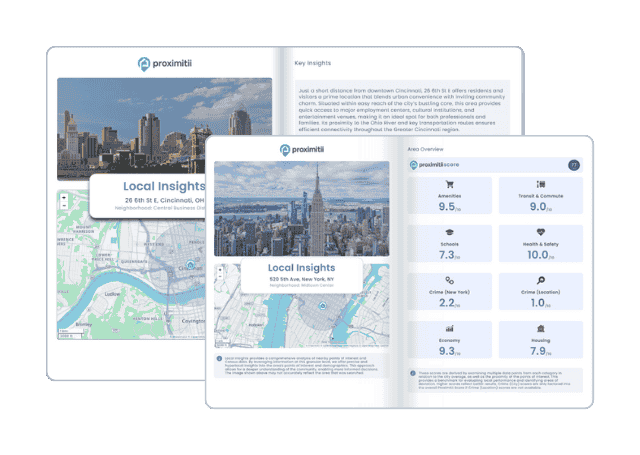
Why stop at city-to-city? With Local Insights, you can compare neighborhoods, zip codes, or even exact addresses. Access 300+ hyperlocal data points—from schools and crime to housing and amenities—to see which area is the better fit.

| Item | Port Angeles | Washington | National |
| Law enforcement employees (officers & civilians) | 57 | 8,169 | 558,732 |
| Police officers & civilians /1000 residents | 2.9 | 2.2 | 3.3 |
| State | Total offenders | Washington /100K | National /100K |
| Washington | 6,688 | 107 | 266 |
| City | Population | Violent crime/100k people | Property crime/100k people | Total crime/100k people |
| Port Angeles East, WA | 3,424 | 187 | 1,414 | 1,601 |
| River Road, WA | 736 | 289 | 2,189 | 2,478 |
| Carlsborg, WA | 900 | 386 | 2,920 | 3,306 |
| Port Angeles, WA | 20,631 | 566 | 2,483 | 3,050 |
| City | Population | Violent crime/100k people | Property crime/100k people | Total crime/100k people |
| Alamo, TX | 20,629 | 897 | 3,492 | 4,389 |
| Portsmouth, OH | 20,625 | 715 | 3,857 | 4,572 |
| East Hemet, CA | 20,622 | 688 | 2,942 | 3,630 |
| Ozark, MO | 20,620 | 81 | 683 | 764 |
| Sand Springs, OK | 20,651 | 243 | 2,762 | 3,005 |
| Port Angeles, WA | 20,631 | 566 | 2,483 | 3,050 |

 Here are the best places to live in Washington
 Most Dangerous States In The US
 These are the largest cities in Washington
 Safest States In The US