
| Statistic | Reportedincidents | /100k people | Minneapolis/100k people | Minnesota/100k people | National/100k people |
| Total crime | 26,680 | n/a (estimate) | 6,303 | 1,863 | 2,119 |
| Murder | 76 | n/a | 18.0 | 2.9 | 5.0 |
| Rape | 377 | n/a | 89.1 | 36.8 | 37.5 |
| Robbery | 1,574 | n/a | 371.9 | 48.9 | 60.6 |
| Assault | 2,884 | n/a | 681.3 | 168.0 | 256.1 |
| Violent crime | 4,911 | n/a (estimate) | 1,160 | 257 | 359 |
| Burglary | 2,619 | n/a | 618.7 | 184.7 | 229.2 |
| Theft | 12,603 | n/a | 2,977.4 | 1,208.5 | 1,272.1 |
| Vehicle theft | 6,547 | n/a | 1,546.7 | 213.1 | 258.8 |
| Property crime | 21,769 | n/a (estimate) | 5,143 | 1,606 | 1,760 |
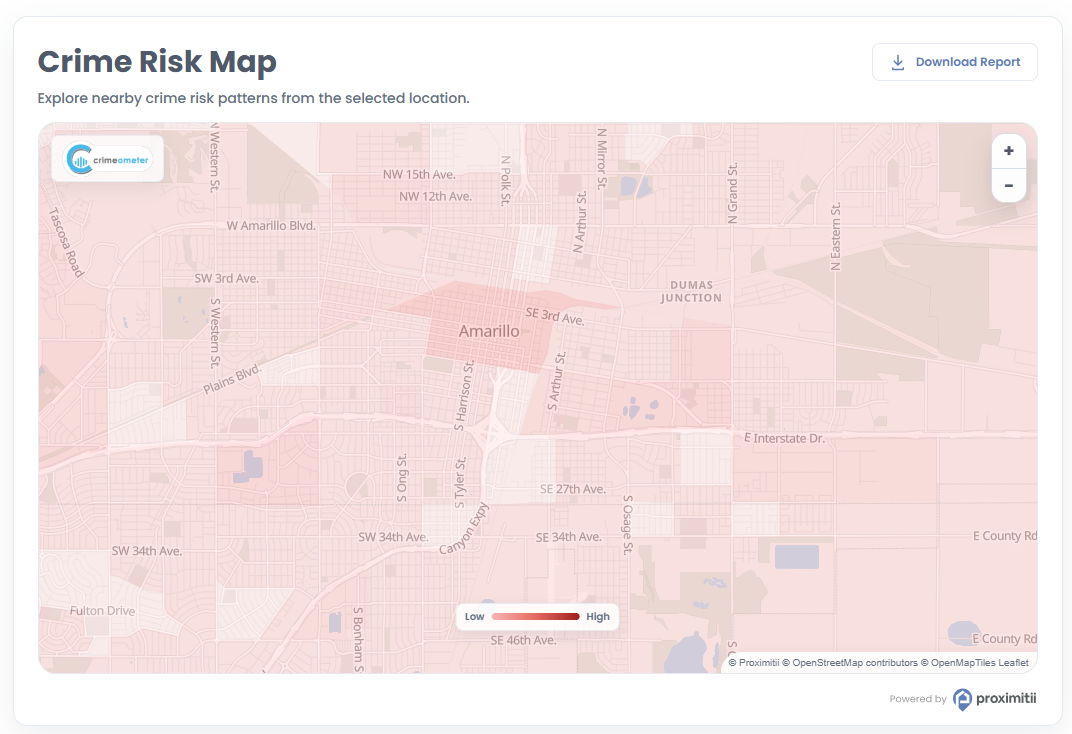

When we analyze the latest crime report, the Minneapolis crime rate is 197.4% higher than the national average. These incidents are classified into two primary categories: violent and property crimes. Violent crimes include assault, robbery, rape and murder. Whereas property crimes encompass theft, vehicle theft and burglary. In the case of Minneapolis, there were 4911 reported violent crimes, equivalent to 1160 per 100,000 individuals, 223.1% higher than the national average. Additionally, Minneapolis recorded 21769 property crimes, amounting to 5143 per 100,000 residents, 192.2% higher than the U.S. average.
Minneapolis has a crime rate of 6303 per 100,000 people, which surpasses the national average by 197.43%, leading to one of the highest total crime rates in the United States. Addressing this issue is vital for improving overall safety and desirability of Minneapolis. Efforts to reduce crime through community engagement, effective law enforcement, and collaborative initiatives are essential to create a more secure and appealing environment for residents and prospective newcomers alike.
Minneapolis ranks among the bottom 10% of all U.S. cities reporting violent crime, earning its reputation as one of the nation's most dangerous areas. With a violent crime rate of 1160 per 100,000 people, Minneapolis is considered one of the most unsafe cities in America. This statistic translates to a 1 in 87 chance of becoming a victim of violent crime in Minneapolis, underscoring the need for increased safety measures and community engagement to improve the city's security.
Despite a steady decline in murder rates in the United States since 1990, recent years have witnessed an unfortunate uptick. Minneapolis stands out with one of the nation's highest murder rates, surpassing other cities that reported crime. In Minneapolis, there were a total of 76 murders, translating to 18 murders per 100,000 people, underscoring the pressing need for continued efforts to address and reduce severe violent crime in the area.
Minneapolis reports one of the nation's highest property crime rates, with 5143 incidents per 100,000 people, positioning it among the worst 10% of American cities reporting crime. This unfortunate statistic translates to a 1 in 20 chance of falling victim to property crime in Minneapolis, significantly surpassing the national average. These figures underscore the city's challenges in combating property-related offenses, necessitating a concerted effort to enhance security and community safety.
Recently, vehicle thefts have seen an upward trend across the United States, and Minneapolis ranks among the cities with the highest vehicle theft rates in the country. Last year, there were 6547 vehicle thefts, amounting to 1547 stolen vehicles per 100,000 residents. This places Minneapolis within the worst 10% of all cities, indicating that 90% of cities fare better in terms of vehicle theft rates. The likelihood of your vehicle being stolen stands at 1 in 65.
What do the local residents think about crime in Minneapolis? Well, based on a recent survey of 363 people (conducted by AreaVibes), 25% of Minneapolis residents said that there was virtually no crime and that they felt safe walking at night. Another 75% of respondents said that there was too much crime in the area and they did not feel safe walking alone at night.
Before you decide to relocate, it’s always good to ask yourself “Is Minneapolis a safe place to live?” Although the answer might not be that simple, as some areas are safer than others, getting a good feel for the overall rate of crime can definitely be helpful. Overall, the Minneapolis crime rate is 197% higher than the national average. If we break that down daily, that translates into 73.1 crimes per day - 13.45 violent crimes and 59.64 property crimes.
Year-over-year crime data allows residents and potential residents to assess the crime in Minneapolis. A decrease in crime rates may indicate improving safety, while an increase could raise concerns. The year-over-year crime rate in Minneapolis has increased by 11.2%. Violent crimes have decreased by 12.6%, while property crimes have increased by 18.5%. By comparing crime rates from one year to the next, authorities and communities can identify trends and patterns in criminal activity. This helps in understanding whether crime is increasing, decreasing, or remaining stable over time.
The Minneapolis area comprises a diverse array of over 82 distinct neighborhoods, each exhibiting a unique crime rate influenced by location and various socioeconomic factors. Generally, neighborhoods situated in proximity to the city center, characterized by higher population density, often report elevated crime rates. Conversely, the outlying neighborhoods, marked by lower population density and reduced unemployment and poverty rates, tend to experience lower crime incidence. Some neighborhoods with lower crime rates include: Armatage, Linden Hills and Ericsson which foster a strong sense of safety. Conversely, neighborhoods such as East Phillips, Midtown Phillips and Central exhibit crime rates above the average, emphasizing the importance of comprehensive research when evaluating different Minneapolis neighborhoods, given their considerable variation in crime rates.
The economic well-being of a city's residents plays a significant role in crime rates. High poverty rates and income inequality can lead to increased crime stats as individuals may resort to illegal activities to meet their basic needs. While lower rates could lead to a lower Minneapolis crime rate. The poverty level in Minneapolis is 18.3%, while the national average is 15.1%.
If employment opportunities are limited or if many jobs offer low wages, it can lead to higher rates of unemployment and underemployment, which could lead to an increase in Minneapolis crime rates. Areas where individuals struggle with unemployment or low wages, may be more susceptible to an increase in criminal activities as a result of financial insecurity. While lower rates of unemployment or a surplus of job opportunities could lead to a decrease in crime as their basic needs are being met. Minneapolis has an unemployment rate of 4.1%, compared to a national average of 4.9%.
High cost of living can lead to economic stress for individuals and families, particularly those with limited financial resources. When people struggle to make ends meet due to high housing costs, healthcare expenses, or other basic necessities, they may be more inclined to engage in criminal activities, such as theft or fraud, as a means of financial survival. On the flipside, cities that have a lower cost of living, could see a reduced crime rate. In Minneapolis, the cost of living is 9.86% higher than the national average.

| Item | Minneapolis | Minnesota | National |
| Law enforcement employees (officers & civilians) | 983 | 7,759 | 558,732 |
| Police officers & civilians /1000 residents | 2.5 | 1.8 | 3.3 |
| State | Total offenders | Minnesota /100K | National /100K |
| Minnesota | 1,283 | 26 | 266 |
| City | Population | Violent crime/100k people | Property crime/100k people | Total crime/100k people |
| Birchwood Village, MN | 1,099 | 36 | 225 | 261 |
| Dellwood, MN | 1,339 | 36 | 225 | 261 |
| Excelsior, MN | 2,486 | 40 | 252 | 292 |
| Long Lake, MN | 1,828 | 46 | 289 | 335 |
| Deephaven, MN | 4,046 | 0 | 352 | 352 |
| North Oaks, MN | 5,400 | 84 | 522 | 606 |
| Lauderdale, MN | 2,705 | 89 | 558 | 648 |
| Minneapolis, MN | 439,880 | 1,160 | 5,143 | 6,303 |
| City | Population | Violent crime/100k people | Property crime/100k people | Total crime/100k people |
| Oakland, CA | 431,366 | 1,925 | 7,230 | 9,156 |
| Virginia Beach, VA | 463,341 | 92 | 1,640 | 1,732 |
| Tulsa, OK | 411,711 | 942 | 3,627 | 4,569 |
| Miami, FL | 470,437 | 473 | 2,995 | 3,468 |
| New Orleans, LA | 406,893 | 362 | 1,596 | 1,958 |
| Minneapolis, MN | 439,880 | 1,160 | 5,143 | 6,303 |

 Here are the best places to live in Minnesota
 Safest States In The US
 Most Dangerous Cities In The US
 Safest Cities In The US