
| Statistic | Reportedincidents | /100k people | Livingston/100k people | Alabama/100k people | National/100k people |
| Total crime | 63 | n/a (estimate) | 2,035 | 1,925 | 2,119 |
| Murder | 1 | n/a | 32.3 | 8.7 | 5.0 |
| Rape | 0 | n/a | 0.0 | 25.8 | 37.5 |
| Robbery | 0 | n/a | 0.0 | 34.0 | 60.6 |
| Assault | 17 | n/a | 549.1 | 291.4 | 256.1 |
| Violent crime | 18 | n/a (estimate) | 581 | 360 | 359 |
| Burglary | 5 | n/a | 161.5 | 243.5 | 229.2 |
| Theft | 34 | n/a | 1,098.2 | 1,148.5 | 1,272.1 |
| Vehicle theft | 6 | n/a | 193.8 | 173.0 | 258.8 |
| Property crime | 45 | n/a (estimate) | 1,453 | 1,565 | 1,760 |
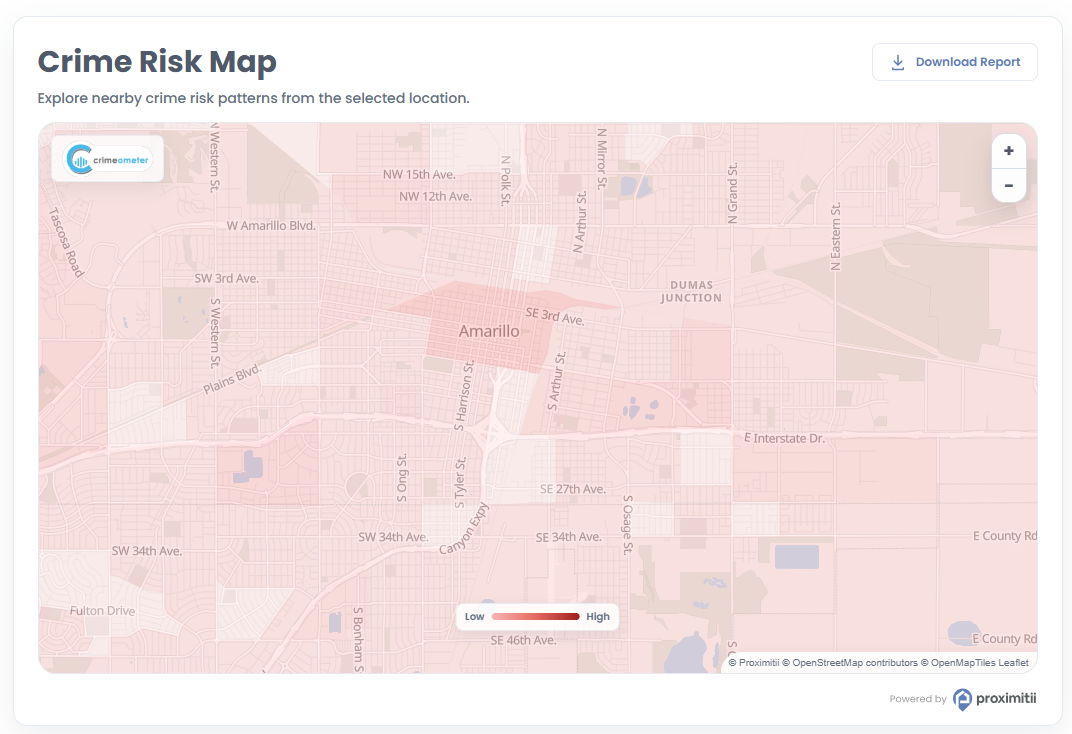

Looking at the most recent crime report, the crime rate in Livingston is 4% lower than the national average. These crimes fall into two primary categories: violent and property. Violent crimes encompass murder, rape, robbery and assault, while property crimes involve theft, vehicle theft and burglary. In Livingston, there were 18 reported violent crimes, equivalent to 581 per 100,000 individuals, 61.9% higher than the national average. Additionally, there were 45 property crimes, amounting to 1453 per 100,000 residents, 17.4% lower than the U.S. average.
When assessing the overall crime rate in Livingston per 100,000 people, it stands in the median range among all cities with reported crime data. Our analysis of total incidents, encompassing both violent and property crimes, underscores the close alignment of reported Livingston crime rates with the national average as reported by other areas.
While murder rates in the United States have shown a consistent decline since 1990, recent years have witnessed an increase. Unfortunately, Livingston ranks among the cities with the highest murder rates in the nation, when compared to all reporting cities in the U.S. In Livingston, there were a total of 1 murders, translating to 32 murders per 100,000 residents. This alarming statistic underscores the need for heightened attention to community safety and crime prevention efforts in the area.
To get a feel for the safety of living in Livingston, it's essential to analyze both the overall crime rate and the daily incident count. Livingston presents a total crime rate that is 4% lower than the national average per 100,000 residents. Consequently, Livingston experiences an average of 0.17 daily crimes, comprising 0.05 violent incidents and 0.12 property-related offenses. This evaluation offers a comprehensive understanding of the safety landscape, aiding individuals in making informed decisions when considering relocation.
Year-over-year crime rates in Livingston has increased by 5% in the last reported crime report. Comparing crime rates from one year to another offers some insight into whether or not Livingston is becoming a safer or more dangerous place to live. Crime rates are categorized by violent and property crime. Year-over-year violent crime has didn't change by 0%, while property crime has increased by 7.1%. This analysis equips individuals with crucial information for making informed decisions about living in Livingston.
Livingston has a poverty rate of 47.3, while the national average is 15.1. In the past, there has been a direct correlation between high or low poverty rates and high or low crime stats. Elevated poverty levels and income disparities can contribute to heightened criminal activity, as individuals may resort to unlawful means to address their fundamental necessities. While lower poverty levels have led to a reduction in typical crime levels compared to other areas.
In Livingston, the cost of living is 13.28% lower than the national average. A substantial cost of living can burden residents, particularly those with constrained financial means. When individuals contend with steep housing expenses, grocery bills, utility costs, healthcare and essential needs that strain their budgets, they may turn to criminal activities, such as theft or fraud, as a means of financial survival. Conversely, cities characterized by a more affordable cost of living may alleviate economic pressures, which could potentially lead to decreased crime rates.
In Livingston, the ratio of police officers and civilians stands at 2.63 per 1,000 residents, contrasting with the national average of 3.25. This discrepancy highlights the potential impact of law enforcement and community policing on crime rates. The strength of their collaboration can serve as a deterrent to criminal behavior, fostering a safer environment. Effective law enforcement leans heavily on community policing strategies that prioritize the cultivation of trust and cooperation between police and residents. It's essential to recognize that the effectiveness of these efforts isn't solely tied to the quantity of officers but also hinges on the quality of their engagement with the community.

| Item | Livingston | Alabama | National |
| Law enforcement employees (officers & civilians) | 9 | 9,968 | 558,732 |
| Police officers & civilians /1000 residents | 2.6 | 4.1 | 3.3 |
| State | Total offenders | Alabama /100K | National /100K |
| Alabama | 10,698 | 231 | 266 |
| City | Population | Violent crime/100k people | Property crime/100k people | Total crime/100k people |
| York, AL | 2,544 | 176 | 264 | 439 |
| Cuba, AL | 303 | 337 | 1,467 | 1,805 |
| Epes, AL | 453 | 474 | 2,061 | 2,535 |
| Bellamy, AL | 368 | 536 | 2,329 | 2,864 |
| Livingston, AL | 3,389 | 581 | 1,453 | 2,035 |
| City | Population | Violent crime/100k people | Property crime/100k people | Total crime/100k people |
| Carrollton, OH | 3,389 | 65 | 291 | 355 |
| Mingo Junction, OH | 3,389 | 161 | 851 | 1,012 |
| Minerva, OH | 3,389 | 158 | 831 | 989 |
| Skidway Lake, MI | 3,388 | 316 | 1,003 | 1,319 |
| Pistakee Highlands, IL | 3,390 | 134 | 795 | 929 |
| Livingston, AL | 3,389 | 581 | 1,453 | 2,035 |

 Here are the best places to live in Alabama
 These are the 10 cheapest cities in Alabama
 Safest Cities In The US
 Most Dangerous States In The US