

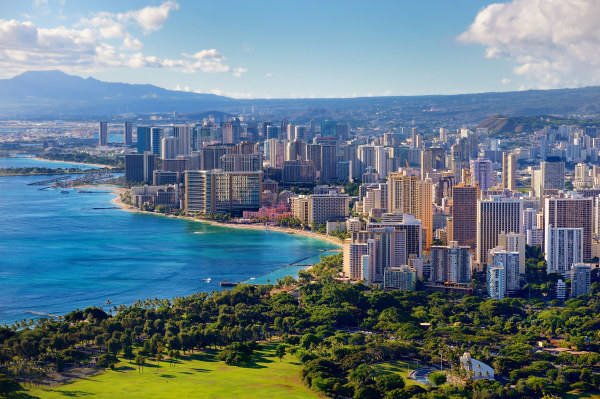
Honolulu, HI, known as 'The Big Pineapple,' offers a unique blend of tropical paradise and urban amenities. Located on the island of Oahu, Honolulu is a large city that serves as the capital and a major cultural and economic hub of Hawaii. Major nearby cities like Kailua and Pearl City enhance its status as a central point in the region. Honolulu's blend of stunning beaches, cultural festivals, and urban amenities creates a distinctive living experience.
Honolulu is home to several iconic landmarks, including Waikiki Beach, the USS Arizona Memorial at Pearl Harbor, and Diamond Head State Monument. The city offers a variety of attractions, from the beautiful Hanauma Bay Nature Preserve to the bustling Ala Moana Center, known for its shopping and dining. Honolulu's dining scene is diverse, offering everything from traditional Hawaiian dishes to international gourmet cuisine.
Annual events such as the Honolulu Festival and the King Kamehameha Celebration highlight the city's vibrant cultural scene and provide unique entertainment opportunities for residents and visitors. These events celebrate Honolulu's rich cultural heritage and community spirit. Prestigious institutions like the University of Hawaii at Manoa contribute to the city's academic and cultural vibrancy, fostering a thriving intellectual community.
The arts and culture scene in Honolulu is dynamic and diverse, with numerous theaters, music venues, and art galleries. The Honolulu Museum of Art and the Hawaii Theatre Center are just a few of the cultural landmarks that showcase the city's commitment to the arts. Living in Honolulu provides ample opportunities to engage with art, music, and history, making it an exciting place to call home.
Honolulu’s community is welcoming and diverse, creating a friendly environment for newcomers. The city is home to professional sports teams like the Rainbow Warriors (NCAA) and is near the Aloha Stadium, providing plenty of excitement for sports fans. Major industries in Honolulu include tourism, defense, and healthcare, with significant employers such as Hawaiian Airlines and The Queen's Health Systems driving economic growth. The city has extensive public transit options, including buses and the HART rail system, making commuting convenient and accessible.
Located in the state of Hawaii, Honolulu is a big city with a population of 358,765 inhabitants. With a population density of 5,926 people per square mile, Honolulu is well above the nation's average density level. Long travel times to work can be one of the most frustrating things in the world - right behind housework! If you decide that living in Honolulu is the right fit for you, your one way commute time will average 23 minutes, which is about average when compared to the national commute time of 26 minutes.
Without the right tools, relocating to any new area can be very stressful and challenging. Living in Honolulu, Hawaii could be a fulfilling experience for anyone who puts in the time to do the research required. When searching for a new neighborhood, several key items should be considered. Safety is paramount, ensuring a secure environment for you and your family. Proximity to workplaces or schools reduces commuting time and enhances convenience. Access to amenities like parks, grocery stores and healthcare facilities contributes to a comfortable lifestyle. Reliable public transportation options promote easy mobility. A strong sense of community fosters social connections and a welcoming atmosphere. Finding the best places to live in Honolulu and nearby areas is a much easier task when you can rely on information and data from the livability score, which includes amenities, crime, cost of living, health & safety, housing and other important metrics.
The livability score in Honolulu is 78/100 and the city is ranked in the 91st percentile of all cities across America. Based on this score, Honolulu would be considered a very livable city! Honolulu is also ranked in the top 10 percentile of all cities across the USA. There are nine total categories that create the livability score. Honolulu scores well for amenities (B-), education (B+) and employment (A+) There is at least one category that you should be aware of in Honolulu. The following was graded with a less than perfect score: cost of living (F).
If you're considering living in Honolulu, it comes with numerous advantages, particularly in the form of an extensive selection of local amenities. These amenities play a pivotal role in elevating the quality of life within this vibrant community. From easily accessible grocery stores, to conveniently located fitness facilities, a diverse range of dining establishments and a multitude of shopping options, Honolulu provides a comprehensive array of resources for its residents. This ensures the effortless fulfillment of your daily needs and creates ample opportunities for relaxation and recreation. The convenience of these local offerings greatly contributes to the overall appeal of the area, making it an enticing destination for those in search of convenience, diversity, and a gratifying lifestyle. If you're contemplating a move, the abundance of local amenities could very well be a defining characteristic of this area. Some of the interesting things to do and attractions include: Diamond Head, Waikiki Beach, and Discover Hawaii Day Tours.
Crime rates play a pivotal role in the decision-making process for anyone considering a move, as they directly influence the overall sense of safety, security and quality of life in a given location. Honolulu shines in this regard, earning exemplary ratings for its exceptionally low violent crime rates, standing at 185 crimes per 100,000 residents. These rates are notably below the national average, underscoring the community's commitment to safety and contributing to an enhanced quality of life.
Honolulu real estate prices and overall affordability will play a huge role in determining if the area is the right fit for you. Of course there are probably some other items on your “wish list”, but even before they are considered, let’s take a look at the home prices and affordability in Honolulu. Median real estate prices in Honolulu come in at $1,246,828, which is 29.6% higher than the Hawaii average. The home price to income ratio compares the median home prices to the median household income. In Honolulu, the home price to income ratio is 11.5, which is 30.7% higher than the Hawaii average.

| Statistic | Honolulu | Hawaii | National |
| Average one way commute | 23min | 27min | 26min |
| Workers who drive to work | 57.9% | 66.6% | 76.4% |
| Workers who carpool | 12.8% | 14.1% | 9.3% |
| Workers who take public transit | 10.5% | 6.7% | 5.1% |
| Workers who bicycle | 1.7% | 1.0% | 0.6% |
| Workers who walk | 8.3% | 4.4% | 2.8% |
| Working from home | 5.0% | 4.6% | 4.6% |

 Here are the best places to live in Hawaii
 See the best places to live in Honolulu
 Safest States In The US
 These are the largest cities in Hawaii