

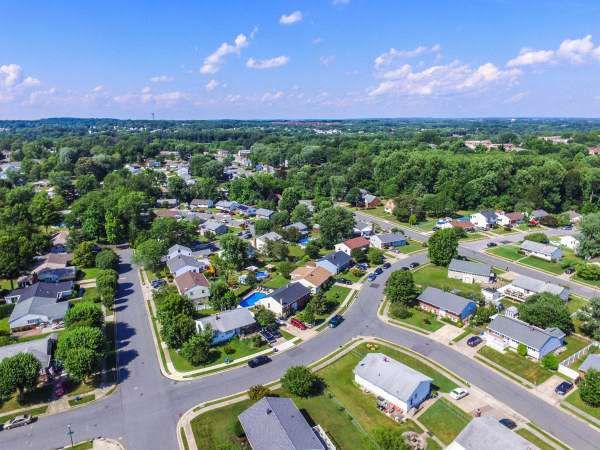
Greenbelt, Maryland is a medium-sized city with a population of 23,942 inhabitants. Greenbelt has a population density of 3,840 people per square mile. This would be considered well above the national population density level. Greenbelt is mostly populated by White (27%) and Black or African American (46%) ethnic groups. Single men and women might be happy to hear that in Greenbelt, only 38% of the population is married. Long, unnecessary commutes can be both frustrating and inconvenient when heading to work. Nationwide, the average one-way commute time takes 26 minutes, but regrettably, residing in Greenbelt entails a longer-than-average one-way commute time, averaging 33 minutes.
Living in Greenbelt can be a fulfilling experience for anyone moving to the area. Having said that, in the state of Maryland, there are many amazing places to live, so choose wisely! When searching for a new neighborhood, several factors play a vital role in determining its suitability. Safety should be a top priority, ensuring a secure environment with low crime rates. Proximity to your workplace or school helps minimize commuting time and allows for a better work-life balance. Availability of essential amenities such as parks, coffee shops, restaurants, grocery stores, and healthcare facilities contributes to convenience and well-being. Access to reliable public transportation options facilitates easy commuting and connectivity. Additionally, considering the sense of community and the overall atmosphere that resonates with your lifestyle and preferences fosters a harmonious living experience. With useful information like amenities, crime, cost of living, health & safety, education and other key data points, finding the best places to live in Greenbelt and in the areas around Greenbelt is a much easier task.
Using data and statistics Greenbelt has received a livability score of 76 out of 100. This score is ranked in the 89th percentile when compared to all other cities. Based on this score, Greenbelt would be considered a very livable city! There are nine total categories that generate the livability score. Greenbelt scores well for employment (A-) and housing (A+) Unfortunately for Greenbelt, there are some categories for which it does not score well, this includes: crime (D-) and cost of living (D-).
A healthy real estate market serves as a key economic indicator. It could signify overall local economic strength, stability and reflects consumer confidence in the area. Based on multiple factors including: median home and rental prices, appreciation rates and home affordability, Greenbelt has received high marks in the housing category. Based on these calculations, the apartment rental and real estate market appears to be very healthy.
Certain items on your wish list like shopping, restaurants, nightlife, parks and proximity to public transportation are all important things to look for. Having said that, perhaps the most important metric to consider when contemplating a move to Greenbelt is real estate affordability. The median home price for Greenbelt homes is $404,193, which is 21.9% lower than the Maryland average. If we take a closer look at the affordability of homes in Greenbelt, we’ll see that the home price to income ratio is 3.7, which is 19.6% lower than the Maryland average.

| Statistic | Greenbelt | Maryland | National |
| Average one way commute | 33min | 32min | 26min |
| Workers who drive to work | 68.6% | 73.7% | 76.4% |
| Workers who carpool | 6.7% | 9.3% | 9.3% |
| Workers who take public transit | 11.4% | 8.9% | 5.1% |
| Workers who bicycle | 1.0% | 0.3% | 0.6% |
| Workers who walk | 3.8% | 2.4% | 2.8% |
| Working from home | 7.0% | 4.4% | 4.6% |

 Here are the best places to live in Maryland
 These are the 10 cheapest cities in Maryland
 Most Dangerous States In The US
 Safest Cities In The US