

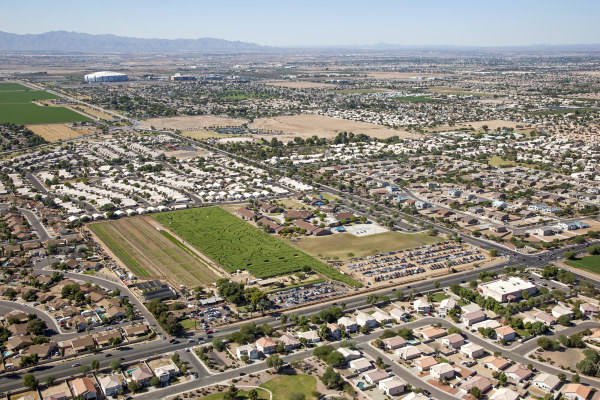
Glendale, AZ, known as 'Arizona's Antique Capital,' offers a unique blend of historic charm and modern urban amenities. Located in the western part of the Phoenix metropolitan area, Glendale is a large city that serves as a major cultural and economic hub. Major nearby cities like Phoenix and Peoria enhance its status as a central point in the region. Glendale's blend of historic landmarks, cultural festivals, and urban amenities creates a distinctive living experience.
Glendale is home to several iconic landmarks, including the Glendale Civic Center, the historic Sahuaro Ranch Park, and the scenic Thunderbird Conservation Park. The city offers a variety of attractions, from the beautiful Westgate Entertainment District to the bustling Arrowhead Towne Center, known for its shopping and dining. Glendale's dining scene is diverse, offering everything from Southwestern cuisine to international dishes.
Annual events such as the Glendale Chocolate Affaire and the Glendale Glitters highlight the city's vibrant cultural scene and provide unique entertainment opportunities for residents and visitors. These events celebrate Glendale's rich cultural heritage and community spirit. Prestigious institutions like Glendale Community College contribute to the city's academic and cultural vibrancy, fostering a thriving intellectual community.
The arts and culture scene in Glendale is dynamic and diverse, with numerous theaters, music venues, and art galleries. The Arizona Broadway Theatre and the West Valley Art Museum are just a few of the cultural landmarks that showcase the city's commitment to the arts. Living in Glendale provides ample opportunities to engage with art, music, and history, making it an exciting place to call home.
Glendale’s community is welcoming and diverse, creating a friendly environment for newcomers. The city is home to professional sports teams like the Arizona Cardinals (NFL) and the Arizona Coyotes (NHL), providing plenty of excitement for sports fans. Major industries in Glendale include healthcare, education, and retail, with significant employers such as Banner Health and Glendale Union High School District driving economic growth. The city has extensive public transit options, including buses and light rail, making commuting convenient for residents.
Glendale is a big city located in the state of Arizona. The city has a population of 255,914 residents. With a population density of 4,302 people per square mile, Glendale is well above the nation's average density level. At 70%, the majority of the Glendale population is White; this is followed by 7% Black and 4% Asian. Additionally, more than a quarter of the population of Glendale are of Hispanic or Latino origin, and 25% of the population also speak Spanish. Single men and women might be happy to hear that in Glendale, only 47% of the population is married. On a daily basis, the typical American spends approximately 26 minutes on their one-way work commute. Reduced travel times not only contributes to increased overall happiness, but also affords more opportunities to cherish moments with family and friends. If you're living in Glendale, your commute time will align closely with the national average, spanning a one-way duration of approximately 29 minutes.
If you’re considering moving to any new city, it could be a very daunting task. However, it could also be a fulfilling experience if you are willing to get to know the area before actually living in Glendale, Arizona. When searching for a new neighborhood, several key items should be considered. Safety is of utmost importance, ensuring a secure environment with low crime. Proximity to your workplace or school helps reduce commuting time and offers convenience. Access to amenities such as parks, grocery stores, and healthcare facilities enhances your daily life. Public transportation options contribute to easy mobility. A sense of community fosters a supportive and engaging environment. Lastly, the overall atmosphere should align with your desired lifestyle, ensuring a fulfilling living experience. Considering these items will guide you towards finding the perfect neighborhood that fits all your needs. Finding the best places to live in Glendale and nearby areas is a much easier task when you can rely on information and data from the livability score, which includes crime, health & safety, housing and other important metrics.
The livability score in Glendale is 76 out of 100 and the city is ranked in the 90th percentile of all cities across America. Compared to the United States average, Glendale ranks among some of the best places to live in the country! The cherry on top is that Glendale also ranks in the top 10 percent of all cities. If we examine each of the categories individually, we see that Glendale ranks well for amenities (B), cost of living (A) and housing (A+). Glendale does not do well for the following: crime (F). It might be a good idea to take a closer look at each category to find out why.
If you're considering living in Glendale, it comes with numerous advantages, particularly in the form of an extensive selection of local amenities. These amenities play a pivotal role in elevating the quality of life within this vibrant community. From easily accessible grocery stores, to conveniently located fitness facilities, a diverse range of dining establishments and a multitude of shopping options, Glendale provides a comprehensive array of resources for its residents. This ensures the effortless fulfillment of your daily needs and creates ample opportunities for relaxation and recreation. The convenience of these local offerings greatly contributes to the overall appeal of the area, making it an enticing destination for those in search of convenience, diversity, and a gratifying lifestyle. If you're contemplating a move, the abundance of local amenities could very well be a defining characteristic of this area. Among the enticing options for fun and exploration in Glendale are: University of Phoenix Stadium, Jobing.com Arena, and Glendale HIstoric District.
For home buyers, real estate will be the largest purchase they will ever make and it will also be their most valuable asset. For renters, the monthly rent paid on their Glendale apartments will most likely be their largest expense. Based on tangible metrics like home and rental affordability and appreciation rates, housing in this area has received a score that is well above the average of every other US city. A thriving real estate market can also generate strong local economic activity and job creation.
Assuming that Glendale meets all of your requirements like low crime rates, good schools and great local amenities, the next most important item to examine is the affordability of real estate in Glendale. Everything else becomes a lot less important if it turns out that home prices in Glendale are simply unattainable. The median home price for Glendale homes is $422,551, which is 35.7% higher than the Arizona average. If we take a closer look at the affordability of homes in Glendale, we’ll see that the home price to income ratio is 4.9, which is 19.5% higher than the Arizona average.

| Statistic | Glendale | Arizona | National |
| Average one way commute | 29min | 25min | 26min |
| Workers who drive to work | 75.0% | 76.7% | 76.4% |
| Workers who carpool | 12.0% | 10.9% | 9.3% |
| Workers who take public transit | 2.3% | 2.0% | 5.1% |
| Workers who bicycle | 0.6% | 1.0% | 0.6% |
| Workers who walk | 1.3% | 2.0% | 2.8% |
| Working from home | 6.9% | 5.7% | 4.6% |

 Here are the best places to live in Arizona
 Safest Cities In The US
 See the best places to live in Glendale
 Check out the 10 most dangerous cities in Arizona