
| Index | East Los Angeles | California | National |
| Cost of living | 145 | 141 | 100 |
| Groceries | 113 | 111 | 100 |
| Health care | 119 | 116 | 100 |
| Housing | 211 | 197 | 100 |
| Transportation | 119 | 118 | 100 |
| Utilities | 119 | 119 | 100 |
| Lifestyle & Entertainment | 116 | 120 | 100 |
| Household Items | 112 | 111 | 100 |
| Education & Childcare | 124 | 127 | 100 |

Understanding the cost of living in East Los Angeles can help future residents assess whether their current financial situation aligns with the expenses they will encounter. It enables them to plan for potential changes in their budget and lifestyle. The East Los Angeles cost of living index is 145, which is 45% higher than the national average. The cost of living index is calculated by taking into account multiple categories, which encompass both the cost of everyday expenditures and larger expenses as well.
If you value affordability in your search for a new place to live, East Los Angeles may not be the most suitable option, as it stands out as one of the priciest areas in the entire United States. Only a small fraction of regions have a cost of living that is more than 20% higher than the national average, and regrettably, East Los Angeles falls into this category, which may not align with your desire for an affordable place to call home.
Housing costs significantly influence the East Los Angeles cost of living index, typically accounting for a substantial portion of one's post-tax income. Regrettably, within this particular region, expenses related to both residential ownership and renting exceeded those observed in an average city by 111.3%. This entails elements such as housing and rental prices, mortgage interest rates and insurance costs.
Everyday household expenses like cleaning products, laundry detergent, toiletries, and kitchen basics can quickly add up over time and make up 8% of the cost of living index. In East Los Angeles, you can expect to spend 11.5% more than average on these recurring essentials, which increases your overall monthly cost of living.
The relentless increase in grocery prices is a noteworthy trend. In the last two years, grocery costs have experienced an upward trajectory of over 10%. Unfortunately, East Los Angeles is no exception, where grocery prices are 12.9% above the national average.
Is East Los Angeles affordable? This is a pivotal question, especially when mulling over a move, as affordability carries substantial weight in your decision-making process. Factors such as the cost of living index (discussed earlier), housing expenses and income levels all contribute to a location's affordability. For instance, in East Los Angeles, the median home price is 150.3% higher than the national average and monthly rent prices are 20.4% higher than the typical rates. Additionally, the median income levels play a role in affordability, with East Los Angeles boasting a median household income of $74,124, 8.9% lower than the national average.
Taxes: Cities that impose higher taxes, including sales and income taxes, can contribute to an escalated cost of living. The added expense of taxes on everyday goods like clothing and food naturally results in higher overall costs. Similarly, a higher income tax rate can further elevate the cost of living. In East Los Angeles, the general sales tax rate starts at 7.25%, and income tax rates begin at 1%.
Subsidies: Some cities and states may extend government subsidies or aid programs aimed at reducing the cost of living for their residents. These initiatives encompass diverse forms of support, including Medicare, Medicaid, housing subsidies, low-income home energy assistance programs, school lunch programs, supplemental nutrition assistance programs, student loans, electric vehicle tax credits, affordable care act subsidies and farm subsidies. Regions with limited subsidy provisions may witness an increase in their overall cost of living.
Transportation: In areas where public transportation is scarce or unavailable, residents often find themselves compelled to own and upkeep vehicles, thereby increasing the overall cost of living. Monthly expenses encompass fuel, insurance, routine maintenance and potentially lease or financing payments. In East Los Angeles, the transportation index is 19.3% higher than the national average.
The cost of living estimates displayed for East Los Angeles are modeled using a U.S. average baseline of 100, helping provide a useful comparison of local living expenses. Housing calculations include U.S. Census home price and rental data, while all other values are AI-assisted estimates based on regional cost patterns, climate, transportation, and everyday spending expectations. These values are intended for directional comparisons across cities.

| Cost of living index | |
| Groceries index | |
| Health care index | |
| Housing index | |
| Transportation index | |
| Utilities index | |
| Lifestyle index | |
| Household index | |
| Educare index |
| Median Income | Per Year | Per Month | Max Budget (28% DTI) | Max Budget (36% DTI) |
| Owners | $110,051 | $9,171 | $2,568 | $3,302 |
| Renters | $62,455 | $5,205 | $1,457 | $1,874 |
| State | General Sales Tax | With Max Surtax |
| California | 7.25% | 10.5% |
| State | Income Tax (Low) | Income Tax (High) |
| California | 1% | 13.3% |
| City | Population | Cost of Living Index | National Avg. |
| Vernon, CA | 254 | 117 | 16.8% |
| Willowbrook, CA | 25,347 | 136 | 36.0% |
| East Rancho Dominguez, CA | 15,765 | 136 | 36.3% |
| Florence-Graham, CA | 66,603 | 138 | 38.2% |
| Compton, CA | 98,731 | 139 | 38.7% |
| East Los Angeles, CA | 124,794 | 145 | 45.3% |
| City | Population | Cost of Living Index | National Avg. |
| Wilmington, NC | 125,049 | 109 | 9.2% |
| Vallejo, CA | 124,444 | 144 | 43.6% |
| Hartford, CT | 125,397 | 106 | 5.6% |
| Columbia, MO | 125,431 | 100 | 0.1% |
| Odessa, TX | 125,590 | 98 | 1.7% |
| East Los Angeles, CA | 124,794 | 145 | 45.3% |

 Here are the best places to live in California
 Most Dangerous Cities In The US
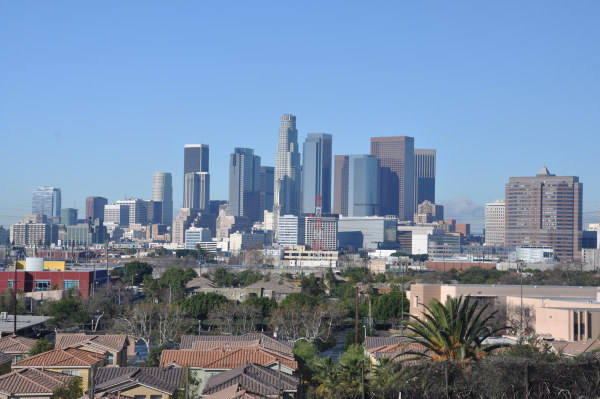 See the best places to live in East Los Angeles
 These are the largest cities in California