

 Commute
High commute scores indicates that public transit should be easily accessible in this area and the average commute time to work is less than average.
 Employment
The combination of higher than average median home income, income per capita and low unemployment rates results in a score that is well above average in the employment category.
 Housing
This area has received high scores in the housing category. This could be due to a positive home affordability ratio, high appreciation rates or elevated home values.
 Health & Safety
A high score in the health and safety category is a result of good air quality and the accessibility to health facilities such as hospitals, clinics, doctors, pharmacies and fire stations.
 Schools
High test scores, elevated graduation rates as well as the conveniently located elementary and high schools in this area have all contributed to the high score in the schools category.
 Amenities
A majority of amenities are not ideally situated within a reasonable walking distance, which may lead residents to rely on a vehicle or public transportation.
Burnsville is a medium-sized city located in the state of Minnesota. The city has a population of 63,628 residents. If we look at the most recent Census, Burnsville is known to have a predominantly White population. The next two most common races are Black and Asian. Long commute times to work can be incredibly frustrating, ranking just behind housework on the list of life's annoyances. If you opt to make Burnsville your home, your one-way commute time will typically last around 24 minutes, a duration that aligns with the national average commute time of 26 minutes.
Living in Burnsville can be a great experience for anyone relocating to the area. Having said that, in the state of Minnesota, there are many desirable places to live, so choose wisely! When searching for a new neighborhood, several factors play a vital role in determining its suitability. Safety should be a top priority, ensuring a secure environment with low crime rates. Proximity to your workplace or school helps minimize commuting time and allows for a better work-life balance. Availability of essential amenities such as parks, coffee shops, restaurants, grocery stores, and healthcare facilities contributes to convenience and well-being. Access to reliable public transportation options facilitates easy commuting and connectivity. Additionally, considering the sense of community and the overall atmosphere that resonates with your lifestyle and preferences fosters a harmonious living experience. The best areas in Burnsville and in surrounding cities are easier to find when you are able to make informed decisions. Using data from amenities, commute, health & safety, employment, you will see a detailed breakdown of the most important information as well as comparisons to the Minnesota and national averages.
Burnsville has a livability score of 79 out of 100 and is ranked #67 in Minnesota and #1,768 in the USA. Clearly, Burnsville is doing something right, as this score ranks well above the average of most cities. Burnsville is also ranked in the top 10 percentile of all cities across the USA. For each of the livability categories, we can establish that Burnsville ranks very well for education (B+), employment (A+) and housing (A+). There is at least one category that did not score well in Burnsville. The following was graded with a discouraging score: amenities (F).
For home buyers, real estate will be the largest purchase they will ever make and it will also be their most valuable asset. For renters, the monthly rent paid on their Burnsville apartments will most likely be their largest expense. Based on tangible metrics like home and rental affordability and appreciation rates, housing in this area has received a score that is well above the average of every other US city. A thriving real estate market can also generate strong local economic activity and job creation.
Assuming that Burnsville meets all of your requirements like low crime rates, good schools and great local amenities, the next most important item to examine is the affordability of real estate in Burnsville. Everything else becomes a lot less important if it turns out that home prices in Burnsville are simply unattainable. The median home price for Burnsville homes is $461,516, which is 36.1% higher than the Minnesota average. If we take a closer look at the affordability of homes in Burnsville, we’ll see that the home price to income ratio is 4, which is 8.1% higher than the Minnesota average.
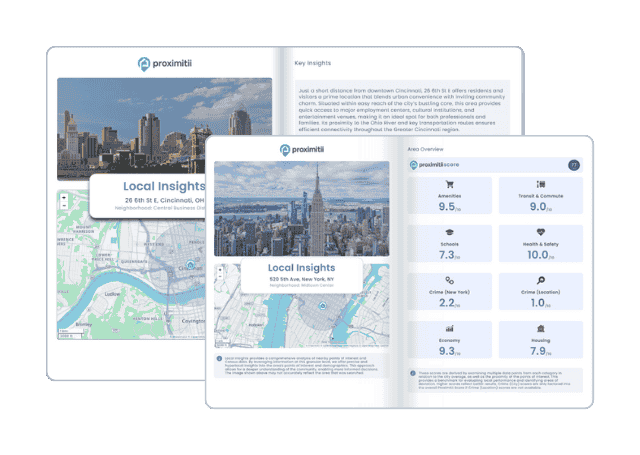
Why stop at city-to-city? With Local Insights, you can compare neighborhoods, zip codes, or even exact addresses. Access 300+ hyperlocal data points—from schools and crime to housing and amenities—to see which area is the better fit.

| Statistic | Burnsville | Minnesota | National |
| Average one way commute | 24min | 23min | 26min |
| Workers who drive to work | 75.3% | 78.0% | 76.4% |
| Workers who carpool | 12.3% | 8.7% | 9.3% |
| Workers who take public transit | 3.6% | 3.5% | 5.1% |
| Workers who bicycle | 0.1% | 0.8% | 0.6% |
| Workers who walk | 0.6% | 2.8% | 2.8% |
| Working from home | 7.3% | 5.3% | 4.6% |

 Here are the best places to live in Minnesota
 Check out the 10 most dangerous cities in Minnesota
 See the best places to live in Burnsville
 Safest States In The US