
| Statistic | Reportedincidents | /100k people | Arlington/100k people | Massachusetts/100k people | National/100k people |
| Total crime | 230 | n/a (estimate) | 490 | 1,427 | 2,119 |
| Murder | 0 | n/a | 0.0 | 1.8 | 5.0 |
| Rape | 5 | n/a | 10.6 | 27.6 | 37.5 |
| Robbery | 0 | n/a | 0.0 | 36.0 | 60.6 |
| Assault | 21 | n/a | 44.7 | 249.3 | 256.1 |
| Violent crime | 26 | n/a (estimate) | 55 | 315 | 359 |
| Burglary | 28 | n/a | 59.6 | 130.3 | 229.2 |
| Theft | 159 | n/a | 338.6 | 876.3 | 1,272.1 |
| Vehicle theft | 17 | n/a | 36.2 | 105.5 | 258.8 |
| Property crime | 204 | n/a (estimate) | 434 | 1,112 | 1,760 |
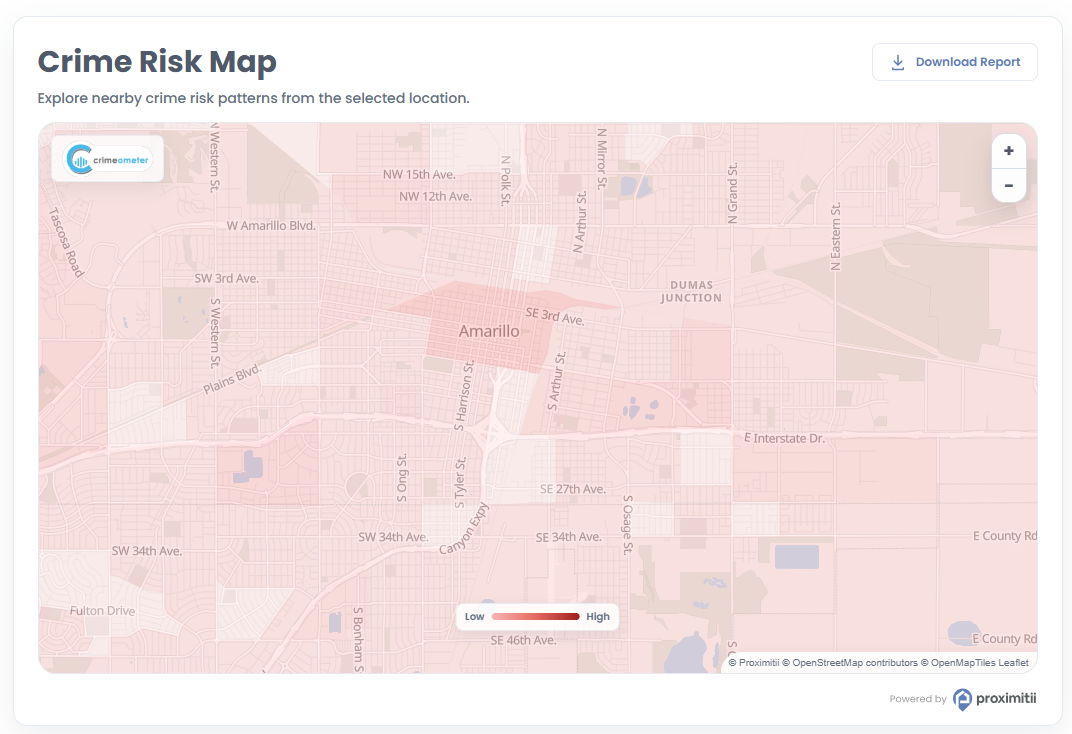
The Arlington crime rates are 76.9% lower than the national average. There are two main categories of crime - violent crime and property crime. Violent crime consists of murder, rape, robbery and assault, while property crimes include burglary, theft and vehicle theft. There were a total of 26 violent crimes in Arlington (55 per 100,000 people), which is 84.6% lower than the national average and there were a total of 204 property crimes (434 per 100,000 residents) which is 75.3% lower than average.
Arlington proudly maintains an impressively low crime rate, registering at a mere 490, which sharply contrasts with the national average of 2119. This stark contrast firmly positions Arlington as one of the most secure residential destinations throughout the entire United States. The total crime rate takes into account the total occurrences of both violent and property crimes per 100,000 people, offering an invaluable assessment of the area's safety suitability for living.
Arlington shines as one of the safest cities in the United States, thanks to its remarkably low rate of only 55 violent incidents per 100,000 residents. This impressive safety record has made Arlington an attractive choice for individuals seeking a secure and hospitable community to call home.
During the most recently reported crime year, Arlington experienced a total of 0 reported murders. This statistic paints it as a beacon of security when it comes to severe violent crimes. Such an achievement not only instills a profound sense of security for its residents but also sets a high standard for other communities striving to create similarly secure environments. It underscores the area as a place where safety is a top priority, enhancing its appeal as a desirable location to live and thrive.
In 1991, property crime rates in the United States soared to over 5,140 crimes per 100,000 people. In the years since, the U.S. property crime rate has continued to decline with the most recent year reporting only 1760 property crimes. In Arlington, the property crime rate was even less than the national average with a rate of 434, cementing it as one of the safest places to live with regards to property crime.
AreaVibes conducted surveys inquiring about the safety perception of Arlington residents. Out of the respondents (19 in total), 89% expressed a strong sense of security, believing that crime rates in Arlington were low, and they felt comfortable walking alone at night. Conversely, 11% held a contrasting viewpoint, expressing concerns about safety in the area and feeling uncomfortable walking alone during the nighttime hours.
Is Arlington a safe place to live? While the answer may not be straightforward due to variations in safety levels across the city, gaining an understanding of the overall crime rate can prove to be advantageous. In general, Arlington has a crime rate that is lower than the national average by 77%. Breaking this down on a daily basis, it translates to 0.63 daily incidents, encompassing 0.07 violent crimes and 0.56 property crimes. Evaluating these statistics can aid in forming a more informed perspective on the safety of Arlington as a potential place to call home.
Year-over-year crime data allows residents and potential residents to assess the crime in Arlington. A decrease in crime rates may indicate improving safety, while an increase could raise concerns. The year-over-year crime rate in Arlington has increased by 49.4%. Violent crimes have increased by 36.8%, while property crimes have increased by 51.1%. By comparing crime rates from one year to the next, authorities and communities can identify trends and patterns in criminal activity. This helps in understanding whether crime is increasing, decreasing, or remaining stable over time.
In areas where employment options are limited or where a significant proportion of jobs offer meager wages, the likelihood of heightened unemployment and homelessness increases. Regions facing challenges related to unemployment or inadequate income may become more vulnerable to a surge in crime stemming from economic instability. While low unemployment rates tend to lead to reduced crime in most areas. Arlington currently has an unemployment rate of 2.6%, contrasting with the national average of 4.9%. This could be one of many factors that could contribute to a higher or lower crime rate.
Rising cost of living expenses, including increased housing costs, grocery, utility and healthcare expenditures, can induce financial strain on individuals and families, particularly those with limited financial resources. Such economic stress may propel individuals towards crime, including theft or burglary, as a means of addressing their financial hardships. Conversely, cities characterized by a lower cost of living may alleviate economic pressures, potentially resulting in a reduced crime rate. In Arlington, the cost of living is 79.11% higher than the national average, reflecting a more affordable economic environment that could contribute to a decrease in crime levels.
The effectiveness of law enforcement and community policing initiatives can influence crime rates. A strong and collaborative relationship between the police and the community can deter criminal activity and improve safety. In Arlington, there are 1.79 police officers and civilians per 1,000 residents, compared to the national average of 3.25. The effectiveness of law enforcement often depends on community policing strategies that emphasize building trust and cooperation between the police and the community. It's not just about the number of officers but also how they engage with the community.

| Item | Arlington | Massachusetts | National |
| Law enforcement employees (officers & civilians) | 78 | 11,659 | 558,732 |
| Police officers & civilians /1000 residents | 1.8 | 2.2 | 3.3 |
| State | Total offenders | Massachusetts /100K | National /100K |
| Massachusetts | 4,551 | 72 | 266 |
| City | Population | Violent crime/100k people | Property crime/100k people | Total crime/100k people |
| Lexington, MA | 34,058 | 52 | 335 | 387 |
| Winchester, MA | 23,430 | 17 | 383 | 400 |
| Cochituate, MA | 6,978 | 102 | 362 | 464 |
| West Concord, MA | 7,498 | 102 | 362 | 464 |
| Melrose, MA | 29,146 | 101 | 430 | 530 |
| Wellesley, MA | 29,744 | 47 | 485 | 532 |
| Nahant, MA | 3,632 | 268 | 268 | 537 |
| Arlington, MA | 46,742 | 55 | 434 | 490 |
| City | Population | Violent crime/100k people | Property crime/100k people | Total crime/100k people |
| Lake Ridge, VA | 46,761 | 158 | 1,136 | 1,293 |
| Attleboro, MA | 46,708 | 221 | 1,126 | 1,347 |
| Herriman, UT | 46,782 | 117 | 598 | 715 |
| Oro Valley, AZ | 46,840 | 51 | 1,148 | 1,200 |
| Coachella, CA | 46,858 | 299 | 1,541 | 1,840 |
| Arlington, MA | 46,742 | 55 | 434 | 490 |

 Here are the best places to live in Massachusetts
 Safest States In The US
 Check out the 10 safest cities in Massachusetts
 Most Dangerous Cities In The US