
| Statistic | Reportedincidents | /100k people | Urbana/100k people | Illinois/100k people | National/100k people |
| Total crime | 1,160 | n/a (estimate) | 3,036 | 2,004 | 2,119 |
| Murder | 1 | n/a | 2.6 | 5.8 | 5.0 |
| Rape | 21 | n/a | 55.0 | 46.9 | 37.5 |
| Robbery | 31 | n/a | 81.1 | 90.2 | 60.6 |
| Assault | 155 | n/a | 405.7 | 146.3 | 256.1 |
| Violent crime | 208 | n/a (estimate) | 544 | 289 | 359 |
| Burglary | 186 | n/a | 486.9 | 290.5 | 229.2 |
| Theft | 665 | n/a | 1,740.7 | 1,134.4 | 1,272.1 |
| Vehicle theft | 101 | n/a | 264.4 | 290.4 | 258.8 |
| Property crime | 952 | n/a (estimate) | 2,492 | 1,715 | 1,760 |
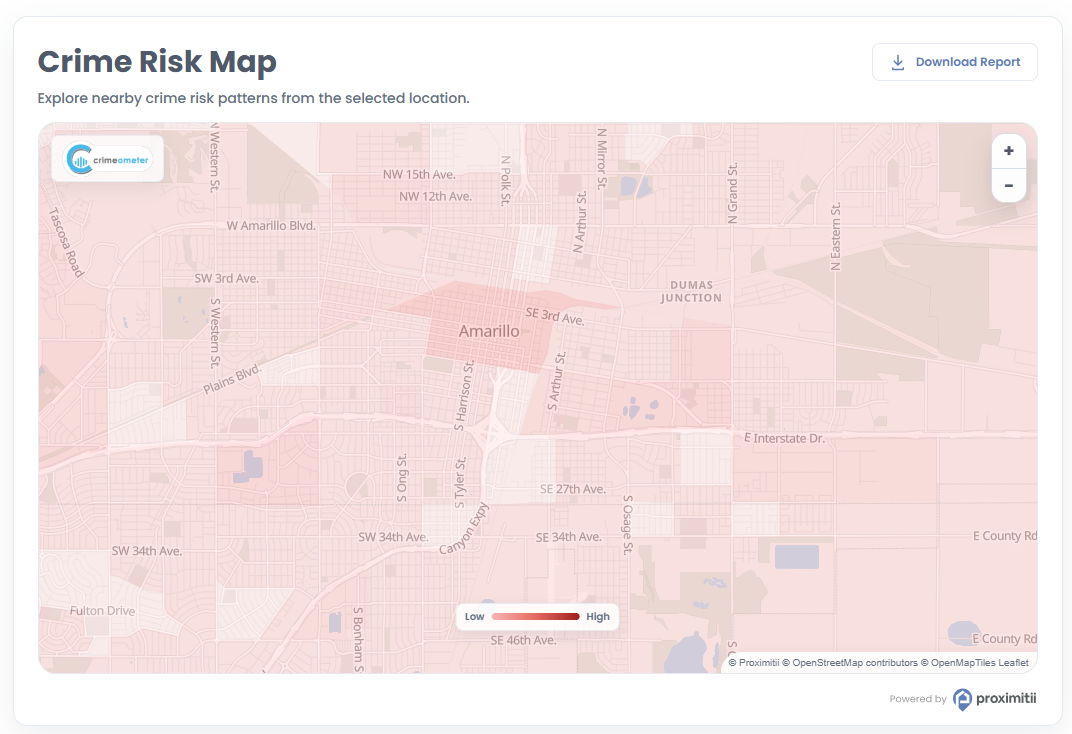

The Urbana crime rates are 43.3% higher than the national average. There are two main categories of crime - violent crime and property crime. Violent crime consists of murder, rape, robbery and assault, while property crimes include burglary, theft and vehicle theft. There were a total of 208 violent crimes in Urbana (544 per 100,000 people), which is 51.6% higher than the national average and there were a total of 952 property crimes (2492 per 100,000 residents) which is 41.6% higher than average.
AreaVibes conducted surveys inquiring about the safety perception of Urbana residents. Out of the respondents (21 in total), 38% expressed a strong sense of security, believing that crime rates in Urbana were low, and they felt comfortable walking alone at night. Conversely, 62% held a contrasting viewpoint, expressing concerns about safety in the area and feeling uncomfortable walking alone during the nighttime hours.
Before you decide to relocate, it’s always good to ask yourself “Is Urbana a safe place to live?” Although the answer might not be that simple, as some areas are safer than others, getting a good feel for the overall rate of crime can definitely be helpful. Overall, the Urbana crime rate is 43% higher than the national average. If we break that down daily, that translates into 3.18 crimes per day - 0.57 violent crimes and 2.61 property crimes.
Examining year-over-year crime data provides insights into short-term trends with regards to the crime activity in Urbana. This analysis involves comparing crime rates from one year to the next, enabling the identification of patterns and fluctuations in crime. Such information proves invaluable to residents seeking to make well-informed decisions about their choice of residence. In the most recent year, compared to the previous one, total crime in Urbana has increased by 12.4%. Specifically, violent crime has didn't change by 0%, while property crime has increased by 15.5%. This data empowers individuals with a clearer understanding of the evolving safety landscape in Urbana.
Limited employment opportunities or a prevalence of low-wage jobs can result in higher rates of unemployment and underemployment. Regions where individuals grapple with joblessness or meager wages may exhibit greater vulnerability to an uptick in crime due to financial instability. While areas that have strong employment rates, often will see a reduction in overall crime. Urbana, for instance, reports an unemployment rate of 3%, which differs from the national average of 4.9%.
The educational level achieved in any given city can influence crime rates significantly. Greater educational achievement is frequently associated with decreased crime rates, as it offers individuals improved job prospects and alternatives to engaging in crime related activities. Conversely, lower educational attainment rates tend to coincide with elevated crime rates. In Urbana, 91.2% of residents have successfully graduated from high school, in contrast to the national average where 83% have achieved high school graduation.
Law enforcement and community policing efforts can play a pivotal role in shaping crime rates. Establishing a robust and cooperative partnership between the police and the community can act as a deterrent to criminal behavior and enhance overall safety. In Urbana, the ratio of police officers and civilians per 1,000 residents differs from the national average, with 1.69 officers and civilians per 1,000 residents compared to 3.25 nationally. Effective law enforcement often hinges on community policing strategies that prioritize the cultivation of trust and collaboration between law enforcement and the community. It's not solely about the quantity of officers but also the quality of their engagement with the community.

| Item | Urbana | Illinois | National |
| Law enforcement employees (officers & civilians) | 70 | 30,690 | 558,732 |
| Police officers & civilians /1000 residents | 1.7 | 2.6 | 3.3 |
| State | Total offenders | Illinois /100K | National /100K |
| Illinois | 32,213 | 263 | 266 |
| City | Population | Violent crime/100k people | Property crime/100k people | Total crime/100k people |
| Thomasboro, IL | 1,071 | 0 | 202 | 202 |
| Tolono, IL | 3,137 | 0 | 377 | 377 |
| Mahomet, IL | 9,102 | 228 | 209 | 437 |
| Philo, IL | 1,447 | 99 | 585 | 684 |
| Homer, IL | 1,352 | 99 | 589 | 688 |
| Sidney, IL | 1,347 | 102 | 607 | 710 |
| Fisher, IL | 1,983 | 108 | 641 | 749 |
| Urbana, IL | 43,747 | 544 | 2,492 | 3,036 |
| City | Population | Violent crime/100k people | Property crime/100k people | Total crime/100k people |
| Hicksville, NY | 43,793 | 214 | 970 | 1,184 |
| North Fort Myers, FL | 43,810 | 326 | 1,735 | 2,061 |
| Jefferson City, MO | 43,647 | 334 | 2,039 | 2,373 |
| Schertz, TX | 43,642 | 154 | 887 | 1,041 |
| Lompoc, CA | 43,853 | 500 | 1,458 | 1,957 |
| Urbana, IL | 43,747 | 544 | 2,492 | 3,036 |

 Here are the best places to live in Illinois
 Safest Cities In The US
 Check out the 10 most dangerous cities in Illinois
 Safest States In The US