
| Statistic | Reportedincidents | /100k people | Uniontown/100k people | Alabama/100k people | National/100k people |
| Total crime | 8 | n/a (estimate) | 416 | 1,925 | 2,119 |
| Murder | 0 | n/a | 0.0 | 8.7 | 5.0 |
| Rape | 1 | n/a | 52.1 | 25.8 | 37.5 |
| Robbery | 0 | n/a | 0.0 | 34.0 | 60.6 |
| Assault | 6 | n/a | 312.3 | 291.4 | 256.1 |
| Violent crime | 7 | n/a (estimate) | 364 | 360 | 359 |
| Burglary | 0 | n/a | 0.0 | 243.5 | 229.2 |
| Theft | 1 | n/a | 52.1 | 1,148.5 | 1,272.1 |
| Vehicle theft | 0 | n/a | 0.0 | 173.0 | 258.8 |
| Property crime | 1 | n/a (estimate) | 52 | 1,565 | 1,760 |
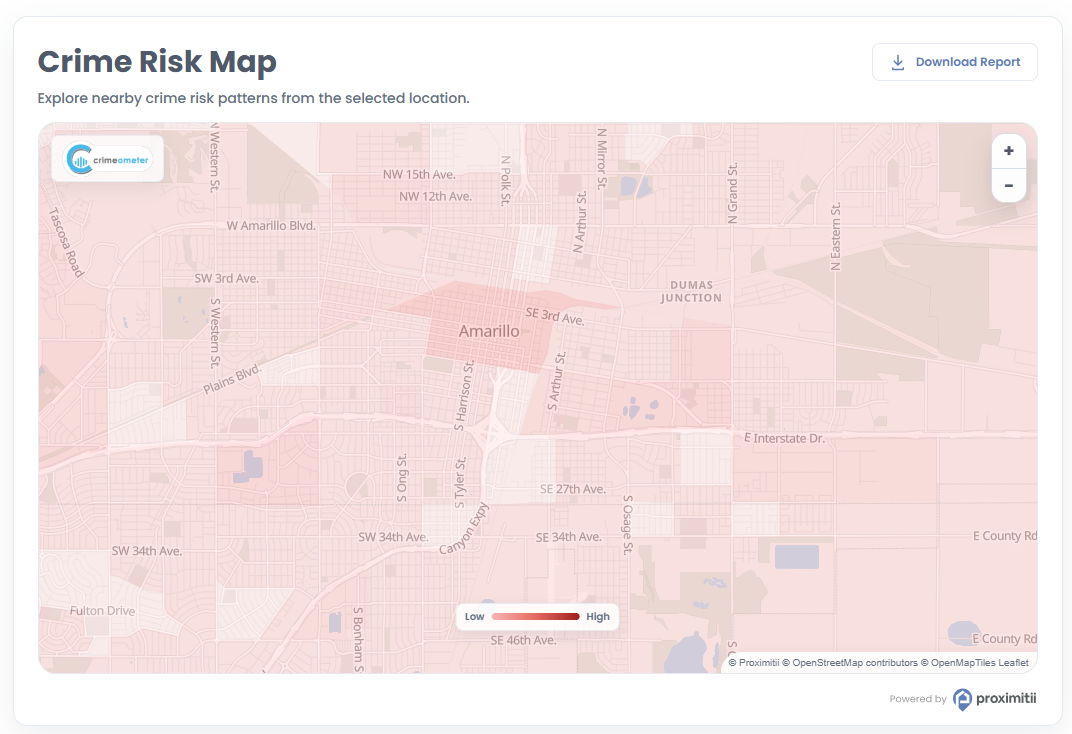

Crime is typically categorized into two main types: violent and property crimes. Violent crimes encompass offenses such as murder, rape, robbery, and assault, while property crimes include burglary, theft, and vehicle theft. Based on the most recent report, the Uniontown crime rate is lower than the national average by 80.4%. Specifically, there were 7 violent crimes in Uniontown, equivalent to 364 per 100,000 individuals, higher than the national average by 1.5%. Furthermore, Uniontown recorded 1 property crimes, amounting to 52 per 100,000 residents, which was lower than the average by 97%.
With a crime rate of 416, significantly below the national average of 2119, Uniontown stands out as one of the safest places to reside in the United States. This distinction is primarily attributed to the calculation of total crimes, which encompasses both violent and property crimes per 100,000 residents.
When it comes to violent crimes per 100,000 people, Uniontown maintains a rate that is very similar to the national average. With 364 reported violent crimes, it falls in line with the national average of 359. This alignment suggests that Uniontown shares a similar crime profile with other cities, highlighting its comparable level of safety within the broader urban landscape.
In a remarkable testament to the city's commitment to safety, Uniontown reported a murder rate of 0. This could indicate that it is a very safe place to live, but also serves as an inspiration to other urban areas striving for safer communities. Examining the full crime report will provide a complete overview of all crimes - violent and property.
Property crime rates per 100,000 individuals have exhibited a consistent decrease of about 50% since 1990, with a minor upturn observed in recent years. According to the latest crime data, Uniontown maintains a property crime rate of 52 incidents per 100,000 people, significantly below the national average of 1760. This serves as a strong indication of the status of Uniontown as a secure and desirable place to reside, emphasizing its commitment to safety and well-being within the community.
The United States contends with some of the world's highest vehicle theft rates, with approximately 300 vehicle thefts per 100,000 individuals. Remarkably, only a modest fraction, approximately 10%, of cities have been fortunate enough to have zero reported instances of stolen vehicles. Uniontown stands out as one of these cities, as it reported no vehicle thefts in the most recent crime report, underscoring its commitment to a secure environment.
Is Uniontown a safe place to live? While the answer may not be straightforward due to variations in safety levels across the city, gaining an understanding of the overall crime rate can prove to be advantageous. In general, Uniontown has a crime rate that is lower than the national average by 80%. Breaking this down on a daily basis, it translates to 0.02 daily incidents, encompassing 0.02 violent crimes and 0 property crimes. Evaluating these statistics can aid in forming a more informed perspective on the safety of Uniontown as a potential place to call home.
Year-over-year crime data allows residents and potential residents to assess the crime in Uniontown. A decrease in crime rates may indicate improving safety, while an increase could raise concerns. The year-over-year crime rate in Uniontown has decreased by 89.7%. Violent crimes have decreased by 61.1%, while property crimes have decreased by 98.3%. By comparing crime rates from one year to the next, authorities and communities can identify trends and patterns in criminal activity. This helps in understanding whether crime is increasing, decreasing, or remaining stable over time.
The educational level within a community can have an influence on crime rates. Typically, higher levels of education are associated with reduced crime rates, as they offer individuals improved employment prospects and alternatives to engaging in criminal activities. Conversely, lower educational attainment tends to correspond with higher crime rates. In Uniontown, 62.9% of residents have achieved at least a high school diploma, which differs from the national average of 83%.
High cost of living can lead to economic stress for individuals and families, particularly those with limited financial resources. When people struggle to make ends meet due to high housing costs, healthcare expenses, or other basic necessities, they may be more inclined to engage in criminal activities, such as theft or fraud, as a means of financial survival. On the flipside, cities that have a lower cost of living, could see a reduced crime rate. In Uniontown, the cost of living is 24.67% lower than the national average.
Elevated rental costs can generate economic strain for both individuals and families, particularly those with restricted financial means. When a substantial proportion of one's income is allocated to housing costs, it often leaves limited resources for fulfilling other crucial necessities such as groceries, healthcare and education. This financial pressure can fuel desperation, potentially prompting individuals to resort to criminal actions, including theft or fraud, as a means of coping with their financial hardships. In Uniontown, the average monthly rent stands at $520, while the national average is $1,444 per month.

| Item | Uniontown | Alabama | National |
| Law enforcement employees (officers & civilians) | 8 | 9,968 | 558,732 |
| Police officers & civilians /1000 residents | n/a | 4.1 | 3.3 |
| State | Total offenders | Alabama /100K | National /100K |
| Alabama | 10,698 | 231 | 266 |
| City | Population | Violent crime/100k people | Property crime/100k people | Total crime/100k people |
| Thomaston, AL | 428 | 0 | 0 | 0 |
| Marion, AL | 3,260 | 0 | 0 | 0 |
| Orrville, AL | 148 | 457 | 1,986 | 2,443 |
| Newbern, AL | 229 | 475 | 2,063 | 2,538 |
| Dayton, AL | 57 | 490 | 2,130 | 2,619 |
| Uniontown, AL | 1,981 | 364 | 52 | 416 |
| City | Population | Violent crime/100k people | Property crime/100k people | Total crime/100k people |
| Hampton, PA | 1,981 | 110 | 641 | 751 |
| Goodrich, MI | 1,981 | 82 | 261 | 343 |
| Chuluota, FL | 1,981 | 51 | 270 | 321 |
| East Pepperell, MA | 1,981 | 112 | 397 | 509 |
| Bourbon, IN | 1,982 | 119 | 524 | 643 |
| Uniontown, AL | 1,981 | 364 | 52 | 416 |
 Here are the best places to live in Alabama
 Most Dangerous States In The US
 Most Dangerous Cities In The US
 These are the 10 cheapest cities in Alabama