
| Statistic | Reportedincidents | /100k people | Tarboro/100k people | North Carolina/100k people | National/100k people |
| Total crime | 367 | n/a (estimate) | 3,361 | 2,344 | 2,119 |
| Murder | 2 | n/a | 18.3 | 7.5 | 5.0 |
| Rape | 1 | n/a | 9.2 | 28.0 | 37.5 |
| Robbery | 9 | n/a | 82.4 | 50.2 | 60.6 |
| Assault | 61 | n/a | 558.6 | 290.1 | 256.1 |
| Violent crime | 73 | n/a (estimate) | 668 | 376 | 359 |
| Burglary | 37 | n/a | 338.8 | 323.9 | 229.2 |
| Theft | 251 | n/a | 2,298.5 | 1,390.2 | 1,272.1 |
| Vehicle theft | 6 | n/a | 54.9 | 254.1 | 258.8 |
| Property crime | 294 | n/a (estimate) | 2,692 | 1,968 | 1,760 |

Looking at the most recent crime report, the crime rate in Tarboro is 58.6% higher than the national average. These crimes fall into two primary categories: violent and property. Violent crimes encompass murder, rape, robbery and assault, while property crimes involve theft, vehicle theft and burglary. In Tarboro, there were 73 reported violent crimes, equivalent to 668 per 100,000 individuals, 86.2% higher than the national average. Additionally, there were 294 property crimes, amounting to 2692 per 100,000 residents, 53% higher than the U.S. average.
While murder rates in the United States have generally declined since 1990, recent years have seen an unfortunate uptick. Tarboro stands out with one of the nation's highest murder rates among cities reporting crime data. In Tarboro, a total of 2 murders were reported, equating to 18 murders per 100,000 residents. This statistic underscores the challenges facing the area in terms of severe violent crime and the importance of ongoing efforts to enhance safety and security within the community.
To get a feel for the safety of living in Tarboro, it's essential to analyze both the overall crime rate and the daily incident count. Tarboro presents a total crime rate that is 59% higher than the national average per 100,000 residents. Consequently, Tarboro experiences an average of 1.01 daily crimes, comprising 0.2 violent incidents and 0.81 property-related offenses. This evaluation offers a comprehensive understanding of the safety landscape, aiding individuals in making informed decisions when considering relocation.
Limited employment opportunities or a prevalence of low-wage jobs can result in higher rates of unemployment and underemployment. Regions where individuals grapple with joblessness or meager wages may exhibit greater vulnerability to an uptick in crime due to financial instability. While areas that have strong employment rates, often will see a reduction in overall crime. Tarboro, for instance, reports an unemployment rate of 2.9%, which differs from the national average of 4.9%.
Tarboro has a ratio of police officers and civilians per 1,000 residents that differs from the national norm, with 3.06 officers and civilians per 1,000 residents, compared to 3.25 nationwide. Crime rates are profoundly influenced by the effectiveness of law enforcement and community policing endeavors. A resilient and cooperative partnership between law enforcement agencies and the community can serve as a deterrent to criminal activities, ultimately enhancing safety. The efficacy of law enforcement extends beyond mere numbers and extends into the realm of community policing strategies, emphasizing the cultivation of trust and collaboration between officers and the community. It is not merely a matter of quantity but the quality of engagement with the community that matters most.
The median home price in Tarboro is $237,209, compared to the national average of $326,622. High housing costs can lead to financial stress for residents. When individuals struggle to make ends meet due to expensive housing, they may be more inclined to engage in criminal activities to address their financial difficulties, such as theft or fraud. Communities with stable housing environments tend to foster stronger social bonds and community engagement. This can lead to increased vigilance and cooperation among residents, which can deter criminal behavior.
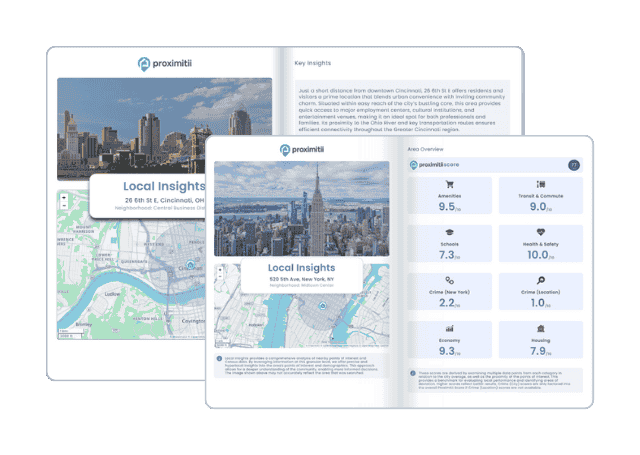
Why stop at city-to-city? With Local Insights, you can compare neighborhoods, zip codes, or even exact addresses. Access 300+ hyperlocal data points—from schools and crime to housing and amenities—to see which area is the better fit.

| Item | Tarboro | North Carolina | National |
| Law enforcement employees (officers & civilians) | 35 | 14,511 | 558,732 |
| Police officers & civilians /1000 residents | 3.1 | 4.8 | 3.3 |
| State | Total offenders | North Carolina /100K | National /100K |
| North Carolina | 26,293 | 320 | 266 |
| City | Population | Violent crime/100k people | Property crime/100k people | Total crime/100k people |
| Bethel, NC | 2,049 | 173 | 904 | 1,077 |
| Pinetops, NC | 1,443 | 177 | 924 | 1,101 |
| Princeville, NC | 2,087 | 219 | 1,145 | 1,364 |
| Leggett, NC | 44 | 368 | 1,929 | 2,297 |
| Macclesfield, NC | 321 | 440 | 2,302 | 2,741 |
| Whitakers, NC | 600 | 523 | 2,739 | 3,263 |
| Parmele, NC | 284 | 541 | 2,829 | 3,370 |
| Tarboro, NC | 11,145 | 668 | 2,692 | 3,361 |
| City | Population | Violent crime/100k people | Property crime/100k people | Total crime/100k people |
| Northbrook, OH | 11,145 | 343 | 1,808 | 2,150 |
| Union Park, FL | 11,146 | 242 | 1,286 | 1,527 |
| Brock Hall, MD | 11,153 | 160 | 781 | 941 |
| Waggaman, LA | 11,136 | 578 | 2,554 | 3,132 |
| Brooklyn, OH | 11,158 | 294 | 1,553 | 1,847 |
| Tarboro, NC | 11,145 | 668 | 2,692 | 3,361 |

 Here are the best places to live in North Carolina
 These are the largest cities in North Carolina
 Check out the 10 most dangerous cities in North Carolina
 Most Dangerous States In The US