

 Amenities
A wealth of amenities, such as restaurants, coffee shops, grocery stores, parks and fitness facilities, are all conveniently located within walking distance.
 Cost Of Living
Taking into account the cost of goods and services like housing, groceries, transportation and utilities, the overall cost of living in this area is well below average.
 Housing
High scores in the housing category are a distinguishing feature of this area, possibly driven by a favorable home affordability ratio, higher home values and appreciation rates.
 Health & Safety
Good air quality as well as nearby health facilities like hospitals, clinics, nursing homes, fire and police stations all contribute to a higher than average health and safety score.
 Commute
A low commute score could be due to longer-than-average work commutes and the limited availability of public transportation in this area.
 Crime
Crime
This area reports elevated crime rates per 100,000 individuals, potentially pointing some areas being unsafe for its residents. Stats are based on both property and violent crimes.
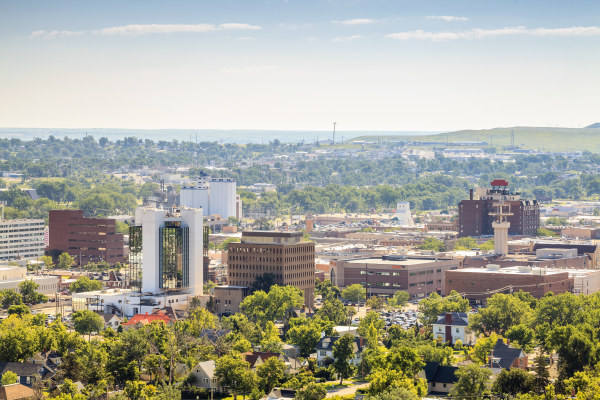
Rapid City, South Dakota is a mid-sized city with a population of 79,549 inhabitants. If we take a look at the last Census, the vast majority of the population falls within one racial group (79% White). Given that fact, Rapid City could be considered less diverse than other cities. Single men and women might be happy to hear that in Rapid City, only 50% of the population is married. If you're not a fan of traffic congestion and long commute times to work, Rapid City is the place to be. Commutes to work here are shorter, with an average one-way commute time taking only 17 minutes, significantly lower than the national average of 26 minutes.
Without the right tools, moving to any new area can be very stressful and challenging. Living in Rapid City, South Dakota could be a fulfilling experience for anyone who puts in the time to do the research required. When searching for a new neighborhood, several key items should be considered. Safety is paramount, ensuring a secure environment for you and your family. Proximity to workplaces or schools reduces commuting time and enhances convenience. Access to amenities like parks, grocery stores and healthcare facilities contributes to a comfortable lifestyle. Reliable public transportation options promote easy mobility. A strong sense of community fosters social connections and a welcoming atmosphere. The best areas in Rapid City and in surrounding cities are easier to find when you are able to make informed decisions. Using data from crime, cost of living, commute, education, you will see a detailed breakdown of the most important information as well as comparisons to the South Dakota and national averages.
Rapid City has a livability score of 75/100 and is ranked #28 in South Dakota and #3,943 in the USA. Pack your bags! This is a very high score in comparison to other US cities. Living in Rapid City could be a great choice! For each of the livability categories, we see that Rapid City ranks very well for amenities (A), cost of living (A+) and housing (A+). Rapid City does not fare well for the following: crime (F). It might be a smart idea to take a closer look at each category to find out why.
If you're considering living in Rapid City, it comes with numerous advantages, particularly in the form of an extensive selection of local amenities. These amenities play a pivotal role in elevating the quality of life within this vibrant community. From easily accessible grocery stores, to conveniently located fitness facilities, a diverse range of dining establishments and a multitude of shopping options, Rapid City provides a comprehensive array of resources for its residents. This ensures the effortless fulfillment of your daily needs and creates ample opportunities for relaxation and recreation. The convenience of these local offerings greatly contributes to the overall appeal of the area, making it an enticing destination for those in search of convenience, diversity, and a gratifying lifestyle. If you're contemplating a move, the abundance of local amenities could very well be a defining characteristic of this area. A few of the enjoyable things to experience and sights to see are: Cosmos of the Black Hills, Storybook Island, and Fort Hays Chuckwagon Supper & Cowboy Music Show.
For home buyers, real estate will be the largest purchase they will ever make and it will also be their most valuable asset. For renters, the monthly rent paid on their Rapid City apartments will most likely be their largest expense. Based on tangible metrics like home and rental affordability and appreciation rates, housing in this area has received a score that is well above the average of every other US city. A thriving real estate market can also generate strong local economic activity and job creation.
Certain items on your wish list like shopping, restaurants, nightlife, parks and proximity to public transportation are all important things to look for. Having said that, perhaps the most important metric to consider when contemplating a move to Rapid City is real estate affordability. The median home price for Rapid City homes is $341,074, which is 30.9% higher than the South Dakota average. If we take a closer look at the affordability of homes in Rapid City, we’ll see that the home price to income ratio is 4.3, which is 30.3% higher than the South Dakota average.

| Statistic | Rapid City | South Dakota | National |
| Average one way commute | 17min | 17min | 26min |
| Workers who drive to work | 81.9% | 79.6% | 76.4% |
| Workers who carpool | 7.1% | 9.1% | 9.3% |
| Workers who take public transit | 1.3% | 0.5% | 5.1% |
| Workers who bicycle | 0.9% | 0.5% | 0.6% |
| Workers who walk | 2.3% | 3.8% | 2.8% |
| Working from home | 5.9% | 5.5% | 4.6% |

 Here are the best places to live in South Dakota
 Check out the 10 most dangerous cities in South Dakota
 See the best places to live in Rapid City
 Most Dangerous Cities In The US