

 Crime
Crime
Crime per 100,000 people is significantly lower than the national average, making it a safe place to live. These crime statistics include both violent and property crimes.
 Employment
Higher than average median household income, income per capita and lower unemployment rates are seen in this area. The result is a high score in the employment category.
 Schools
The schools category earns a high score due to factors like exceptional test scores, strong education levels and the close proximity of elementary and high schools in this area.
 Ratings
Based on recent surveys and polls, locals gave high marks in the walkability to local amenities, safety, public transit, friendliness of neighbors and overall sense of community in the area.
 Amenities
The majority of amenities are not ideally located within walking distance. To access these amenities, residents may be required to rely on a vehicle or public transit.
 Cost Of Living
Living in this region comes with a high cost of living, translating to elevated costs for homes, goods and services, groceries, utilities, health care and transportation.
Paradise Valley is a moderately-sized city located in the state of Arizona. The city has a population of 14,999 people. If we take a look at the last Census, the vast majority of the population falls within one racial group (87% White). Given that fact, Paradise Valley could be considered less diverse than other cities. Paradise Valley is considered to be a city with an aging population. The average age of all residents is 55, which is well beyond the United States median age average. If you are looking for a family friendly city, Paradise Valley might be a good fit as 75% of the population over 15 years old are married, and 28% have kids who are 18 years old or younger. Long commute times to work can be incredibly frustrating, ranking just behind housework on the list of life's annoyances. If you opt to make Paradise Valley your home, your one-way commute time will typically last around 25 minutes, a duration that aligns with the national average commute time of 26 minutes.
Whether you’re moving to a new town to be closer to family, friends or for a new job, living in Paradise Valley could be a positive experience compared to other cities in Arizona if you know where to look. Don't forget to determine what matters most to you in a neighborhood. Consider factors such as safety, proximity to work or school, access to amenities (like parks, fitness facilities, grocery stores, restaurants), public transportation options, community atmosphere and the overall vibe you're looking for. Finding the best places to live in Paradise Valley and nearby areas is a much easier task when you can rely on information and data from the livability score, which includes cost of living, commute, health & safety, education, employment and other important metrics.
With a livability score of 62 out of 100, Paradise Valley is ranked #15,325 in the United States and #111 in Arizona. There are nine total categories that form the livability score. Paradise Valley scores well for crime (A+) and education (A+) On a more negative note, Paradise Valley does not have favorable grades for the following: amenities (F) and cost of living (F). If we take a look at the data, we can find out why.
Ensuring a sense of security is paramount for the majority of residents in any area. Low crime rates exert a positive influence on various aspects, including home prices, rates of home appreciation and the cultivation of positive community dynamics and social cohesion. In the case of Paradise Valley, it boasts a notably low violent crime rate of 80 crimes per 100,000 residents, which significantly outperforms the national average.
The unemployment rate in Paradise Valley has consistently declined over the years and currently stands well below the national average at 1.2%. This downward trend holds the potential to reduce poverty and inequality within the region, promote higher wage levels and stimulate greater economic growth. Such positive indicators signal the overall robust health of the local economy, offering a promising outlook for its residents and fostering an environment of financial well-being and prosperity.
Parents and families often rely on school test scores when making decisions about local public schools. Test score data serves as a crucial metric for comparing and assessing various educational institutions. In Paradise Valley, the average school test scores reached an impressive 72%, significantly higher than the national average. This remarkable performance underscores the commitment of the educational system to equip students with the knowledge and resources necessary for success. It allows your children to receive the support and skills that are essential for thriving academically, making Paradise Valley an excellent choice for families seeking a high-quality education.
Being close to public transit, grocery stores, parks and other conveniences are all important when weighing your options for a new home in Paradise Valley. Before you determine if any of these amenities are available in the area, you will also want to know if the real estate prices in Paradise Valley are affordable. Median real estate prices in Paradise Valley come in at $3,044,510, which is 877.5% higher than the Arizona average. The home price to income ratio compares the median home prices to the median household income. In Paradise Valley, the home price to income ratio is 9.4, which is 129.3% higher than the Arizona average.
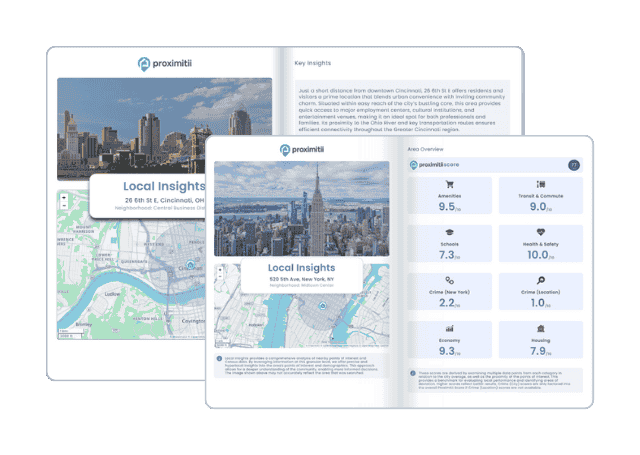
Why stop at city-to-city? With Local Insights, you can compare neighborhoods, zip codes, or even exact addresses. Access 300+ hyperlocal data points—from schools and crime to housing and amenities—to see which area is the better fit.

| Statistic | Paradise Valley | Arizona | National |
| Average one way commute | 25min | 25min | 26min |
| Workers who drive to work | 69.1% | 76.7% | 76.4% |
| Workers who carpool | 6.7% | 10.9% | 9.3% |
| Workers who take public transit | 0.4% | 2.0% | 5.1% |
| Workers who bicycle | 0.8% | 1.0% | 0.6% |
| Workers who walk | 1.8% | 2.0% | 2.8% |
| Working from home | 19.6% | 5.7% | 4.6% |

 Here are the best places to live in Arizona
 See the best places to live in Paradise Valley
 Check out the 10 most dangerous cities in Arizona
 These are the 10 cheapest cities in Arizona