
| Statistic | Reportedincidents | /100k people | Oblong/100k people | Illinois/100k people | National/100k people |
| Total crime | 8 | n/a (estimate) | 599 | 2,004 | 2,119 |
| Murder | 0 | n/a | 0.0 | 5.8 | 5.0 |
| Rape | 0 | n/a | 0.0 | 46.9 | 37.5 |
| Robbery | 0 | n/a | 0.0 | 90.2 | 60.6 |
| Assault | 0 | n/a | 0.0 | 146.3 | 256.1 |
| Violent crime | 0 | n/a (estimate) | 0 | 289 | 359 |
| Burglary | 1 | n/a | 74.9 | 290.5 | 229.2 |
| Theft | 7 | n/a | 524.0 | 1,134.4 | 1,272.1 |
| Vehicle theft | 0 | n/a | 0.0 | 290.4 | 258.8 |
| Property crime | 8 | n/a (estimate) | 599 | 1,715 | 1,760 |
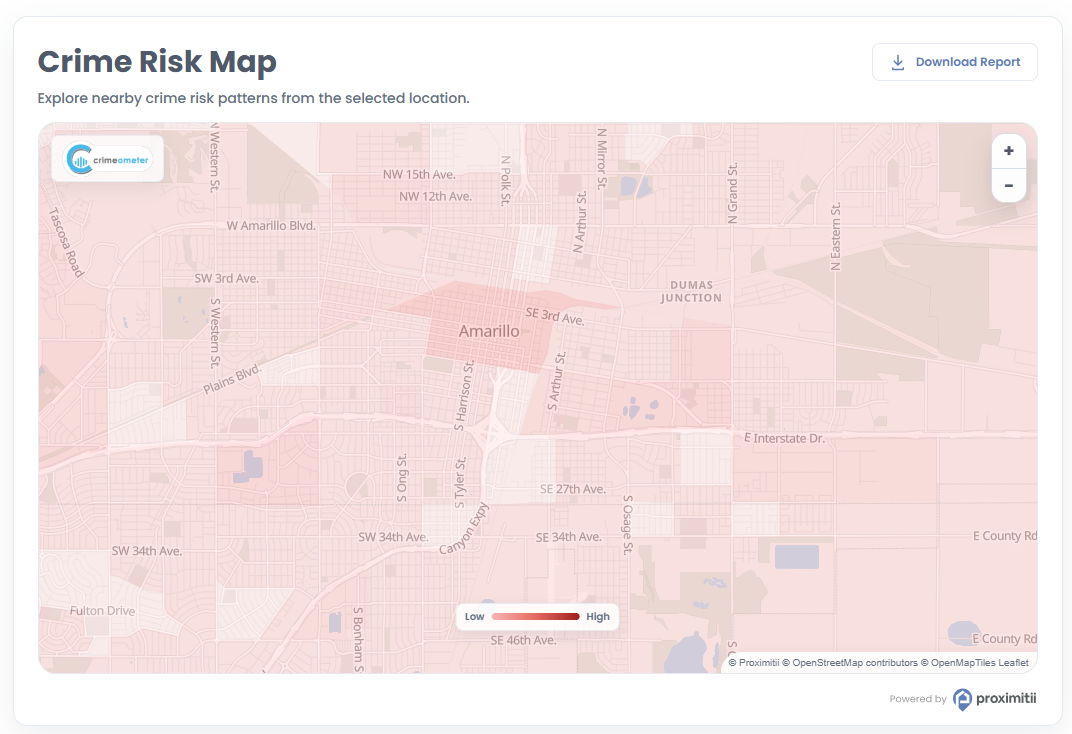

Crime can be categorized into two primary types: violent and property crimes. Violent crimes encompass offenses such as murder, rape, robbery, and assault, whereas property crimes involve acts like burglary, theft, and vehicle theft. The overall crime rate in Oblong is 71.7% lower than the national average. Specifically, there were 0 violent crimes reported in Oblong, equivalent to 0 per 100,000 residents, which is lower than the national average by 100%. Additionally, Oblong recorded 8 property crimes, amounting to 599 per 100,000 people, lower than the national average by 66%.
With a crime rate of 599, significantly below the national average of 2119, Oblong stands out as one of the safest places to reside in the United States. This distinction is primarily attributed to the calculation of total crimes, which encompasses both violent and property crimes per 100,000 residents.
Oblong reported zero instances of violent crime in the latest crime report, underscoring its exceptional safety profile in this regard. Violent crimes serve as a crucial gauge of a city's overall safety, and the absence of such incidents in Oblong signifies it as a remarkably secure urban environment concerning violent crime.
In the latest reported crime year, Oblong recorded zero homicides. This statistic potentially positions the city as a paragon of security, radiating a profound sense of safety for its residents. A low number of severe violent crimes instills a deep feeling of well-being among its community but also establishes a lofty benchmark for other locales aspiring to foster equally secure environments.
Since 1990, property crime rates per 100,000 people in the United States have steadily decreased. Recently, the average did increase slightly. Having said that, Oblong has a property crime rate that is well below the national average with only 599 reported property crimes compared to the national average of 1760. Based on this report, Oblong remains a very safe place to live with regards to property crime.
The United States experiences some of the highest vehicle theft rates in the world, with about 300 vehicle thefts per 100,000 people. In fact, only a small percentage (about 10%) of cities were lucky enough to report no stolen vehicles at all. Oblong was one of those cities, as it had no reported vehicle thefts in the most recent crime report.
Is Oblong a safe place to live? While the answer may not be straightforward due to variations in safety levels across the city, gaining an understanding of the overall crime rate can prove to be advantageous. In general, Oblong has a crime rate that is lower than the national average by 72%. Breaking this down on a daily basis, it translates to 0.02 daily incidents, encompassing 0 violent crimes and 0.02 property crimes. Evaluating these statistics can aid in forming a more informed perspective on the safety of Oblong as a potential place to call home.
Year-over-year crime data allows residents and potential residents to assess the crime in Oblong. A decrease in crime rates may indicate improving safety, while an increase could raise concerns. The year-over-year crime rate in Oblong has decreased by 74.2%. Violent crimes have decreased by 100%, while property crimes have decreased by 65.2%. By comparing crime rates from one year to the next, authorities and communities can identify trends and patterns in criminal activity. This helps in understanding whether crime is increasing, decreasing, or remaining stable over time.
Regions characterized by high population density frequently encompass expansive urban hubs that offer diverse economic prospects. In such areas, income inequality can be exacerbated, creating pockets of poverty alongside affluence. Economic disparities within these regions may correlate with elevated property crimes and, in certain instances, violent crimes. Conversely, areas with low population density numbers generally exhibit reduced Oblong crime rates. Oblong registers a population density of 1403 people per square mile, in contrast to the national average of 90.6 people per square mile.
High cost of living can lead to economic stress for individuals and families, particularly those with limited financial resources. When people struggle to make ends meet due to high housing costs, healthcare expenses, or other basic necessities, they may be more inclined to engage in criminal activities, such as theft or fraud, as a means of financial survival. On the flipside, cities that have a lower cost of living, could see a reduced crime rate. In Oblong, the cost of living is 17.93% lower than the national average.
High rental costs can limit economic mobility, making it difficult for individuals to save money, invest in education, or access better job opportunities. This can perpetuate a cycle of poverty and increase the risk of involvement in criminal activities. In summary, high rental costs can create economic challenges, overcrowding, and neighborhood dynamics that may increase the likelihood of certain types of crime, particularly property crimes. In Oblong, the average rental rates are $720 per month, compared to the national average of $1,444.

| Item | Oblong | Illinois | National |
| Law enforcement employees (officers & civilians) | 1 | 30,690 | 558,732 |
| Police officers & civilians /1000 residents | 0.7 | 2.6 | 3.3 |
| State | Total offenders | Illinois /100K | National /100K |
| Illinois | 32,213 | 263 | 266 |
| City | Population | Violent crime/100k people | Property crime/100k people | Total crime/100k people |
| Newton, IL | 2,985 | 293 | 1,280 | 1,572 |
| Robinson, IL | 7,675 | 301 | 1,607 | 1,909 |
| Stoy, IL | 149 | 383 | 2,275 | 2,658 |
| Annapolis, IL | 29 | 395 | 2,343 | 2,737 |
| Hutsonville, IL | 585 | 421 | 2,496 | 2,916 |
| Ste. Marie, IL | 367 | 429 | 2,545 | 2,974 |
| Flat Rock, IL | 477 | 436 | 2,587 | 3,023 |
| Oblong, IL | 1,557 | 0 | 599 | 599 |
| City | Population | Violent crime/100k people | Property crime/100k people | Total crime/100k people |
| Mount Carroll, IL | 1,557 | 350 | 350 | 699 |
| Seeley Lake, MT | 1,557 | 137 | 523 | 660 |
| East Carbon-Sunnyside, UT | 1,557 | 125 | 764 | 889 |
| Baidland, PA | 1,556 | 63 | 370 | 433 |
| Glenville, WV | 1,556 | 114 | 533 | 647 |
| Oblong, IL | 1,557 | 0 | 599 | 599 |

 Here are the best places to live in Illinois
 Most Dangerous States In The US
 Check out the 10 safest cities in Illinois
 These are the largest cities in Illinois