

Knoxville, TN, known as "The Marble City," is renowned for its rich history and vibrant cultural scene. Located in eastern Tennessee along the Tennessee River, Knoxville is approximately 180 miles northeast of Nashville and 110 miles south of Lexington, KY. This medium-sized city is known for its beautiful landscapes and historical significance.
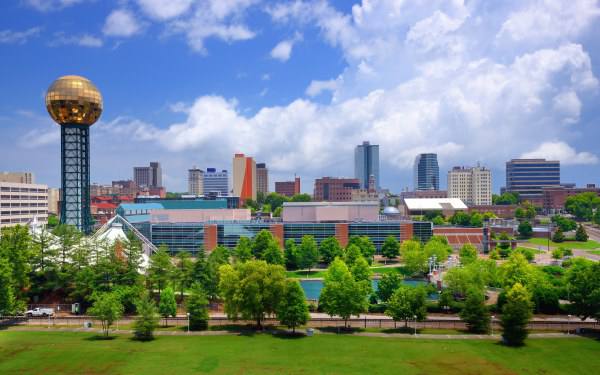
Knoxville's climate features hot, humid summers and mild winters, providing ideal conditions for year-round outdoor activities. The city boasts numerous parks and recreational areas, including the scenic Ijams Nature Center and the expansive World's Fair Park, which offer trails, gardens, and opportunities for boating and fishing.
The cultural scene in Knoxville is vibrant, with attractions like the Knoxville Museum of Art, the East Tennessee History Center, and the historic Tennessee Theatre. The city hosts a variety of events and festivals throughout the year, including the Dogwood Arts Festival and the Big Ears Festival, celebrating the city's artistic and cultural achievements.
Education is a priority in Knoxville, with institutions like the University of Tennessee providing higher education opportunities. The city's public and private schools are highly regarded, making Knoxville an attractive place for families. The presence of major healthcare institutions, such as the University of Tennessee Medical Center, also supports a strong job market.
Living in Knoxville combines the benefits of a vibrant cultural scene with a high quality of life. Residents enjoy access to excellent healthcare facilities, diverse dining options, and a range of housing choices. The city's efficient public transportation system and well-maintained infrastructure make commuting and exploring the area convenient. With its historical richness, cultural vibrancy, and welcoming atmosphere, Knoxville offers a dynamic and fulfilling living experience.
Knoxville, Tennessee is a mid-sized city with a population of 193,504 people. According to the most recent Census, 76% of Knoxville residents are White, 17% Black and 2% Asian. Knoxville tends to attract a younger crowd, as the median age of 33 is far below the national average. Knoxville is not known to have a high population (over 15 years old) of married people. At only 42% married, this city falls well below the national average. If you prefer shorter commutes, living in Knoxville will be a delight. With an average one-way commute time of just 21 minutes, traveling to and from work is notably more convenient than the national average, which stands at 26 minutes.
Without the right tools, relocating to any new town can be very stressful and challenging. Living in Knoxville, Tennessee could be a fulfilling experience for anyone who puts in the time to do the research required. When searching for a new neighborhood, several key items should be considered. Safety is paramount, ensuring a secure environment for you and your family. Proximity to workplaces or schools reduces commuting time and enhances convenience. Access to amenities like parks, grocery stores and healthcare facilities contributes to a comfortable lifestyle. Reliable public transportation options promote easy mobility. A strong sense of community fosters social connections and a welcoming atmosphere. Using the livability score which includes data from categories like crime, commute, health & safety, education, employment, you can easily compare the best places to live in Knoxville and also determine if there are any nearby cities that might be a better match for your lifestyle. You can also compare Knoxville to Tennessee and the national average.
The livability score in Knoxville is 73/100 and the city is ranked in the 84th percentile of all cities across America. If we consider each of the categories on their own, we see that Knoxville ranks well for housing (A+). Unfortunately for Knoxville, there are some categories for which it does not score well, this includes: crime (F), education (D) and employment (D-).
A robust real estate market serves as a crucial economic indicator, reflecting the local area's strength, stability and the confidence of its residents. Knoxville excels in the housing sector, scoring high marks based on factors such as median home and rental prices, appreciation rates and home affordability. These calculations suggest that the apartment rental and real estate market in the region is exceptionally healthy, highlighting the area's economic vitality and attractiveness to potential homebuyers and renters.
Assuming that Knoxville meets all of your requirements like low crime rates, good schools and great local amenities, the next most important item to examine is the affordability of real estate in Knoxville. Everything else becomes a lot less important if it turns out that home prices in Knoxville are simply unattainable. Median real estate prices in Knoxville come in at $251,575, which is 4% lower than the Tennessee average. The home price to income ratio compares the median home prices to the median household income. In Knoxville, the home price to income ratio is 4, which is 8.1% higher than the Tennessee average.

| Statistic | Knoxville | Tennessee | National |
| Average one way commute | 21min | 25min | 26min |
| Workers who drive to work | 78.1% | 83.6% | 76.4% |
| Workers who carpool | 8.9% | 9.2% | 9.3% |
| Workers who take public transit | 1.5% | 0.8% | 5.1% |
| Workers who bicycle | 0.4% | 0.1% | 0.6% |
| Workers who walk | 4.0% | 1.4% | 2.8% |
| Working from home | 6.5% | 3.9% | 4.6% |

 Here are the best places to live in Tennessee
 See the best places to live in Knoxville
 Safest States In The US
 Most Dangerous Cities In The US