
| Statistic | Reportedincidents | /100k people | Fraser/100k people | Michigan/100k people | National/100k people |
| Total crime | 313 | n/a (estimate) | 2,181 | 1,813 | 2,119 |
| Murder | 1 | n/a | 7.0 | 5.2 | 5.0 |
| Rape | 6 | n/a | 41.8 | 56.5 | 37.5 |
| Robbery | 2 | n/a | 13.9 | 31.3 | 60.6 |
| Assault | 25 | n/a | 174.2 | 341.3 | 256.1 |
| Violent crime | 34 | n/a (estimate) | 237 | 434 | 359 |
| Burglary | 17 | n/a | 118.5 | 184.2 | 229.2 |
| Theft | 237 | n/a | 1,651.6 | 963.6 | 1,272.1 |
| Vehicle theft | 25 | n/a | 174.2 | 231.0 | 258.8 |
| Property crime | 279 | n/a (estimate) | 1,944 | 1,379 | 1,760 |

The Fraser crime rates are 2.9% higher than the national average. There are two main categories of crime - violent crime and property crime. Violent crime consists of murder, rape, robbery and assault, while property crimes include burglary, theft and vehicle theft. There were a total of 34 violent crimes in Fraser (237 per 100,000 people), which is 34% lower than the national average and there were a total of 279 property crimes (1944 per 100,000 residents) which is 10.5% higher than average.
When evaluating the Fraser crime rate for every 100,000 residents, it positions itself in the middle range among all cities that reported crime. Our examination of total offenses, spanning both violent and property crimes, indicates that the reported Fraser crime rates closely correspond to the national average reported by other regions.
Fraser has a property crime rate that closely mirrors the national average. There were a total of 1944 property crimes in Fraser, while the national average was 1760 per 100,000 people. This results in the area being no safer or more dangerous than the average city.
Is Fraser a safe place to live? While the answer may not be straightforward due to variations in safety levels across the city, gaining an understanding of the overall crime rate can prove to be advantageous. In general, Fraser has a crime rate that is higher than the national average by 3%. Breaking this down on a daily basis, it translates to 0.86 daily incidents, encompassing 0.09 violent crimes and 0.76 property crimes. Evaluating these statistics can aid in forming a more informed perspective on the safety of Fraser as a potential place to call home.
In the most recent crime report, year-over-year crime rates in Fraser has increased by 46.3%. Examining the change in crime rates from one year to the next provides valuable insights into the evolving safety landscape of Fraser, aiding residents in assessing whether it is becoming a safer or more dangerous place to live. These crime rates are categorized into two primary groups: violent and property crimes. Year-over-year, violent crime has decreased by 10.5%, while property crime has increased by 58.5%. This comprehensive analysis offers potential residents essential information for making informed decisions about whether or not Fraser is a safe place to live.
The economic prosperity of a city's inhabitants exerts substantial influence on crime stats. Elevated poverty rates and income inequality can precipitate heightened criminal activity, as individuals may turn to illicit means to fulfill their fundamental requirements. While lower poverty rates could lead to lower Fraser crime rates. In Fraser, the poverty rate stands at 11.7%, diverging from the national average of 15.1%.
Regions characterized by high population density frequently encompass expansive urban hubs that offer diverse economic prospects. In such areas, income inequality can be exacerbated, creating pockets of poverty alongside affluence. Economic disparities within these regions may correlate with elevated property crimes and, in certain instances, violent crimes. Conversely, areas with low population density numbers generally exhibit reduced Fraser crime rates. Fraser registers a population density of 3577.5 people per square mile, in contrast to the national average of 90.6 people per square mile.
The educational level achieved in any given city can influence crime rates significantly. Greater educational achievement is frequently associated with decreased crime rates, as it offers individuals improved job prospects and alternatives to engaging in crime related activities. Conversely, lower educational attainment rates tend to coincide with elevated crime rates. In Fraser, 89.7% of residents have successfully graduated from high school, in contrast to the national average where 83% have achieved high school graduation.
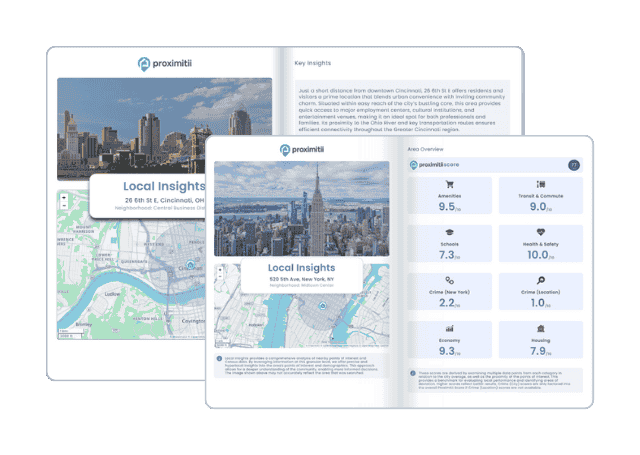
Why stop at city-to-city? With Local Insights, you can compare neighborhoods, zip codes, or even exact addresses. Access 300+ hyperlocal data points—from schools and crime to housing and amenities—to see which area is the better fit.

| Item | Fraser | Michigan | National |
| Law enforcement employees (officers & civilians) | 46 | 10,515 | 558,732 |
| Police officers & civilians /1000 residents | 3.2 | 2.1 | 3.3 |
| State | Total offenders | Michigan /100K | National /100K |
| Michigan | 40,460 | 414 | 266 |
| City | Population | Violent crime/100k people | Property crime/100k people | Total crime/100k people |
| Village of Grosse Pointe Shores, MI | 2,877 | 68 | 216 | 284 |
| Huntington Woods, MI | 6,528 | 32 | 305 | 337 |
| Berkley, MI | 15,712 | 34 | 343 | 377 |
| Rochester, MI | 13,503 | 24 | 378 | 401 |
| New Baltimore, MI | 12,588 | 42 | 401 | 443 |
| Beverly Hills, MI | 10,767 | 48 | 494 | 542 |
| Pleasant Ridge, MI | 2,661 | 78 | 507 | 585 |
| Fraser, MI | 14,815 | 237 | 1,944 | 2,181 |
| City | Population | Violent crime/100k people | Property crime/100k people | Total crime/100k people |
| Midlothian, IL | 14,817 | 200 | 1,565 | 1,765 |
| Dayton, NV | 14,811 | 263 | 1,435 | 1,697 |
| Morris, IL | 14,819 | 315 | 1,513 | 1,828 |
| Destin, FL | 14,810 | 102 | 541 | 643 |
| Mill Valley, CA | 14,823 | 95 | 1,003 | 1,098 |
| Fraser, MI | 14,815 | 237 | 1,944 | 2,181 |

 Here are the best places to live in Michigan
 Safest States In The US
 These are the largest cities in Michigan
 Safest Cities In The US