

 Cost Of Living
The overall cost of living in this area is much lower than average. This includes everyday goods and services, as well as housing, utilities and health care.
 Housing
This area has received high scores in the housing category. This could be due to a positive home affordability ratio, high appreciation rates or elevated home values.
 Health & Safety
A high score in the health and safety category is a result of good air quality and the accessibility to health facilities such as hospitals, clinics, doctors, pharmacies and fire stations.
 Commute
Public transportation is not readily available in this area and the average commute time to work could also be longer than the national average.
 Crime
Crime
This area is reporting high crime rates per 100,000 people and could signify that it is a dangerous place to live. Crime rates include both violent and property crimes.
 Employment
A low score in the employment category could indicate that this area struggles with high unemployment rates and low household income and income per capita levels.
Located in the state of Washington, Clarkston is a small-sized city with a population of 7,664 people. In Clarkston, there are 3,839 people per square mile, which is well above the national population density average. At 87%, the majority of the Clarkston population is White; this is followed by 3% Asian and 3% American Indian and Alaskan. Single men and women might be happy to hear that in Clarkston, only 38% of the population is married. If you prefer shorter commutes, living in Clarkston will be a delight. With an average one-way commute time of just 15 minutes, traveling to and from work is notably more convenient than the national average, which stands at 26 minutes.
Whether you’re relocating to a new area to be closer to family, friends or for a new job, living in Clarkston could be a positive experience compared to other cities in Washington if you know where to search. Don't forget to determine what matters most to you in a neighborhood. Consider factors such as safety, proximity to work or school, access to amenities (like parks, fitness facilities, grocery stores, restaurants), public transportation options, community atmosphere and the overall vibe you're looking for. With useful information like crime, cost of living, education and other key data points, finding the best places to live in Clarkston and in the areas around Clarkston is a much easier task.
Using data and statistics Clarkston has received a livability score of 69 out of 100. This score is ranked in the 72nd percentile when compared to all other cities. Based on the grades for each individual category, Clarkston has received high marks for cost of living (A+) and housing (A). There are some categories that Clarkston does not rank well for, including: amenities (D), crime (F) and employment (F). It might be worth taking a closer look to determine why.
Finding affordable real estate and housing in Clarkston can be tricky. Having said that, this area might be the place to get the best of both worlds. Based on factors like home/rental affordability and appreciation rates, this area has received an above average score in the housing category. A healthy real estate market can lead to wealth appreciation for property owners, as rising property values can contribute to homeowners' equity, financial stability and the ability to build long-term wealth.
Assuming that Clarkston meets all of your requirements like low crime rates, good schools and great local amenities, the next most important item to examine is the affordability of real estate in Clarkston. Everything else becomes a lot less important if it turns out that home prices in Clarkston are simply unattainable. The median home price for Clarkston homes is $256,815, which is 47.8% lower than the Washington average. If we take a closer look at the affordability of homes in Clarkston, we’ll see that the home price to income ratio is 4.3, which is 20.4% lower than the Washington average.
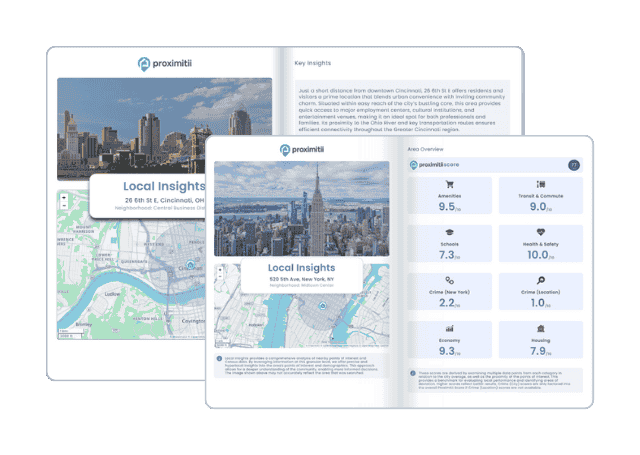
Why stop at city-to-city? With Local Insights, you can compare neighborhoods, zip codes, or even exact addresses. Access 300+ hyperlocal data points—from schools and crime to housing and amenities—to see which area is the better fit.

| Statistic | Clarkston | Washington | National |
| Average one way commute | 15min | 27min | 26min |
| Workers who drive to work | 77.2% | 72.3% | 76.4% |
| Workers who carpool | 12.3% | 10.2% | 9.3% |
| Workers who take public transit | 0.0% | 6.2% | 5.1% |
| Workers who bicycle | 0.6% | 0.9% | 0.6% |
| Workers who walk | 5.7% | 3.6% | 2.8% |
| Working from home | 2.6% | 5.6% | 4.6% |

 Here are the best places to live in Washington
 Safest States In The US
 These are the largest cities in Washington
 See the best places to live in Clarkston