
| Statistic | Reportedincidents | /100k people | Buffalo/100k people | Wyoming/100k people | National/100k people |
| Total crime | 40 | n/a (estimate) | 853 | 1,435 | 2,119 |
| Murder | 0 | n/a | 0.0 | 2.4 | 5.0 |
| Rape | 1 | n/a | 21.3 | 58.0 | 37.5 |
| Robbery | 0 | n/a | 0.0 | 7.1 | 60.6 |
| Assault | 3 | n/a | 64.0 | 135.8 | 256.1 |
| Violent crime | 4 | n/a (estimate) | 85 | 203 | 359 |
| Burglary | 11 | n/a | 234.7 | 171.2 | 229.2 |
| Theft | 24 | n/a | 512.1 | 954.5 | 1,272.1 |
| Vehicle theft | 1 | n/a | 21.3 | 106.2 | 258.8 |
| Property crime | 36 | n/a (estimate) | 768 | 1,232 | 1,760 |

The Buffalo crime rates are 59.7% lower than the national average. There are two main categories of crime - violent crime and property crime. Violent crime consists of murder, rape, robbery and assault, while property crimes include burglary, theft and vehicle theft. There were a total of 4 violent crimes in Buffalo (85 per 100,000 people), which is 76.2% lower than the national average and there were a total of 36 property crimes (768 per 100,000 residents) which is 56.4% lower than average.
With only 85 incidents per 100,000 people, Buffalo boasts an exceptionally low rate of violent crimes, positioning it as one of the safest cities in the United States. Given these low violent crime rates, Buffalo has become an appealing destination for individuals in search of a secure and welcoming place to establish their new home.
During the most recently reported crime year, Buffalo experienced a total of 0 reported murders. This statistic paints it as a beacon of security when it comes to severe violent crimes. Such an achievement not only instills a profound sense of security for its residents but also sets a high standard for other communities striving to create similarly secure environments. It underscores the area as a place where safety is a top priority, enhancing its appeal as a desirable location to live and thrive.
AreaVibes has conducted polls asking local residents if they feel safe living in Buffalo. Based on the results of the surveys (18 responses), 83% of people felt that there was very little crime in Buffalo and felt safe walking alone at night. While 17% of people felt that it was not a safe place to live and did not feel safe walking alone at night.
Before you decide to relocate, it’s always good to ask yourself “Is Buffalo a safe place to live?” Although the answer might not be that simple, as some areas are safer than others, getting a good feel for the overall rate of crime can definitely be helpful. Overall, the Buffalo crime rate is 60% lower than the national average. If we break that down daily, that translates into 0.11 crimes per day - 0.01 violent crimes and 0.1 property crimes.
Examining year-over-year crime data provides insights into short-term trends with regards to the crime activity in Buffalo. This analysis involves comparing crime rates from one year to the next, enabling the identification of patterns and fluctuations in crime. Such information proves invaluable to residents seeking to make well-informed decisions about their choice of residence. In the most recent year, compared to the previous one, total crime in Buffalo has didn't change by 0%. Specifically, violent crime has decreased by 33.3%, while property crime has didn't change by 5.9%. This data empowers individuals with a clearer understanding of the evolving safety landscape in Buffalo.
Buffalo has a poverty rate that stands at 19.5, in contrast to the national average of 15.1. Historically, a direct correlation has been observed between poverty rates and crime stats. Higher poverty rates have led to higher crime rates, while lower poverty rates have led to a reduction in Buffalo crime rates. Income disparities and heightened poverty levels can serve as catalysts for elevated or reduced criminal activity, as individuals may or may not turn to illicit means to fulfill their basic needs. This could be one of many factors that may influence crime.
Regions characterized by high population density frequently encompass expansive urban hubs that offer diverse economic prospects. In such areas, income inequality can be exacerbated, creating pockets of poverty alongside affluence. Economic disparities within these regions may correlate with elevated property crimes and, in certain instances, violent crimes. Conversely, areas with low population density numbers generally exhibit reduced Buffalo crime rates. Buffalo registers a population density of 1064.2 people per square mile, in contrast to the national average of 90.6 people per square mile.
In areas where housing affordability is an issue, crime can become a significant concern. Some individuals and families may be forced to live in overcrowded or substandard housing conditions, which can increase stress and potentially contribute to domestic disputes and related crimes. The median home price in Buffalo is $399,401, compared to a national average of $326,622.
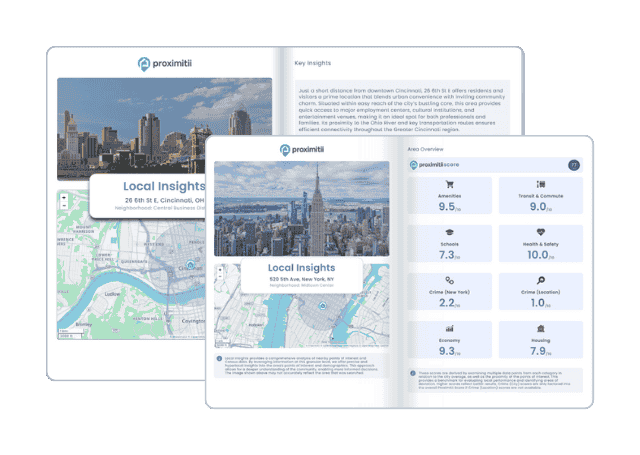
Why stop at city-to-city? With Local Insights, you can compare neighborhoods, zip codes, or even exact addresses. Access 300+ hyperlocal data points—from schools and crime to housing and amenities—to see which area is the better fit.

| Item | Buffalo | Wyoming | National |
| Law enforcement employees (officers & civilians) | 22 | 987 | 558,732 |
| Police officers & civilians /1000 residents | 4.7 | 3.2 | 3.3 |
| State | Total offenders | Wyoming /100K | National /100K |
| Wyoming | 2,403 | 423 | 266 |
| City | Population | Violent crime/100k people | Property crime/100k people | Total crime/100k people |
| Buffalo, WY | 4,760 | 85 | 768 | 853 |
| City | Population | Violent crime/100k people | Property crime/100k people | Total crime/100k people |
| West York, PA | 4,761 | 315 | 1,439 | 1,754 |
| Tuscola, IL | 4,761 | 369 | 521 | 891 |
| Greenfield CDP, CA | 4,762 | 505 | 2,159 | 2,664 |
| Deale, MD | 4,757 | 209 | 1,021 | 1,230 |
| Canastota, NY | 4,754 | 342 | 1,547 | 1,889 |
| Buffalo, WY | 4,760 | 85 | 768 | 853 |

 Here are the best places to live in Wyoming
 Check out the 10 safest cities in Wyoming
 Most Dangerous Cities In The US
 See the best places to live in Buffalo