

Located in the state of Alabama, Alexandria is a small city with a population of 4,327 people. At 83%, the majority of the Alexandria population is White; this is followed by 8% Black and 7% Native Hawaiian. On a daily basis, the typical American spends approximately 26 minutes on their one-way work commute. Reduced travel times not only contributes to increased overall happiness, but also affords more opportunities to cherish moments with family and friends. If you're living in Alexandria, your commute time will align closely with the national average, spanning a one-way duration of approximately 27 minutes.
If you’re considering relocating to any new city, it could be a very daunting task. However, it could also be a great experience if you are willing to get to know the town before actually living in Alexandria, Alabama. When searching for a new neighborhood, several key items should be considered. Safety is of utmost importance, ensuring a secure environment with low crime. Proximity to your workplace or school helps reduce commuting time and offers convenience. Access to amenities such as parks, grocery stores, and healthcare facilities enhances your daily life. Public transportation options contribute to easy mobility. A sense of community fosters a supportive and engaging environment. Lastly, the overall atmosphere should align with your desired lifestyle, ensuring a fulfilling living experience. Considering these items will guide you towards finding the perfect neighborhood that fits all your needs. With useful information like amenities, cost of living, health & safety, employment, housing and other key data points, finding the best places to live in Alexandria and in the areas around Alexandria is a much easier task.
Using data and statistics Alexandria has received a livability score of 70 out of 100. This score is ranked in the 75th percentile when compared to all other cities. If we consider each of the categories individually, we see that Alexandria ranks well for crime (A-), cost of living (A+), employment (A+) and housing (A+). There is at least one category that did not score well in Alexandria. The following was graded with a discouraging score: amenities (F) and education (D).
The Alexandria unemployment rate of 1.1% has continued to decrease over the years and is now well below the national average. The result could lead to reduced poverty and inequality in the area, higher wages and increased economic growth. This is a positive sign in the overall health of the local economy.
Finding affordable real estate and housing in Alexandria can be tricky. Having said that, this area might be the place to get the best of both worlds. Based on factors like home/rental affordability and appreciation rates, this area has received an above average score in the housing category. A healthy real estate market can lead to wealth appreciation for property owners, as rising property values can contribute to homeowners' equity, financial stability and the ability to build long-term wealth.
Certain items on your wish list like shopping, restaurants, nightlife, parks and proximity to public transportation are all important things to look for. Having said that, perhaps the most important metric to consider when contemplating a move to Alexandria is real estate affordability. Median real estate prices in Alexandria come in at $221,947, which is 5.8% lower than the Alabama average. The home price to income ratio compares the median home prices to the median household income. In Alexandria, the home price to income ratio is 1.7, which is 52.8% lower than the Alabama average.

| Statistic | Alexandria | Alabama | National |
| Average one way commute | 27min | 25min | 26min |
| Workers who drive to work | 84.7% | 85.7% | 76.4% |
| Workers who carpool | 9.7% | 8.8% | 9.3% |
| Workers who take public transit | 1.2% | 0.4% | 5.1% |
| Workers who bicycle | 0.0% | 0.1% | 0.6% |
| Workers who walk | 0.0% | 1.1% | 2.8% |
| Working from home | 4.4% | 2.9% | 4.6% |

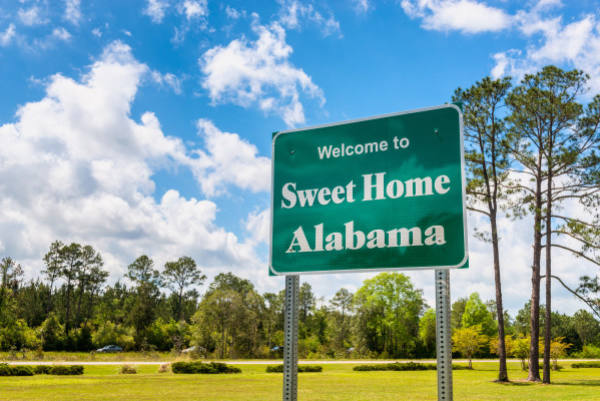 Here are the best places to live in Alabama
 See the best places to live in Alexandria
 Check out the 10 safest cities in Alabama
 These are the 10 cheapest cities in Alabama