
| Statistic | Reportedincidents | /100k people | Hamilton/100k people | Illinois/100k people | National/100k people |
| Total crime | 8 | n/a (estimate) | 299 | 2,004 | 2,119 |
| Murder | 0 | n/a | 0.0 | 5.8 | 5.0 |
| Rape | 0 | n/a | 0.0 | 46.9 | 37.5 |
| Robbery | 0 | n/a | 0.0 | 90.2 | 60.6 |
| Assault | 0 | n/a | 0.0 | 146.3 | 256.1 |
| Violent crime | 0 | n/a (estimate) | 0 | 289 | 359 |
| Burglary | 1 | n/a | 37.4 | 290.5 | 229.2 |
| Theft | 7 | n/a | 262.0 | 1,134.4 | 1,272.1 |
| Vehicle theft | 0 | n/a | 0.0 | 290.4 | 258.8 |
| Property crime | 8 | n/a (estimate) | 299 | 1,715 | 1,760 |
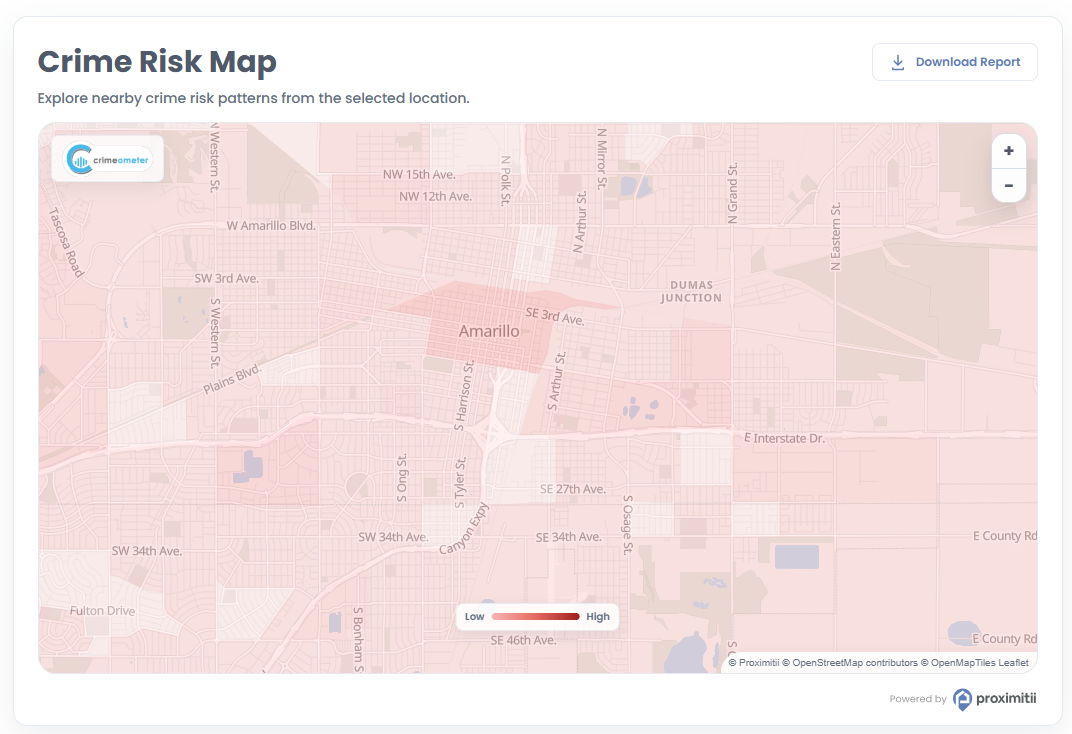

Crime can be categorized into two primary types: violent and property crimes. Violent crimes encompass offenses such as murder, rape, robbery, and assault, whereas property crimes involve acts like burglary, theft, and vehicle theft. The overall crime rate in Hamilton is 85.9% lower than the national average. Specifically, there were 0 violent crimes reported in Hamilton, equivalent to 0 per 100,000 residents, which is lower than the national average by 100%. Additionally, Hamilton recorded 8 property crimes, amounting to 299 per 100,000 people, lower than the national average by 83%.
Hamilton enjoys a remarkably low crime rate, standing at just 299, a significant contrast to the national average of 2119. This distinction firmly establishes Hamilton as one of the safest places to reside in the entire United States. This crime rate is meticulously calculated, taking into account the total occurrences of both violent and property crimes per 100,000 individuals, providing a comprehensive perspective on the area's safety and livability.
Hamilton proudly boasts an impeccable safety record with no reported instances of violent crime. This remarkable accomplishment reflects the city's dedication to fostering a secure environment for its residents and visitors. In an age where safety is so important, Hamilton shines as a beacon of tranquility. This absence of violent crime not only solidifies its reputation as a desirable place to live and visit but also provides a profound sense of security for all residents.
In the most recently reported crime year, Hamilton registered zero reported homicides. This statistic not only designates the area as an exemplar of security but also emanates a profound sense of safety within its community. A minimal incidence of severe violent crime not only fosters a strong sense of well-being among residents but also sets a commendable standard for other regions aiming to cultivate similarly safe surroundings.
Property crime rates per 100,000 individuals have exhibited a consistent decrease of about 50% since 1990, with a minor upturn observed in recent years. According to the latest crime data, Hamilton maintains a property crime rate of 299 incidents per 100,000 people, significantly below the national average of 1760. This serves as a strong indication of the status of Hamilton as a secure and desirable place to reside, emphasizing its commitment to safety and well-being within the community.
The United States contends with some of the world's highest vehicle theft rates, with approximately 300 vehicle thefts per 100,000 individuals. Remarkably, only a modest fraction, approximately 10%, of cities have been fortunate enough to have zero reported instances of stolen vehicles. Hamilton stands out as one of these cities, as it reported no vehicle thefts in the most recent crime report, underscoring its commitment to a secure environment.
Determining whether Hamilton is a place to live may not always yield a simple answer, given the city's varying safety levels across different areas. Nonetheless, comprehending the city's overall crime rate can be a valuable asset. In broad terms, Hamilton has an overall crime rate that is 86% lower than the national average. When we take a look at crime on a daily basis, this translates into 0.02 daily occurrences, comprising 0 violent crimes and 0.02 property crimes. Scrutinizing these statistics provides a foundation for a more informed assessment of the suitability of Hamilton as a potential place to establish residency.
The economic well-being of a city's residents plays a significant role in crime rates. High poverty rates and income inequality can lead to increased crime stats as individuals may resort to illegal activities to meet their basic needs. While lower rates could lead to a lower Hamilton crime rate. The poverty level in Hamilton is 10.4%, while the national average is 15.1%.
High population density areas are often large urban centers with diverse economic opportunities. These areas can exacerbate income inequality, with pockets of poverty existing alongside affluence. Areas with economic disparities may experience higher property crimes and, in some cases, violent crimes. On the other hand, areas with low population density tend to see lower Hamilton crime rates. The population density in Hamilton is 811.3 people per square mile, while the national average is 90.6 people per square mile.
In Hamilton, 88.9% of residents have successfully graduated from high school, whereas the national average stands at 83%. The educational makeup of any city can exert a significant influence on crime rates. Typically, higher levels of educational attainment are associated with reduced crime rates, as they furnish individuals with improved employment prospects and viable alternatives to engaging in criminal activities. Conversely, communities characterized by lower educational achievement often grapple with higher crime rates, as limited opportunities may drive individuals towards criminal behavior.

| Item | Hamilton | Illinois | National |
| Law enforcement employees (officers & civilians) | 4 | 30,690 | 558,732 |
| Police officers & civilians /1000 residents | n/a | 2.6 | 3.3 |
| State | Total offenders | Illinois /100K | National /100K |
| Illinois | 32,213 | 263 | 266 |
| City | Population | Violent crime/100k people | Property crime/100k people | Total crime/100k people |
| Nauvoo, IL | 973 | 218 | 436 | 654 |
| Warsaw, IL | 1,632 | 129 | 768 | 897 |
| Carthage, IL | 2,563 | 130 | 773 | 903 |
| Montrose, IA | 876 | 283 | 1,508 | 1,791 |
| Keokuk, IA | 10,556 | 287 | 1,586 | 1,874 |
| Bentley, IL | 18 | 371 | 2,201 | 2,572 |
| Lima, IL | 109 | 382 | 2,267 | 2,649 |
| Hamilton, IL | 2,889 | 0 | 299 | 299 |
| City | Population | Violent crime/100k people | Property crime/100k people | Total crime/100k people |
| North Kingsville, OH | 2,889 | 108 | 571 | 679 |
| Jarrettsville, MD | 2,889 | 104 | 507 | 611 |
| Rising Sun, MD | 2,890 | 108 | 647 | 755 |
| Tilton, IL | 2,890 | 276 | 3,310 | 3,585 |
| Sublimity, OR | 2,888 | 81 | 584 | 665 |
| Hamilton, IL | 2,889 | 0 | 299 | 299 |

 Here are the best places to live in Illinois
 Most Dangerous States In The US
 Check out the 10 most dangerous cities in Illinois
 Safest Cities In The US