

 Commute
A high commute score suggests convenient, easy access to public transportation, with shorter-than-average work commute times to work.
 Crime
Crime
The crime rate is far lower than the national average per 100,000 residents. As such, it should be considered a very safe place to live when compared to other areas.
 Employment
This area excels in the employment category with a score well above average, primarily due to the higher median home income, per capita income and low unemployment rates.
 Housing
High scores in the housing category are attributed to this area, possibly pointing to a favorable home affordability ratio, robust appreciation rates or elevated home values.
 Health & Safety
Achieving a high health and safety score relies on factors including great air quality and convenient access to vital health facilities such as hospitals, doctors, clinics and police stations.
 Cost Of Living
The cost of living in this area is notably high, making it a more expensive place to live. You'll find higher expenses for everyday goods and services, housing and groceries.
Farmingdale is a small-sized city located in the state of New York. The city has a population of 9,158 people. Farmingdale has a population density of 8,172 people per square mile. This would be considered well above the national population density level. At 79%, the majority of the Farmingdale population is White; this is followed by 8% Asian and 3% Black. When traveling to work, spending unnecessary time in your vehicle is not ideal and downright frustrating. Across all of America, the average one way commute time is 26 minutes, unfortunately, living in Farmingdale offers up a higher than average one way commute time of 34 minutes.
Without the right tools, moving to any new area can be very stressful and challenging. Living in Farmingdale, New York could be a positive experience for anyone who puts in the effort to do the research required. When searching for a new neighborhood, several key items should be considered. Safety is paramount, ensuring a secure environment for you and your family. Proximity to workplaces or schools reduces commuting time and enhances convenience. Access to amenities like parks, grocery stores and healthcare facilities contributes to a comfortable lifestyle. Reliable public transportation options promote easy mobility. A strong sense of community fosters social connections and a welcoming atmosphere. To help you find the best places to live in and around Farmingdale, AreaVibes has created a livability score using key metrics like crime, commute, education, housing and more.
Using data and statistics Farmingdale has received a livability score of 79 out of 100. This score is ranked in the 93rd percentile when compared to all other cities. This is a great score, as Farmingdale ranks well in multiple categories! Farmingdale is also ranked in the top 10 percentile of all cities across the USA. If we examine each of the categories on their own, we see that Farmingdale ranks well for crime (B), education (B-) and housing (A+). On a more negative note, Farmingdale does not have favorable grades for the following: cost of living (F). If we take a look at the data, we can find out why.
The Farmingdale unemployment rate of 2.6% has continued to decrease over the years and is now well below the national average. The result could lead to reduced poverty and inequality in the area, higher wages and increased economic growth. This is a positive sign in the overall health of the local economy.
A healthy real estate market serves as a key economic indicator. It could signify overall local economic strength, stability and reflects consumer confidence in the area. Based on multiple factors including: median home and rental prices, appreciation rates and home affordability, Farmingdale has received high marks in the housing category. Based on these calculations, the apartment rental and real estate market appears to be very healthy.
Farmingdale real estate prices and overall affordability will play a huge role in determining if the area is the right fit for you. Of course there are probably some other items on your “wish list”, but even before they are considered, let’s take a look at the home prices and affordability in Farmingdale. The median home price for Farmingdale homes is $742,609, which is 47.5% higher than the New York average. If we take a closer look at the affordability of homes in Farmingdale, we’ll see that the home price to income ratio is 4.9, which is 12.5% lower than the New York average.
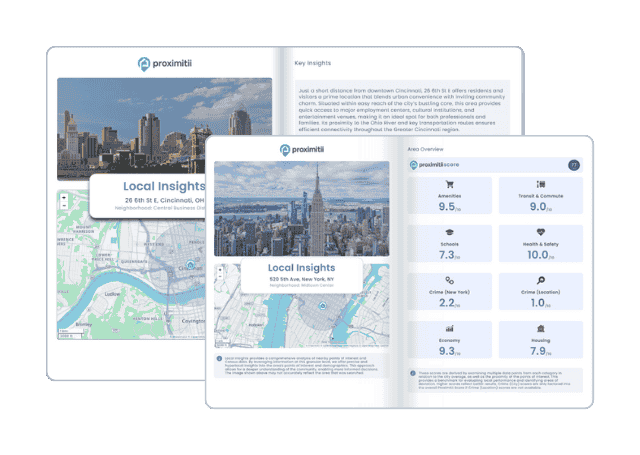
Why stop at city-to-city? With Local Insights, you can compare neighborhoods, zip codes, or even exact addresses. Access 300+ hyperlocal data points—from schools and crime to housing and amenities—to see which area is the better fit.

| Statistic | Farmingdale | New York | National |
| Average one way commute | 34min | 33min | 26min |
| Workers who drive to work | 76.4% | 53.0% | 76.4% |
| Workers who carpool | 5.9% | 6.7% | 9.3% |
| Workers who take public transit | 13.8% | 28.0% | 5.1% |
| Workers who bicycle | 0.9% | 0.7% | 0.6% |
| Workers who walk | 0.7% | 6.3% | 2.8% |
| Working from home | 2.1% | 4.0% | 4.6% |

 Here are the best places to live in New York
 Most Dangerous Cities In The US
 Check out the 10 safest cities in New York
 These are the 10 cheapest cities in New York