

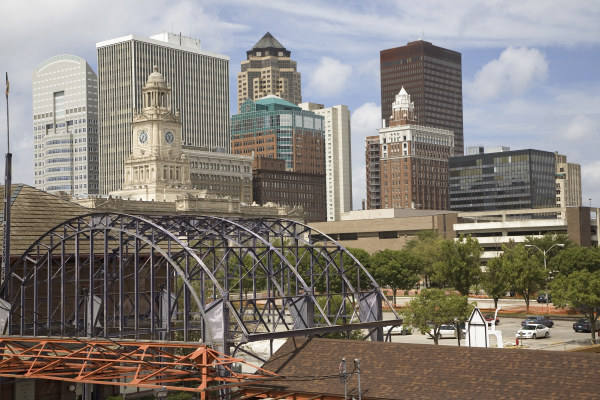
Des Moines, IA, known as 'The Hartford of the West,' offers a unique blend of historic charm and modern urban amenities. Located in the heart of Iowa, Des Moines is a large city that serves as the state capital and a major cultural and economic hub. Major nearby cities like Ames and West Des Moines enhance its status as a central point in the region. Des Moines's blend of historic landmarks, cultural festivals, and urban amenities creates a distinctive living experience.
Des Moines is home to several iconic landmarks, including the Iowa State Capitol, the historic Salisbury House, and the scenic Pappajohn Sculpture Park. The city offers a variety of attractions, from the beautiful Greater Des Moines Botanical Garden to the bustling Jordan Creek Town Center, known for its shopping and dining. Des Moines's dining scene is diverse, offering everything from farm-to-table cuisine to international dishes.
Annual events such as the Iowa State Fair and the Des Moines Arts Festival highlight the city's vibrant cultural scene and provide unique entertainment opportunities for residents and visitors. These events celebrate Des Moines's rich cultural heritage and community spirit. Prestigious institutions like Drake University contribute to the city's academic and cultural vibrancy, fostering a thriving intellectual community.
The arts and culture scene in Des Moines is dynamic and diverse, with numerous theaters, music venues, and art galleries. The Des Moines Civic Center and the Des Moines Art Center are just a few of the cultural landmarks that showcase the city's commitment to the arts. Living in Des Moines provides ample opportunities to engage with art, music, and history, making it an exciting place to call home.
Des Moines’s community is welcoming and diverse, creating a friendly environment for newcomers. The city is home to professional sports teams like the Iowa Cubs (MiLB) and the Iowa Wild (AHL), providing plenty of excitement for sports fans. Major industries in Des Moines include finance, insurance, and healthcare, with significant employers such as Principal Financial Group and UnityPoint Health driving economic growth. The city has extensive public transit options, including buses and bike-sharing programs, making commuting convenient and sustainable.
 Commute
A high commute score suggests convenient, easy access to public transportation, with shorter-than-average work commute times to work.
 Cost Of Living
The cost of living in this region is notably lower than the national average, encompassing everyday goods, housing, utilities, transportation and health care expenses.
 Housing
High scores in the housing category are attributed to this area, possibly pointing to a favorable home affordability ratio, robust appreciation rates or elevated home values.
 Health & Safety
Achieving a high health and safety score relies on factors including great air quality and convenient access to vital health facilities such as hospitals, doctors, clinics and police stations.
 Ratings
Locals express favorable opinions about the proximity of everyday local amenities, parks, public transit, neighborly atmosphere, strong sense of community and the general safety of the area.
 Crime
Crime
This area exhibits elevated crime rates per 100,000 residents, which may suggest it's a potentially unsafe place to reside. These rates encompass both property and violent crimes.
Des Moines is a highly populated city located in the state of Iowa. The city has a population of 221,968 inhabitants. At 73%, the majority of the Des Moines population is White; this is followed by 11% Black and 6% Asian. All the single ladies and all the single fellas might want to take notice as only 46% of the Des Moines population is married. If you are not a fan of long commutes, you will enjoy living in Des Moines. With an average one way commute time of only 19 minutes, getting to and from work is a breeze compared to the national average of 26 minutes.
If you’re considering moving to any new city, it could be a very daunting task. However, it could also be a good experience if you are willing to get to know the town before actually living in Des Moines, Iowa. When searching for a new neighborhood, several key items should be considered. Safety is of utmost importance, ensuring a secure environment with low crime. Proximity to your workplace or school helps reduce commuting time and offers convenience. Access to amenities such as parks, grocery stores, and healthcare facilities enhances your daily life. Public transportation options contribute to easy mobility. A sense of community fosters a supportive and engaging environment. Lastly, the overall atmosphere should align with your desired lifestyle, ensuring a fulfilling living experience. Considering these items will guide you towards finding the perfect neighborhood that fits all your needs. Using the livability score which includes data from categories like amenities, crime, cost of living, health & safety, housing, you can easily compare the best places to live in Des Moines and also determine if there are any nearby cities that might be a better match for your lifestyle. You can also compare Des Moines to Iowa and the national average.
Des Moines has a livability score of 83 out of 100 and is ranked #24 in Iowa and #734 in the USA. Clearly, Des Moines is doing something right, as this score ranks well above the average of most cities. Des Moines has also earned the rare honor of ranking in the top 10 percentile among all cities. Based on the scores for each individual category, Des Moines has been rewarded with high marks for amenities (B), cost of living (A+) and housing (A+).
The mantra of real estate, "location, location, location," underscores the importance of where a property is situated, making it a pivotal factor in your quest for a new home. Fortunately, when you're living in Des Moines, you'll discover an abundance of exceptional local amenities and lots of things to do. Among these are conveniently located grocery stores, charming coffee shops, diverse dining options and plenty of spacious parks. These local amenities contribute significantly to its overall appeal, ensuring that your daily needs are met and offering ample opportunities for leisure and recreation. When considering your next move, the thriving local scene in Des Moines undoubtedly enhances its desirability, affirming the significance of its prime location. Among the enticing options for fun and exploration in Des Moines are: Blank Park Zoo, Iowa State Fairgrounds, and Des Moines Art Center.
Finding affordable real estate and housing in Des Moines can be tricky. Having said that, this area might be the place to get the best of both worlds. Based on factors like home/rental affordability and appreciation rates, this area has received an above average score in the housing category. A healthy real estate market can lead to wealth appreciation for property owners, as rising property values can contribute to homeowners' equity, financial stability and the ability to build long-term wealth.
Being close to public transit, grocery stores, parks and other conveniences are all important when weighing your options for a new home in Des Moines. Before you determine if any of these amenities are available in the area, you will also want to know if the real estate prices in Des Moines are affordable. Median real estate prices in Des Moines come in at $256,147, which is 6.7% higher than the Iowa average. The home price to income ratio compares the median home prices to the median household income. In Des Moines, the home price to income ratio is 3.1, which is 3.3% higher than the Iowa average.

| Statistic | Des Moines | Iowa | National |
| Average one way commute | 19min | 19min | 26min |
| Workers who drive to work | 78.6% | 80.7% | 76.4% |
| Workers who carpool | 9.7% | 8.6% | 9.3% |
| Workers who take public transit | 2.0% | 1.1% | 5.1% |
| Workers who bicycle | 0.3% | 0.5% | 0.6% |
| Workers who walk | 2.7% | 3.5% | 2.8% |
| Working from home | 5.5% | 4.5% | 4.6% |

 Here are the best places to live in Iowa
 These are the 10 cheapest cities in Iowa
 See the best places to live in Des Moines
 Check out the 10 safest cities in Iowa