

 Commute
High commute scores indicates that public transit should be easily accessible in this area and the average commute time to work is less than average.
 Crime
Crime
With a lower than average crime rate per 100,000 people, this area could be considered a very safe place to live. Crime rates are based on both violent and property crimes.
 Employment
The combination of higher than average median home income, income per capita and low unemployment rates results in a score that is well above average in the employment category.
 Health & Safety
A high score in the health and safety category is a result of good air quality and the accessibility to health facilities such as hospitals, clinics, doctors, pharmacies and fire stations.
 Schools
High test scores, elevated graduation rates as well as the conveniently located elementary and high schools in this area have all contributed to the high score in the schools category.
 Cost Of Living
Based on the most recent cost of living data, this area is more expensive to live in. You can expect to pay more for everyday goods and services, housing, groceries and utilities.
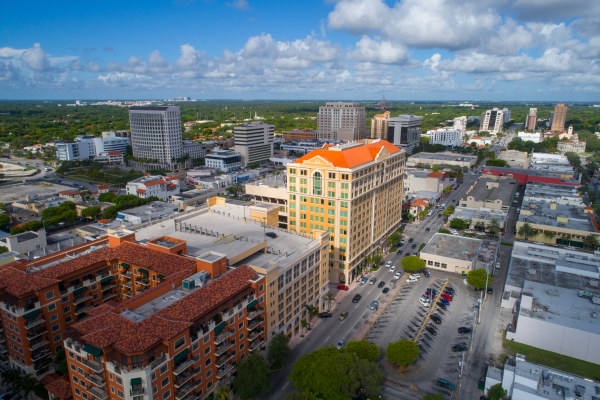
Coral Gables is a moderately-sized city located in the state of Florida. The city has a population of 51,686 people. In Coral Gables, there are 3,997 people per square mile, which is well above the national population density average. According to the most recent Census, 82% of Coral Gables residents are White, 3% Black and 3% Asian. Additionally, more than a quarter of the population of Coral Gables are of Hispanic or Latino origin, and 54% of the population also speak Spanish. Long commute times to work can be incredibly frustrating, ranking just behind housework on the list of life's annoyances. If you opt to make Coral Gables your home, your one-way commute time will typically last around 25 minutes, a duration that aligns with the national average commute time of 26 minutes.
If you’re considering moving to any new city, it could be a very daunting task. However, it could also be a fulfilling experience if you are willing to get to know the city before actually living in Coral Gables, Florida. When searching for a new neighborhood, several key items should be considered. Safety is of utmost importance, ensuring a secure environment with low crime. Proximity to your workplace or school helps reduce commuting time and offers convenience. Access to amenities such as parks, grocery stores, and healthcare facilities enhances your daily life. Public transportation options contribute to easy mobility. A sense of community fosters a supportive and engaging environment. Lastly, the overall atmosphere should align with your desired lifestyle, ensuring a fulfilling living experience. Considering these items will guide you towards finding the perfect neighborhood that fits all your needs. With useful information like amenities, cost of living, commute, health & safety, housing and other key data points, finding the best places to live in Coral Gables and in the areas around Coral Gables is a much easier task.
Using data and statistics Coral Gables has received a livability score of 84 out of 100. This score is ranked in the 98th percentile when compared to all other cities. Compared to the United States average, Coral Gables ranks among some of the best places to live in the country! Coral Gables has also earned the rare honor of ranking in the top 10 percentile among all cities. There are nine total categories that generate the livability score. Coral Gables ranks well for amenities (B-), crime (A+) and education (A+) Coral Gables does not score well for the following: cost of living (F). It might be wise to take a closer look at each category to find out why.
Unemployment rates can vary significantly among cities, impacting job prospects, wage levels and the overall economic health of an area. In Coral Gables, the unemployment rate stands at 2%, suggesting increased job opportunities and a heightened demand for workers. This scenario can lead to higher wages, as the demand for employees outpaces job availability. Importantly, a low unemployment rate often signifies a robust and flourishing local economy.
Parents and families often rely on school test scores when making decisions about local public schools. Test score data serves as a crucial metric for comparing and assessing various educational institutions. In Coral Gables, the average school test scores reached an impressive 78%, significantly higher than the national average. This remarkable performance underscores the commitment of the educational system to equip students with the knowledge and resources necessary for success. It allows your children to receive the support and skills that are essential for thriving academically, making Coral Gables an excellent choice for families seeking a high-quality education.
Being close to public transit, grocery stores, parks and other conveniences are all important when weighing your options for a new home in Coral Gables. Before you determine if any of these amenities are available in the area, you will also want to know if the real estate prices in Coral Gables are affordable. The median home price for Coral Gables homes is $1,571,329, which is 424.5% higher than the Florida average. If we take a closer look at the affordability of homes in Coral Gables, we’ll see that the home price to income ratio is 10.1, which is 140.5% higher than the Florida average.

| Statistic | Coral Gables | Florida | National |
| Average one way commute | 25min | 27min | 26min |
| Workers who drive to work | 71.9% | 79.5% | 76.4% |
| Workers who carpool | 6.4% | 9.3% | 9.3% |
| Workers who take public transit | 2.8% | 2.1% | 5.1% |
| Workers who bicycle | 0.9% | 0.7% | 0.6% |
| Workers who walk | 4.2% | 1.5% | 2.8% |
| Working from home | 11.9% | 5.4% | 4.6% |

 Here are the best places to live in Florida
 See the best places to live in Coral Gables
 These are the largest cities in Florida
 Safest States In The US