
| Statistic | Reportedincidents | /100k people | Charleston/100k people | Tennessee/100k people | National/100k people |
| Total crime | 12 | n/a (estimate) | 1,332 | 2,624 | 2,119 |
| Murder | 0 | n/a | 0.0 | 7.9 | 5.0 |
| Rape | 0 | n/a | 0.0 | 37.4 | 37.5 |
| Robbery | 0 | n/a | 0.0 | 58.4 | 60.6 |
| Assault | 4 | n/a | 444.0 | 488.6 | 256.1 |
| Violent crime | 4 | n/a (estimate) | 444 | 592 | 359 |
| Burglary | 1 | n/a | 111.0 | 251.8 | 229.2 |
| Theft | 6 | n/a | 665.9 | 1,443.6 | 1,272.1 |
| Vehicle theft | 1 | n/a | 111.0 | 336.7 | 258.8 |
| Property crime | 8 | n/a (estimate) | 888 | 2,032 | 1,760 |
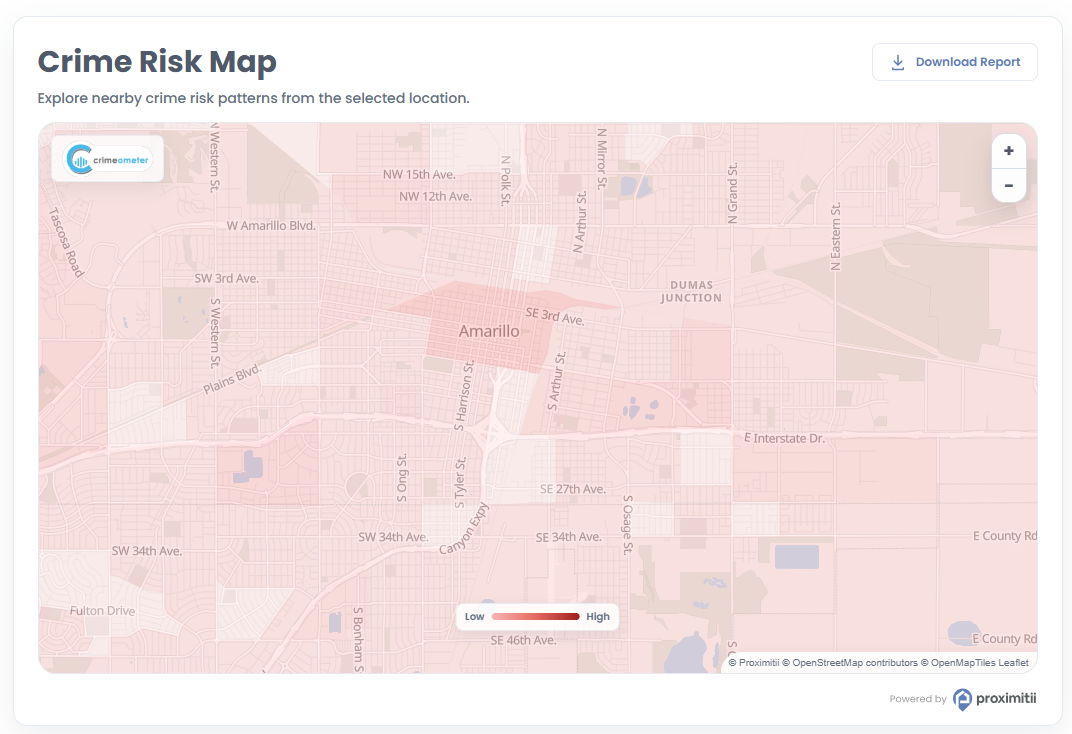
Crime can be categorized into two primary types: violent and property crimes. Violent crimes encompass offenses such as murder, rape, robbery, and assault, whereas property crimes involve acts like burglary, theft, and vehicle theft. The overall crime rate in Charleston is 37.2% lower than the national average. Specifically, there were 4 violent crimes reported in Charleston, equivalent to 444 per 100,000 residents, which is higher than the national average by 23.6%. Additionally, Charleston recorded 8 property crimes, amounting to 888 per 100,000 people, lower than the national average by 49.6%.
In the most recently reported crime year, Charleston registered zero reported homicides. This statistic not only designates the area as an exemplar of security but also emanates a profound sense of safety within its community. A minimal incidence of severe violent crime not only fosters a strong sense of well-being among residents but also sets a commendable standard for other regions aiming to cultivate similarly safe surroundings.
Before you decide to relocate, it’s always good to ask yourself “Is Charleston a safe place to live?” Although the answer might not be that simple, as some areas are safer than others, getting a good feel for the overall rate of crime can definitely be helpful. Overall, the Charleston crime rate is 37% lower than the national average. If we break that down daily, that translates into 0.03 crimes per day - 0.01 violent crimes and 0.02 property crimes.
Year-over-year crime data allows us to analyze short-term trends in crime activity. By comparing crime rates from one year to the next, we can identify patterns and shifts in Charleston crime rates. This information can be invaluable for residents looking to make informed decisions on where to live. When comparing the most recent year to the previous year, total crime in Charleston has increased by 9.1% year over year. Violent crime has increased by 300% and property crime has increased by 20%.
The economic well-being of a city's residents plays a significant role in crime rates. High poverty rates and income inequality can lead to increased crime stats as individuals may resort to illegal activities to meet their basic needs. While lower rates could lead to a lower Charleston crime rate. The poverty level in Charleston is 12.9%, while the national average is 15.1%.
Charleston has a population density of 662 people per square mile, while with the national average is 90.6 people per square mile. Cities characterized by high population density are frequently larger urban centers offering diverse economic prospects. Within these areas, income inequality may be accentuated, resulting in the coexistence of poverty and affluence. Such economic disparities can contribute to elevated property crimes and on occasion, violent crimes. Conversely, areas with low population density generally record lower Charleston crime rates.
In Charleston, the average rental rates are $1,049 per month, compared to the national average of $1,444. Rapid increases in rental costs can lead to neighborhood instability as residents are forced to move frequently in search of more affordable housing. This transience can weaken community bonds and hinder the establishment of social support networks, which can indirectly contribute to crime. While affordable rent and areas with higher income per capita, allow for long term renters and community bonds to the formed, therefore reducing crime rates on the long term.

| Item | Charleston | Tennessee | National |
| Law enforcement employees (officers & civilians) | 3 | 11,551 | 558,732 |
| Police officers & civilians /1000 residents | 4.5 | 3.6 | 3.3 |
| State | Total offenders | Tennessee /100K | National /100K |
| Tennessee | 24,578 | 412 | 266 |
| City | Population | Violent crime/100k people | Property crime/100k people | Total crime/100k people |
| Etowah, TN | 3,600 | 161 | 403 | 565 |
| Benton, TN | 1,293 | 211 | 493 | 704 |
| Hopewell, TN | 2,097 | 205 | 704 | 910 |
| Wildwood Lake, TN | 3,719 | 283 | 973 | 1,256 |
| East Cleveland, TN | 2,617 | 354 | 1,217 | 1,571 |
| Dayton, TN | 7,510 | 241 | 1,433 | 1,674 |
| South Cleveland, TN | 7,971 | 532 | 1,826 | 2,358 |
| Charleston, TN | 687 | 444 | 888 | 1,332 |
| City | Population | Violent crime/100k people | Property crime/100k people | Total crime/100k people |
| Beach City, OH | 687 | 374 | 1,976 | 2,350 |
| Kennard, IN | 687 | 420 | 1,849 | 2,269 |
| Arroyo Colorado Estates, TX | 687 | 624 | 3,272 | 3,895 |
| Lakota, ND | 687 | 299 | 1,979 | 2,278 |
| Glen St. Mary, FL | 687 | 311 | 1,654 | 1,965 |
| Charleston, TN | 687 | 444 | 888 | 1,332 |

 Here are the best places to live in Tennessee
 Check out the 10 safest cities in Tennessee
 Most Dangerous Cities In The US
 These are the 10 cheapest cities in Tennessee