

 Crime
Crime
This area boasts a crime rate that is far below the national average, making it a very safe place to live. These crime statistics encompass both property and violent offenses.
 Employment
With higher than average median household income, income per capita and lower unemployment rates, this area scores extremely well in the employment category.
 Housing
Impressive scores in the housing category characterize this area, potentially attributed to the availability of affordable housing, strong appreciation rates and high home values.
 Health & Safety
Accessible health facilities like hospitals, doctors offices, clinics and nursing homes as well as good air quality are all factors that have led to a high score in this category.
 Ratings
According to recent surveys and polls, locals had excellent ratings for walkability to nearby amenities, safety, access to public transit and the overall sense of community in the area.
 Amenities
The majority of amenities will be difficult to reach within a short walk, often requiring residents to use a vehicle or public transportation for access.
 Commute
Low commute scores could be due to limited access to public transit in this area, as well as longer-than-average work commute times for residents.
 Cost Of Living
This area is known for its high cost of living, which means you should anticipate higher costs for everyday goods and services, housing, groceries, and health care.
 Schools
The low schools score might be a result of factors like lower than average education levels, lackluster reading and math scores and the inaccessibility of local elementary and high schools.
Soledad, California is a mid-sized city with a population of 26,210 people. In Soledad, there are 5,938 people per square mile, which is well above the national population density average. More than a quarter of the residents of Soledad identify themselves as Hispanic or Latino, and 61% of the population speak Spanish as their primary or secondary language. Single men and women might be happy to hear that in Soledad, only 43% of the population is married. The average American spends about 26 minutes on their one way commute to work each day. Lower travel times can increase overall happiness and allow for more time to be spent with family and friends. While living in Soledad, your commute times will be about average, with a one way commute time of 23 minutes.
If you’re considering relocating to any new city, it could be a very daunting task. However, it could also be a good experience if you are willing to get to know the area before actually living in Soledad, California. When searching for a new neighborhood, several key items should be considered. Safety is of utmost importance, ensuring a secure environment with low crime. Proximity to your workplace or school helps reduce commuting time and offers convenience. Access to amenities such as parks, grocery stores, and healthcare facilities enhances your daily life. Public transportation options contribute to easy mobility. A sense of community fosters a supportive and engaging environment. Lastly, the overall atmosphere should align with your desired lifestyle, ensuring a fulfilling living experience. Considering these items will guide you towards finding the perfect neighborhood that fits all your needs. Finding the best places to live in Soledad and nearby areas is a much easier task when you can rely on information and data from the livability score, which includes amenities, crime, cost of living, commute and other important metrics.
Soledad, CA receives 65/100 for its livability score; this results in a ranking of #362 in California and #11,424 in the USA. If we probe a little deeper into each category within the livability score, we see that Soledad has higher than average rankings for the following: crime (B), employment (A-) and housing (B+). There is at least one category that you should be aware of in Soledad. The following was graded with a disappointing score: amenities (F), cost of living (F) and education (F).
The Soledad unemployment rate of 0.6% has continued to decrease over the years and is now well below the national average. The result could lead to reduced poverty and inequality in the area, higher wages and increased economic growth. This is a positive sign in the overall health of the local economy.
Real estate represents the most substantial investment for homebuyers, constituting their most valuable asset. Renters, on the other hand, typically see their monthly rent as their most significant expense. The Soledad market earns a high score in the housing category, surpassing the national average in factors like home and rental affordability and appreciation rates. This robust real estate market not only benefits individual homeowners and renters but also spurs vigorous local economic activity and job growth, solidifying its significance in driving the region's prosperity and financial well-being.
Assuming that Soledad meets all of your requirements like low crime rates, good schools and great local amenities, the next most important item to examine is the affordability of real estate in Soledad. Everything else becomes a lot less important if it turns out that home prices in Soledad are simply unattainable. Median real estate prices in Soledad come in at $754,870, which is 3.2% higher than the California average. The home price to income ratio compares the median home prices to the median household income. In Soledad, the home price to income ratio is 7.6, which is 1.3% lower than the California average.
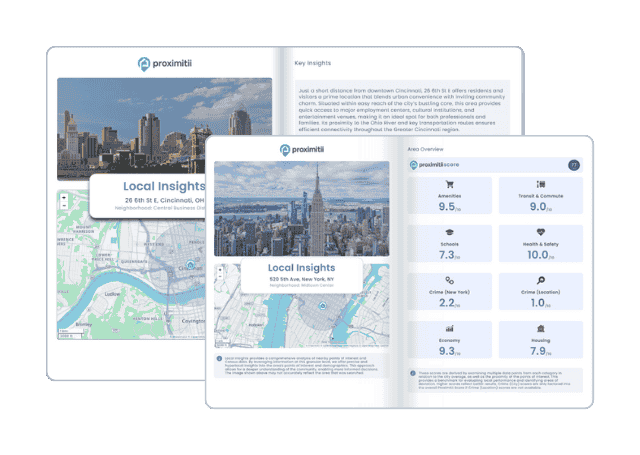
Why stop at city-to-city? With Local Insights, you can compare neighborhoods, zip codes, or even exact addresses. Access 300+ hyperlocal data points—from schools and crime to housing and amenities—to see which area is the better fit.

| Statistic | Soledad | California | National |
| Average one way commute | 23min | 28min | 26min |
| Workers who drive to work | 75.5% | 73.5% | 76.4% |
| Workers who carpool | 10.4% | 10.6% | 9.3% |
| Workers who take public transit | 0.5% | 5.2% | 5.1% |
| Workers who bicycle | 0.0% | 1.1% | 0.6% |
| Workers who walk | 0.5% | 2.7% | 2.8% |
| Working from home | 0.9% | 5.4% | 4.6% |

 Here are the best places to live in California
 Safest States In The US
 See the best places to live in Soledad
 Most Dangerous States In The US