

 Amenities
A wealth of amenities, such as restaurants, coffee shops, grocery stores, parks and fitness facilities, are all conveniently located within walking distance.
 Commute
An elevated score in the commute category points to excellent public transit accessibility and shorter-than-average work commute times in this area.
 Employment
Higher than average median household income, income per capita and lower unemployment rates are seen in this area. The result is a high score in the employment category.
 Housing
High scores in the housing category are a distinguishing feature of this area, possibly driven by a favorable home affordability ratio, higher home values and appreciation rates.
 Health & Safety
Good air quality as well as nearby health facilities like hospitals, clinics, nursing homes, fire and police stations all contribute to a higher than average health and safety score.
 Cost Of Living
Living in this region comes with a high cost of living, translating to elevated costs for homes, goods and services, groceries, utilities, health care and transportation.
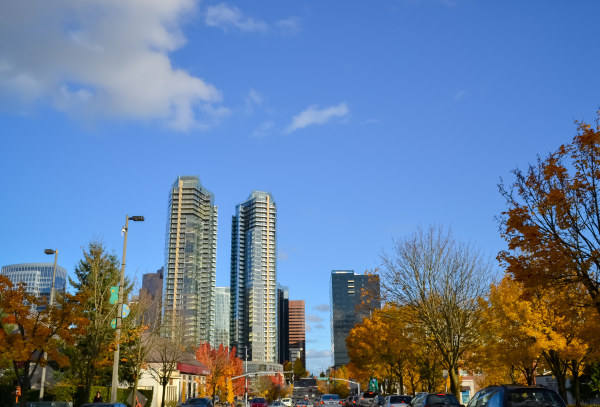
Redmond, Washington is a medium-sized city with a population of 70,521 residents. With a population density of 4,281 people per square mile, Redmond is well above the nation's average density level. Individuals of White (54%) and Asian (37%) backgrounds make up a significant portion of the population of Redmond. The average American spends about 26 minutes on their one way commute to work each day. Lower travel times can increase overall happiness and allow for more time to be spent with family and friends. While living in Redmond, your commute times will be about average, with a one way commute time of 25 minutes.
Whether you’re moving to a new area to be closer to family, friends or for a new job, living in Redmond could be a positive experience compared to other cities in Washington if you know where to look. Don't forget to determine what matters most to you in a neighborhood. Consider factors such as safety, proximity to work or school, access to amenities (like parks, fitness facilities, grocery stores, restaurants), public transportation options, community atmosphere and the overall vibe you're looking for. To help you find the best places to live in and around Redmond, AreaVibes has created a livability score using key metrics like amenities, crime, cost of living, housing and more.
Redmond, WA receives 88 out of 100 for its livability score; this results in a ranking of #5 in Washington and #123 in the USA. This is a phenomenal score, as Redmond ranks well in multiple categories! Another exciting tidbit, is that Redmond ranks better than 90% of all US cities! For each of the livability categories, we can establish that Redmond ranks very well for crime (B-), education (A+) and housing (A-). Redmond does not fare well for the following: cost of living (F). It might be a smart idea to take a closer look at each category to find out why.
Redmond has many conveniently situated amenities and captivating attractions that adds to the continuous enjoyment of your everyday life. Having the assurance of abundant conveniences and a wide array of activities ensures your easy access to nearby grocery stores, restaurants, bars, fitness facilities, coffee shops and exciting entertainment options. This not only simplifies daily routines but also fosters a vibrant and dynamic lifestyle within the community. With a wealth of resources at your fingertips, you can savor the convenience and variety that Redmond has to offer, making it a desirable destination for those seeking both accessibility and enjoyment in their daily lives. Here are some of the more popular things to do in Redmond: iPic Theaters, Idylwood Beach Park, and Black Raven Brewing Company.
Feeling a sense of safety in the area that you live in is a must for most people. Low crime rates can have a positive impact on things like home prices, home appreciation rates and can help foster positive community dynamics and social cohesion. Redmond has a violent crime rate of 131 crimes per 100,000 residents which is far lower than the national average.
Test scores can be a good way to measure a school's academic performance and the proficiency of its students. They can be an important metric in deciding if the local area schools can provide a solid educational system for children. The schools in Redmond have an average test score of 83%, which is well above the US average.
A robust real estate market serves as a crucial economic indicator, reflecting the local area's strength, stability and the confidence of its residents. Redmond excels in the housing sector, scoring high marks based on factors such as median home and rental prices, appreciation rates and home affordability. These calculations suggest that the apartment rental and real estate market in the region is exceptionally healthy, highlighting the area's economic vitality and attractiveness to potential homebuyers and renters.
Being close to public transit, grocery stores, parks and other conveniences are all important when weighing your options for a new home in Redmond. Before you determine if any of these amenities are available in the area, you will also want to know if the real estate prices in Redmond are affordable. Median real estate prices in Redmond come in at $1,422,198, which is 189.2% higher than the Washington average. The home price to income ratio compares the median home prices to the median household income. In Redmond, the home price to income ratio is 7.2, which is 33.3% higher than the Washington average.

| Statistic | Redmond | Washington | National |
| Average one way commute | 25min | 27min | 26min |
| Workers who drive to work | 57.3% | 72.3% | 76.4% |
| Workers who carpool | 11.4% | 10.2% | 9.3% |
| Workers who take public transit | 10.2% | 6.2% | 5.1% |
| Workers who bicycle | 0.9% | 0.9% | 0.6% |
| Workers who walk | 3.3% | 3.6% | 2.8% |
| Working from home | 15.8% | 5.6% | 4.6% |

 Here are the best places to live in Washington
 See the best places to live in Redmond
 These are the largest cities in Washington
 Safest States In The US