
| Statistic | Reportedincidents | /100k people | Princeton/100k people | Minnesota/100k people | National/100k people |
| Total crime | 133 | n/a (estimate) | 2,455 | 1,863 | 2,119 |
| Murder | 0 | n/a | 0.0 | 2.9 | 5.0 |
| Rape | 0 | n/a | 0.0 | 36.8 | 37.5 |
| Robbery | 0 | n/a | 0.0 | 48.9 | 60.6 |
| Assault | 3 | n/a | 55.4 | 168.0 | 256.1 |
| Violent crime | 3 | n/a (estimate) | 55 | 257 | 359 |
| Burglary | 11 | n/a | 203.0 | 184.7 | 229.2 |
| Theft | 114 | n/a | 2,104.1 | 1,208.5 | 1,272.1 |
| Vehicle theft | 5 | n/a | 92.3 | 213.1 | 258.8 |
| Property crime | 130 | n/a (estimate) | 2,399 | 1,606 | 1,760 |

Crime is typically categorized into two main types: violent and property crimes. Violent crimes encompass offenses such as murder, rape, robbery, and assault, while property crimes include burglary, theft, and vehicle theft. Based on the most recent report, the Princeton crime rate is higher than the national average by 15.8%. Specifically, there were 3 violent crimes in Princeton, equivalent to 55 per 100,000 individuals, lower than the national average by 84.6%. Furthermore, Princeton recorded 130 property crimes, amounting to 2399 per 100,000 residents, which was higher than the average by 36.3%.
Princeton stands out with one of the lowest violent crime rates in the United States. Reporting only 55 violent crimes per 100,000 people, Princeton secures its place among the safest cities in the nation, making it an enticing destination for those in search of a new home.
In the most recently reported crime year, Princeton registered zero reported homicides. This statistic not only designates the area as an exemplar of security but also emanates a profound sense of safety within its community. A minimal incidence of severe violent crime not only fosters a strong sense of well-being among residents but also sets a commendable standard for other regions aiming to cultivate similarly safe surroundings.
To get a feel for the safety of living in Princeton, it's essential to analyze both the overall crime rate and the daily incident count. Princeton presents a total crime rate that is 16% higher than the national average per 100,000 residents. Consequently, Princeton experiences an average of 0.36 daily crimes, comprising 0.01 violent incidents and 0.36 property-related offenses. This evaluation offers a comprehensive understanding of the safety landscape, aiding individuals in making informed decisions when considering relocation.
Year-over-year crime rates in Princeton has decreased by 9.5% in the last reported crime report. Comparing crime rates from one year to another offers some insight into whether or not Princeton is becoming a safer or more dangerous place to live. Crime rates are categorized by violent and property crime. Year-over-year violent crime has decreased by 50%, while property crime has decreased by 7.8%. This analysis equips individuals with crucial information for making informed decisions about living in Princeton.
In Princeton, the poverty rate currently stands at 14.7%, which contrasts with the national average of 15.1%. It's essential to recognize that the economic status of a city's inhabitants could be a pivotal factor influencing crime stats. Communities grappling with high poverty rates and income inequality are often susceptible to elevated crime levels, as some individuals may turn to unlawful activities to fulfill their essential needs. While lower poverty rates could lead to a reduction in Princeton crime rates.
The educational level achieved in any given city can influence crime rates significantly. Greater educational achievement is frequently associated with decreased crime rates, as it offers individuals improved job prospects and alternatives to engaging in crime related activities. Conversely, lower educational attainment rates tend to coincide with elevated crime rates. In Princeton, 84.2% of residents have successfully graduated from high school, in contrast to the national average where 83% have achieved high school graduation.
Escalating cost of living expenses, encompassing exorbitant housing costs, grocery and healthcare expenditures, can induce financial strain on individuals and families, particularly those with limited financial resources. Such economic stress may propel individuals towards criminal activities, including theft or burglary, as a means of addressing their financial hardships. Conversely, cities characterized by a lower cost of living may alleviate economic pressures, potentially resulting in a reduced crime rate. In Princeton, the cost of living is 5.27% lower than the national average, reflecting a more affordable economic environment that could contribute to a decrease in crime levels.
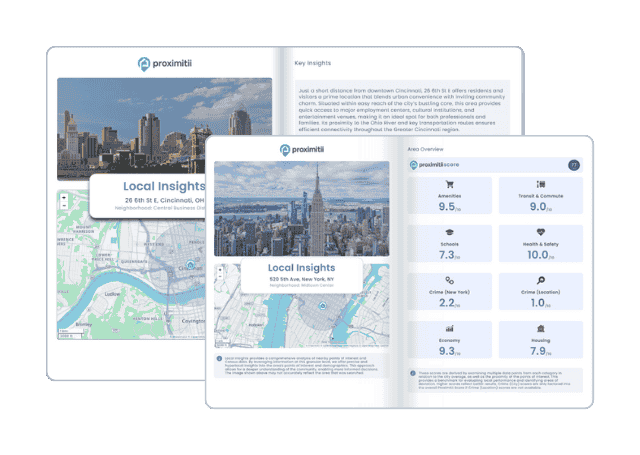
Why stop at city-to-city? With Local Insights, you can compare neighborhoods, zip codes, or even exact addresses. Access 300+ hyperlocal data points—from schools and crime to housing and amenities—to see which area is the better fit.

| Item | Princeton | Minnesota | National |
| Law enforcement employees (officers & civilians) | 13 | 7,759 | 558,732 |
| Police officers & civilians /1000 residents | 2.8 | 1.8 | 3.3 |
| State | Total offenders | Minnesota /100K | National /100K |
| Minnesota | 1,283 | 26 | 266 |
| City | Population | Violent crime/100k people | Property crime/100k people | Total crime/100k people |
| Becker, MN | 5,061 | 78 | 312 | 390 |
| St. Francis, MN | 7,954 | 223 | 809 | 1,031 |
| Milaca, MN | 3,008 | 98 | 1,239 | 1,337 |
| Zimmerman, MN | 6,045 | 212 | 1,327 | 1,540 |
| Ronneby, MN | 46 | 236 | 1,472 | 1,708 |
| Foreston, MN | 613 | 271 | 1,695 | 1,966 |
| Pease, MN | 205 | 331 | 2,069 | 2,400 |
| Princeton, MN | 4,800 | 55 | 2,399 | 2,455 |
| City | Population | Violent crime/100k people | Property crime/100k people | Total crime/100k people |
| Cobleskill, NY | 4,799 | 341 | 1,543 | 1,884 |
| Highland Lakes, NJ | 4,801 | 133 | 868 | 1,001 |
| Rock Hill, MO | 4,799 | 411 | 823 | 1,234 |
| Todd Creek, CO | 4,802 | 124 | 674 | 797 |
| Danville, PA | 4,797 | 268 | 998 | 1,266 |
| Princeton, MN | 4,800 | 55 | 2,399 | 2,455 |

 Here are the best places to live in Minnesota
 These are the 10 cheapest cities in Minnesota
 Safest States In The US
 Check out the 10 most dangerous cities in Minnesota