

 Amenities
Within the vicinity, you'll find a wealth of amenities, from restaurants and coffee shops to grocery stores and local shops, all easily accessible on foot.
 Commute
High scores in the commute category could indicate that this area offers short commute times to work and readily available public transportation options.
 Crime
Crime
This area is characterized by a crime rate, per 100,000 individuals, that falls well below the national average, indicating its potential as a very safe place to live.
 Employment
This area scores extremely well in the employment category. This is primarily due to the combination of low unemployment rates, higher median home income and income per capita.
 Housing
The housing category in this area boasts higher than average scores, likely influenced by a positive home affordability ratio, robust appreciation rates or elevated home values.
 Cost Of Living
Residents of this area contend with a high cost of living, resulting in increased expenditures for everyday goods and services, housing, utilities and health care.
Located in the state of Washington, Issaquah is a mid-sized city with a population of 39,876 residents. Issaquah has a population density of 3,287 people per square mile. This would be considered well above the national population density level. Long, unnecessary commutes can be both frustrating and inconvenient when heading to work. Nationwide, the average one-way commute time takes 26 minutes, but regrettably, residing in Issaquah entails a longer-than-average one-way commute time, averaging 31 minutes.
Without the right tools, moving to any new city can be very stressful and challenging. Living in Issaquah, Washington could be a great experience for anyone who puts in the effort to do the research required. When searching for a new neighborhood, several key items should be considered. Safety is paramount, ensuring a secure environment for you and your family. Proximity to workplaces or schools reduces commuting time and enhances convenience. Access to amenities like parks, grocery stores and healthcare facilities contributes to a comfortable lifestyle. Reliable public transportation options promote easy mobility. A strong sense of community fosters social connections and a welcoming atmosphere. With useful information like amenities, crime, health & safety, education, employment and other key data points, finding the best places to live in Issaquah and in the areas around Issaquah is a much easier task.
Issaquah, WA receives 88/100 for its livability score; this results in a ranking of #8 in Washington and #150 in the USA. Pack your bags! This is a very high score in comparison to other US cities. Living in Issaquah could be a great choice! Another exciting tidbit, is that Issaquah ranks better than 90% of all US cities! For each of the livability categories, we see that Issaquah ranks very well for crime (B-), education (A+) and housing (A). There is at least one category that does not have great scores in Issaquah. The following was graded with a disappointing score: cost of living (F).
Living in Issaquah offers many benefits and offers an extensive array of local amenities. These amenities play a crucial role in enhancing the quality of life in this vibrant community. From readily accessible grocery stores to charming coffee shops, diverse dining options and generously spaced parks, Issaquah provides a wide spectrum of resources for its residents. This ensures that your daily requirements are effortlessly met and creates abundant opportunities for leisure and recreation. The abundant local offerings contribute to the area's overall appeal, making it an attractive destination for those seeking convenience, variety and a fulfilling lifestyle. If you're considering a move, the wealth of local amenities continues could be a defining feature of this remarkable locale.
Unemployment rates can vary significantly among cities, impacting job prospects, wage levels and the overall economic health of an area. In Issaquah, the unemployment rate stands at 2.6%, suggesting increased job opportunities and a heightened demand for workers. This scenario can lead to higher wages, as the demand for employees outpaces job availability. Importantly, a low unemployment rate often signifies a robust and flourishing local economy.
Test scores can be a good way to measure a school's academic performance and the proficiency of its students. They can be an important metric in deciding if the local area schools can provide a solid educational system for children. The schools in Issaquah have an average test score of 74%, which is well above the US average.
For home buyers, real estate will be the largest purchase they will ever make and it will also be their most valuable asset. For renters, the monthly rent paid on their Issaquah apartments will most likely be their largest expense. Based on tangible metrics like home and rental affordability and appreciation rates, housing in this area has received a score that is well above the average of every other US city. A thriving real estate market can also generate strong local economic activity and job creation.
Certain items on your wish list like shopping, restaurants, nightlife, parks and proximity to public transportation are all important things to look for. Having said that, perhaps the most important metric to consider when contemplating a move to Issaquah is real estate affordability. Median real estate prices in Issaquah come in at $1,185,812, which is 141.1% higher than the Washington average. The home price to income ratio compares the median home prices to the median household income. In Issaquah, the home price to income ratio is 6.6, which is 22.2% higher than the Washington average.
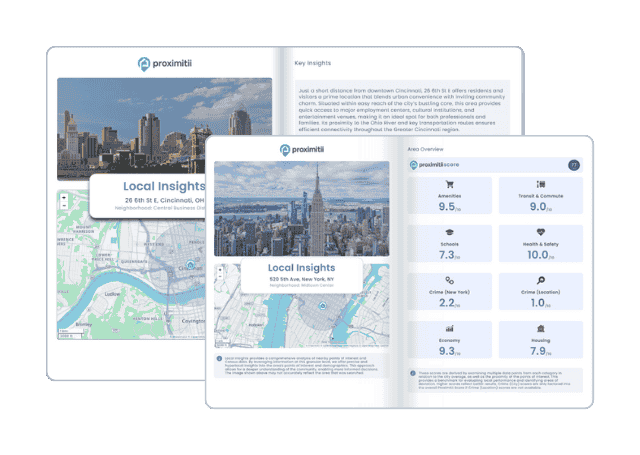
Why stop at city-to-city? With Local Insights, you can compare neighborhoods, zip codes, or even exact addresses. Access 300+ hyperlocal data points—from schools and crime to housing and amenities—to see which area is the better fit.

| Statistic | Issaquah | Washington | National |
| Average one way commute | 31min | 27min | 26min |
| Workers who drive to work | 56.6% | 72.3% | 76.4% |
| Workers who carpool | 11.5% | 10.2% | 9.3% |
| Workers who take public transit | 9.9% | 6.2% | 5.1% |
| Workers who bicycle | 0.5% | 0.9% | 0.6% |
| Workers who walk | 3.1% | 3.6% | 2.8% |
| Working from home | 16.3% | 5.6% | 4.6% |

 Here are the best places to live in Washington
 Check out the 10 safest cities in Washington
 Most Dangerous States In The US
 Safest States In The US