

 Amenities
The area boasts an ample array of local amenities, such as restaurants, entertainment options, grocery stores and parks, all conveniently located within walking distance.
 Crime
Crime
The crime rate is far lower than the national average per 100,000 residents. As such, it should be considered a very safe place to live when compared to other areas.
 Employment
This area excels in the employment category with a score well above average, primarily due to the higher median home income, per capita income and low unemployment rates.
 Housing
High scores in the housing category are attributed to this area, possibly pointing to a favorable home affordability ratio, robust appreciation rates or elevated home values.
 Health & Safety
Achieving a high health and safety score relies on factors including great air quality and convenient access to vital health facilities such as hospitals, doctors, clinics and police stations.
 Cost Of Living
The cost of living in this area is notably high, making it a more expensive place to live. You'll find higher expenses for everyday goods and services, housing and groceries.
Ellicott City, Maryland is a medium-sized city with a population of 75,837 inhabitants. Individuals of White (56%) and Asian (29%) backgrounds make up a significant portion of the population of Ellicott City. An important consideration when living in Ellicott City is the longer-than-average commute times. If you seek a short work commute, this area may not be the best choice for you. The one-way commute time here typically takes 30 minutes, far surpassing the national average of 26 minutes.
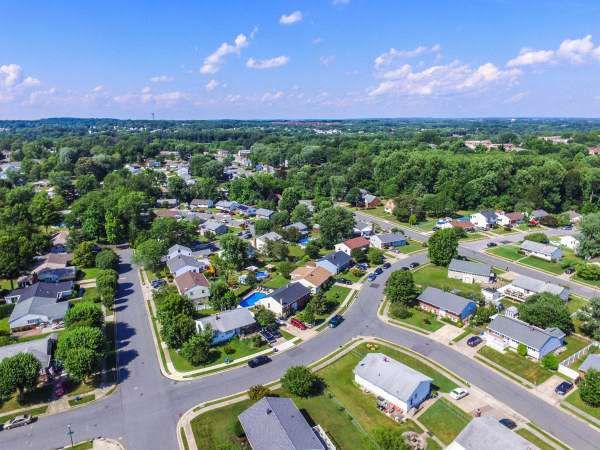
Living in Ellicott City can be a great experience for anyone moving to the town. Having said that, in the state of Maryland, there are many desirable places to live, so choose wisely! When searching for a new neighborhood, several factors play a vital role in determining its suitability. Safety should be a top priority, ensuring a secure environment with low crime rates. Proximity to your workplace or school helps minimize commuting time and allows for a better work-life balance. Availability of essential amenities such as parks, coffee shops, restaurants, grocery stores, and healthcare facilities contributes to convenience and well-being. Access to reliable public transportation options facilitates easy commuting and connectivity. Additionally, considering the sense of community and the overall atmosphere that resonates with your lifestyle and preferences fosters a harmonious living experience. To help you find the best places to live in and around Ellicott City, AreaVibes has created a livability score using key metrics like amenities, crime, cost of living, health & safety, housing and more.
Ellicott City has a livability score of 76 out of 100 and is ranked #89 in Maryland and #2,983 in the USA. Pack your bags! This is a very high score in comparison to other US cities. Living in Ellicott City could be a great choice! If we take a closer look at each of the categories on their own, we see that Ellicott City ranks well for amenities (A+), crime (A-), education (A-) and housing (A+). There is at least one category that did not score well in Ellicott City. The following was graded with a concerning score: cost of living (F).
Living in Ellicott City offers many benefits and offers an extensive array of local amenities. These amenities play a crucial role in enhancing the quality of life in this vibrant community. From readily accessible grocery stores to charming coffee shops, diverse dining options and generously spaced parks, Ellicott City provides a wide spectrum of resources for its residents. This ensures that your daily requirements are effortlessly met and creates abundant opportunities for leisure and recreation. The abundant local offerings contribute to the area's overall appeal, making it an attractive destination for those seeking convenience, variety and a fulfilling lifestyle. If you're considering a move, the wealth of local amenities continues could be a defining feature of this remarkable locale. Some of the interesting things to do and attractions include: B&O Railroad Station Museum, Patapsco Valley State Park, and The Spa Turf Valley.
Unemployment rates can range pretty dramatically from one city to another. Knowing that Ellicott City has an unemployment rate of 1.9% could mean increased job opportunities with a higher demand for workers. It could also lead to higher wages, as the demand for workers exceeds the availability of jobs. Most importantly, it could be a sign of a healthy and thriving local economy.
Test scores can be a good way to measure a school's academic performance and the proficiency of its students. They can be an important metric in deciding if the local area schools can provide a solid educational system for children. The schools in Ellicott City have an average test score of 66%, which is well above the US average.
A healthy real estate market serves as a key economic indicator. It could signify overall local economic strength, stability and reflects consumer confidence in the area. Based on multiple factors including: median home and rental prices, appreciation rates and home affordability, Ellicott City has received high marks in the housing category. Based on these calculations, the apartment rental and real estate market appears to be very healthy.
Certain items on your wish list like shopping, restaurants, nightlife, parks and proximity to public transportation are all important things to look for. Having said that, perhaps the most important metric to consider when contemplating a move to Ellicott City is real estate affordability. The median home price for Ellicott City homes is $984,711, which is 90.3% higher than the Maryland average. If we take a closer look at the affordability of homes in Ellicott City, we’ll see that the home price to income ratio is 5, which is 8.7% higher than the Maryland average.

| Statistic | Ellicott City | Maryland | National |
| Average one way commute | 30min | 32min | 26min |
| Workers who drive to work | 79.2% | 73.7% | 76.4% |
| Workers who carpool | 6.4% | 9.3% | 9.3% |
| Workers who take public transit | 1.4% | 8.9% | 5.1% |
| Workers who bicycle | 0.0% | 0.3% | 0.6% |
| Workers who walk | 0.8% | 2.4% | 2.8% |
| Working from home | 11.3% | 4.4% | 4.6% |

 Here are the best places to live in Maryland
 These are the 10 cheapest cities in Maryland
 Safest Cities In The US
 Safest States In The US