

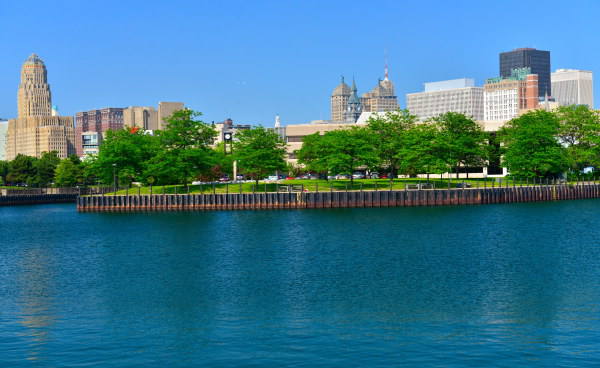
Buffalo, NY, known as 'The City of Good Neighbors,' offers a unique blend of historic charm and modern urban amenities. Located in western New York, Buffalo is a large city that serves as a major cultural and economic hub. Major nearby cities like Niagara Falls and Rochester enhance its status as a central point in the region. Buffalo's blend of historic landmarks, cultural festivals, and urban amenities creates a distinctive living experience.
Buffalo is home to several iconic landmarks, including the Buffalo Museum of Science, the historic Shea's Performing Arts Center, and the scenic Delaware Park. The city offers a variety of attractions, from the beautiful Albright-Knox Art Gallery to the bustling Elmwood Village, known for its shopping and dining. Buffalo's dining scene is diverse, offering everything from classic Buffalo wings to international dishes.
Annual events such as the Allentown Art Festival and the Taste of Buffalo highlight the city's vibrant cultural scene and provide unique entertainment opportunities for residents and visitors. These events celebrate Buffalo's rich cultural heritage and community spirit. Prestigious institutions like the University at Buffalo contribute to the city's academic and cultural vibrancy, fostering a thriving intellectual community.
The arts and culture scene in Buffalo is dynamic and diverse, with numerous theaters, music venues, and art galleries. The Buffalo Philharmonic Orchestra and the Burchfield Penney Art Center are just a few of the cultural landmarks that showcase the city's commitment to the arts. Living in Buffalo provides ample opportunities to engage with art, music, and history, making it an exciting place to call home.
Buffalo’s community is welcoming and diverse, creating a friendly environment for newcomers. The city is home to professional sports teams like the Buffalo Bills (NFL) and the Buffalo Sabres (NHL), providing plenty of excitement for sports fans. Major industries in Buffalo include healthcare, education, and technology, with significant employers such as Kaleida Health and M&T Bank driving economic growth. The city has extensive public transit options, including buses and light rail, making commuting convenient for residents.
 Amenities
An abundance of amenities, including restaurants, coffee shops, grocery stores and fitness facilities, are conveniently situated within walking distance of the area.
 Commute
High commute scores indicates that public transit should be easily accessible in this area and the average commute time to work is less than average.
 Cost Of Living
The overall cost of living in this area is much lower than average. This includes everyday goods and services, as well as housing, utilities and health care.
 Housing
This area has received high scores in the housing category. This could be due to a positive home affordability ratio, high appreciation rates or elevated home values.
 Health & Safety
A high score in the health and safety category is a result of good air quality and the accessibility to health facilities such as hospitals, clinics, doctors, pharmacies and fire stations.
 Crime
Crime
This area is reporting high crime rates per 100,000 people and could signify that it is a dangerous place to live. Crime rates include both violent and property crimes.
 Employment
A low score in the employment category could indicate that this area struggles with high unemployment rates and low household income and income per capita levels.
 Ratings
AreaVibes conducted surveys and polls with locals who live in the area. The results were not favorable for walkability of amenities, parks, public transit and the overall sense of community in the area.
Located in the state of New York, Buffalo is a highly populated city with a population of 262,656 residents. With a population density of 6,504 people per square mile, Buffalo is well above the nation's average density level. Individuals of White (47%) and Black or African American (35%) backgrounds make up a significant portion of the population of the city. If you are a young adult or student, you might be pleased to know that the average age of all Buffalo residents is 33. In Buffalo, only 37% of people over the age of fifteen are married. This city could be a good option for singles ready to mingle. Not a fan of sitting in traffic during your commute to work? Buffalo offers shorter work commutes, with an average one-way commute time taking only 20 minutes, far lower than the national average of 26 minutes.
Are you trying to figure out if living in Buffalo is the right fit for your lifestyle? To ensure a great experience before relocating to any new city in New York, you will probably want to make sure that you check all of the most important boxes. Several key factors deserve attention. For one, safety is paramount, ensuring that your new area is low in crime is key. Proximity to workplaces or schools minimizes commute times and fosters convenience. Access to essential amenities like parks, grocery stores, food, fitness, shops and healthcare facilities enhances daily life. Efficient public transportation options provide mobility and connectivity. The sense of community creates a welcoming and supportive environment. Lastly, the overall atmosphere, encompassing the vibe, aesthetics, and lifestyle offerings, contributes to a fulfilling living experience. Considering these elements helps identify the ideal neighborhood for your needs and preferences. To help you find the best places to live in and around Buffalo, AreaVibes has created a livability score using key metrics like commute, health & safety, employment and more.
With a livability score of 79/100, Buffalo is ranked #1,744 in the United States and #109 in New York. Clearly, Buffalo is doing something right, as this score ranks well above the average of most cities. Buffalo also ranks in the top 10 percent of all cities, which is no small feat! If we examine each of the categories on their own, we see that Buffalo ranks well for amenities (A), cost of living (A+) and housing (A+). Buffalo does not do well for the following: crime (F) and employment (D-). It might be wise to take a closer look at each category to find out why.
If you're living in Buffalo, you can expect to enjoy a multitude of local amenities, mostly thanks to the strategic placement of essential services such as grocery stores, restaurants, coffee shops, parks and various shops. If you're contemplating a move to this locale with the intent of establishing it as your permanent residence, you'll be pleased to find an extensive array of amenities and recreational opportunities within easy reach, either on foot or via a brief commute. This wealth of accessible amenities not only enhances the livability of the area but also ensures that you can enjoy a rich and fulfilling lifestyle, making Buffalo an attractive destination for those seeking a vibrant and well-served community to call home. A few of the enjoyable things to experience and sights to see are: Frank Lloyd Wright's Darwin D. Martin House Complex, The Buffalo Zoo, and Spirit of Buffalo - Buffalo Sailing Adventures.
A healthy real estate market serves as a key economic indicator. It could signify overall local economic strength, stability and reflects consumer confidence in the area. Based on multiple factors including: median home and rental prices, appreciation rates and home affordability, Buffalo has received high marks in the housing category. Based on these calculations, the apartment rental and real estate market appears to be very healthy.
Certain items on your wish list like shopping, restaurants, nightlife, parks and proximity to public transportation are all important things to look for. Having said that, perhaps the most important metric to consider when contemplating a move to Buffalo is real estate affordability. Median real estate prices in Buffalo come in at $183,992, which is 63.5% lower than the New York average. The home price to income ratio compares the median home prices to the median household income. In Buffalo, the home price to income ratio is 3.1, which is 44.6% lower than the New York average.

| Statistic | Buffalo | New York | National |
| Average one way commute | 20min | 33min | 26min |
| Workers who drive to work | 67.9% | 53.0% | 76.4% |
| Workers who carpool | 10.0% | 6.7% | 9.3% |
| Workers who take public transit | 9.9% | 28.0% | 5.1% |
| Workers who bicycle | 0.9% | 0.7% | 0.6% |
| Workers who walk | 5.8% | 6.3% | 2.8% |
| Working from home | 4.1% | 4.0% | 4.6% |

 Here are the best places to live in New York
 These are the 10 cheapest cities in New York
 These are the largest cities in New York
 See the best places to live in Buffalo